10 Nightstand Organization Ideas for Small Bedrooms
Disclosure: This post contains affiliate links. As an Amazon Associate I earn from qualifying purchases. If you buy through these links, I may earn a small commission at no extra cost to you. Read our full disclaimer.
A nightstand is the first thing you touch in the morning and the last thing you touch at night, so it fills up fast. Phone, charger, water glass, lip balm, two books, a hair tie, receipts, a dish of earrings and a mug from yesterday. In a small bedroom, that pile does more than look messy. It makes the whole room feel busy right where you are trying to rest. These nightstand organization ideas fix that with a short list of simple habits and a few cheap tools.
You will learn why a small bedside table gets cluttered so quickly, what actually belongs on top, 10 nightstand organization ideas that work in rentals and tight rooms, what to do when there is no space for a nightstand at all, budget buys, common mistakes and a practical FAQ.
Quick answer: The best nightstand organization ideas start with a three-item rule on top: a light, one tray and one thing you love. Put small items in the tray, give the drawer simple dividers, set up a tidy charging spot and limit books to the one or two you are reading. If the nightstand is tiny or missing, use a wall lamp, a floating shelf or a bedside caddy. Finish with a two-minute nightly reset so the surface stays clear.
The 10 ideas at a glance:
- Clear the top: 1. Follow a three-item rule, 2. Corral small things in one tray, 3. Divide the drawer
- Handle the clutter magnets: 4. Build a simple charging station, 5. Swap the table lamp for a wall lamp, 6. Keep a short book stack, 7. Use baskets on the lower shelf
- Make it work in a tiny room: 8. Hang a bedside caddy, 9. Try a floating shelf, 10. Do a two-minute nightly reset
Why Nightstand Organization Ideas Matter in a Small Bedroom

In a small bedroom, the nightstand is often the only flat surface besides the bed. It becomes a desk, a charging station, a bookshelf, a jewelry box and a snack table, all on a top that may be only 15 or 18 inches wide. No surface can do all of that and still look calm.
That matters because the nightstand sits in your line of sight when you lie down. A clear, simple bedside table helps the room feel restful, while a crowded one reminds you of every task you did not finish. Good nightstand organization ideas give each item a home so the top can stay mostly empty.
There is a practical side too. When the nightstand is organized, you can find your glasses in the dark, your phone charges where you can reach it and the water glass does not get knocked onto a pile of library books. Small changes make your night and your morning easier.
If the whole room feels tight, start with where the bed and nightstand sit. Our small bedroom layout ideas cover how to place the bed so there is still room for a bedside table and a clear walkway.
It also helps to admit why nightstands get messy. The bedside table is the last stop before sleep, so it collects whatever is in your hands when you are too tired to walk across the room. Receipts from your pocket, the hair tie you pulled out, the mug you carried in. None of it is a big decision, which is exactly why it piles up. The fix is not more willpower. It is a setup where the easy choice and the tidy choice are the same, and that is what the nightstand organization ideas below are built to do.
A small bedroom also has fewer backup spots. In a large room, extra things can drift to a dresser, a chair or a window seat. In a tiny room, the nightstand is often the only landing zone, so it takes every hit. Giving the bedside table clear limits protects the rest of the room as well.
What Belongs on a Nightstand (and What Does Not)

Before you buy anything, decide what the nightstand is for. A bedside table works best when it holds only what you use in bed or right before and after sleep.
Good to keep on or in a nightstand:
- A lamp or light you can reach from bed
- Your phone and its charger
- A water glass or bottle with a lid
- The one or two books you are reading
- Glasses or contacts case
- Lip balm, hand cream and a small tissue pack
- Earplugs, a sleep mask or any small sleep aids you use
- A notebook and pen if you like to write before bed
Better kept somewhere else:
- Mail, receipts and paperwork
- Dishes and mugs (take them back to the kitchen each night)
- Makeup and full skincare routines
- A stack of “someday” books
- Spare chargers, cables and old electronics
- Clothes, bags and laundry
Once you have your list, everything else has a better home. Our guide to small bedroom storage ideas for adults can help you find that home for the extras.
Tip: Look at your nightstand right now and count the items on top. If it is more than five, the top is doing the work of a drawer.
Think about your night, not a photo. Walk through your real routine before you organize. Do you read? Do you wear glasses or contacts? Do you take a medicine at bedtime? Do you need hand cream, a sleep mask or a fan remote? The right nightstand organization depends on what you actually reach for between turning off the light and getting up. A list of five or six real items is the best plan you can make.
10 Nightstand Organization Ideas That Work
These 10 nightstand organization ideas are built for small bedrooms, renters and real budgets. You do not need a new bedside table to try them. Most use a tray, a few dividers and a couple of habits.
Start with the first three. A short list on top, one tray and a divided drawer solve most of the clutter. The rest handle the usual problem spots: cords, lamps, books, low shelves and rooms that barely fit a bed.
1. Follow a Three-Item Rule on Top

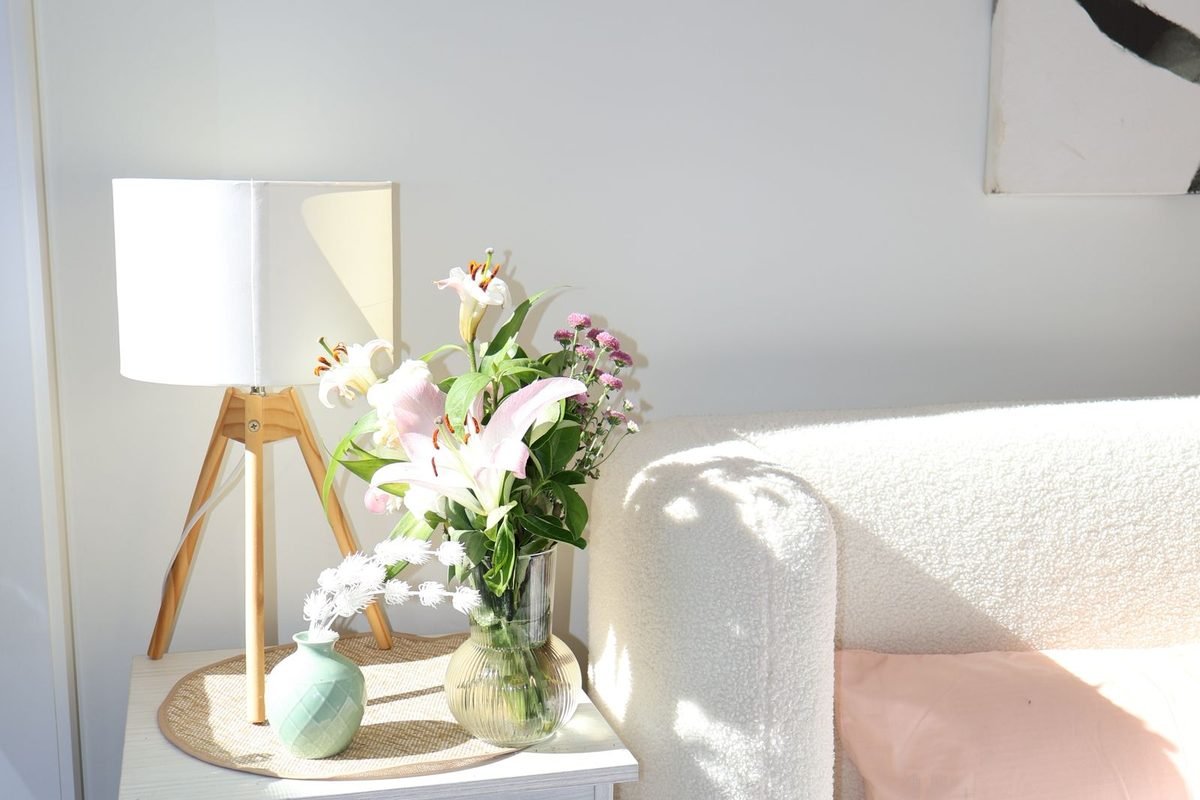
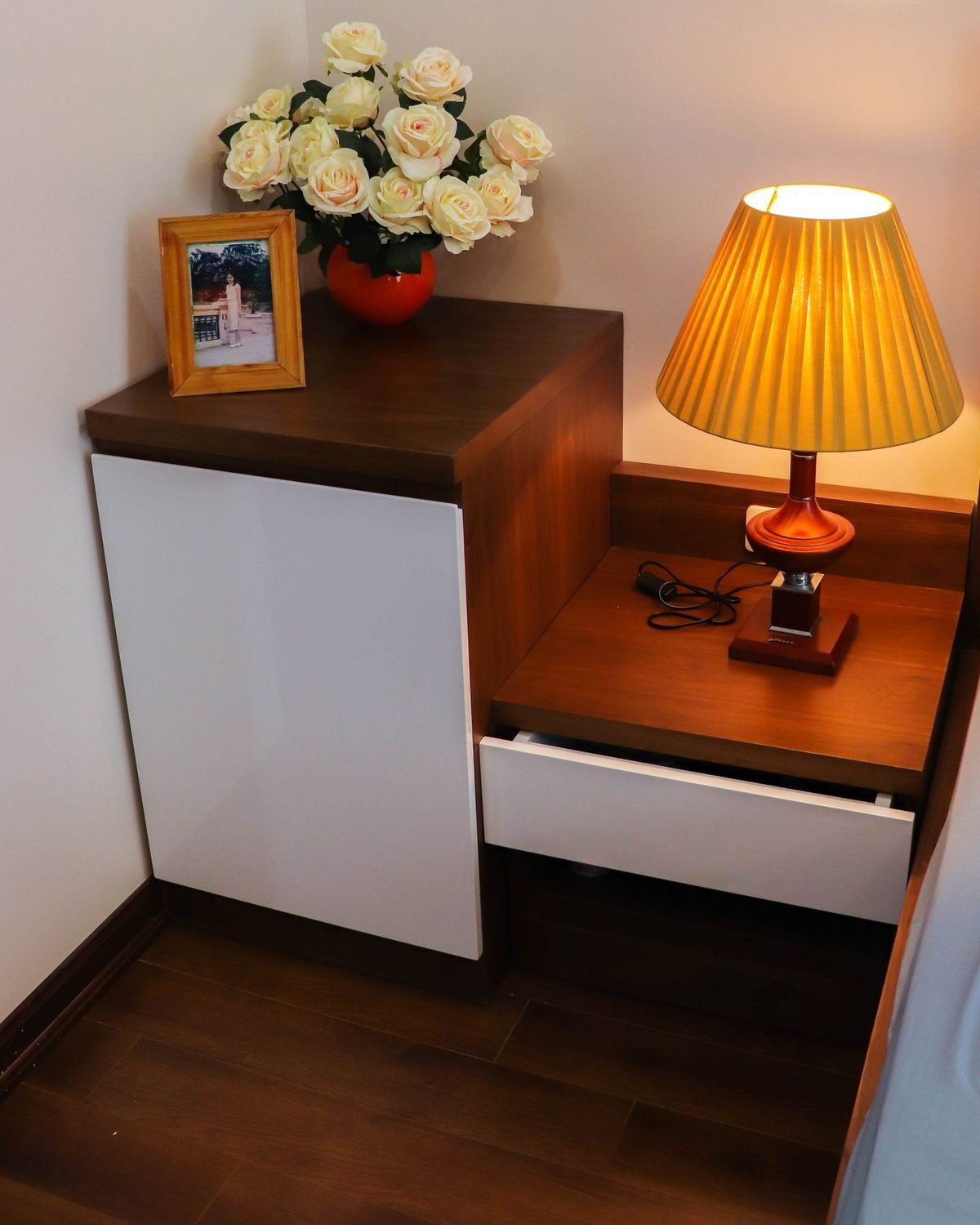
The easiest way to keep a nightstand clear is to decide how many things can live on top. Three works for most people: a light, one tray and one thing that makes you happy, such as a small plant, a photo or a candle.
Everything else goes in the drawer, on the lower shelf or back where it belongs. Your phone and water glass are allowed to visit at night, but they do not count as decor and should not collect friends.
This rule sounds strict, but it is freeing. You stop asking “where should this go?” because the answer is almost always “not on top.”
Tip: If you share the bed, give each person their own three-item rule. One person’s tidy side can quietly encourage the other.
What counts as “the one thing you love” can change with the seasons. A small vase of flowers in spring, a candle in winter or a framed photo all year round. Rotating that single item keeps the nightstand feeling fresh without adding more. If you are tempted to add a second decor piece, swap instead of stacking.
2. Corral Small Things in One Tray

A small tray is the hardest-working piece on a nightstand. It gives lip balm, hand cream, a hair tie, earrings and a watch one defined spot. When the tray is full, you know it is time to clear it.
Choose a tray that takes up no more than a third of the nightstand top. A small decorative tray in wood, ceramic or metal looks finished and is easy to wipe. A shallow dish works too.
Trays also make cleaning easy. Lift one tray, wipe the surface and put it back. No need to move ten small items one by one.
Tip: Add a tiny ring dish inside the tray for jewelry. Rings and earrings stop vanishing between the bed and the wall.
If you share a bed with someone who keeps their side tidy and you do not, the tray can be a gentle middle ground. It does not ask you to put everything away perfectly. It only asks you to drop things in one spot instead of across the whole nightstand. For many people, that small shift is enough.
3. Divide the Drawer

A drawer without dividers turns into a junk drawer within a week. A few small drawer organizer trays turn it into a set of labeled spots: one for sleep items, one for chargers, one for notes and pens, one for small medicine or hand cream.
Measure the drawer before you buy. Nightstand drawers are often shallow, around 3 inches tall inside, so look for low trays. Mix sizes so they fill the drawer without gaps.
Keep the most-used items at the front of the drawer. Things you reach for in the dark, like earplugs or a sleep mask, should be in the same spot every night.
Tip: No budget for organizers? Small boxes from tea, phones or jewelry make great free drawer dividers.
Once a month, empty the drawer onto the bed and sort it quickly. Throw away dead pens, old receipts and empty wrappers, and put the rest back into its divider. This short check keeps the drawer from slowly filling with things that have nothing to do with sleep.
If you keep any medicine in the nightstand drawer, keep it in its original labeled bottle and well away from the reach of kids. A small lidded box inside the drawer can add an extra layer.
4. Build a Simple Charging Station

Cords are the top source of nightstand clutter. A simple charging setup keeps them neat and keeps your phone where it should be at night.
Start by deciding which devices actually charge by the bed. Often it is just your phone and maybe a watch. Move everything else to a desk or a shared charging spot elsewhere.
Then choose one of these options:
- A short cable and a clip. Use a cable that is just long enough, plus an adhesive cable clip on the back edge of the nightstand so the end never falls behind it.
- A small charging stand. A wireless charging stand keeps the phone upright and off the main surface.
- A power strip on the floor or back leg. Run cords down the back leg with clips so they do not trail across the top.
For more ways to tame cords around the house, see our cable organization ideas.
Many sleep experts suggest keeping screens out of reach before bed. The Sleep Foundation’s guide to technology in the bedroom explains how phones and screens can affect sleep, which is one more reason to give the phone a set spot rather than letting it live on your pillow.
Tip: If you want less screen time at night, charge your phone across the room and use a small alarm clock on the nightstand instead.
If you share a bedroom, decide whose devices charge where. Two phones, two watches and a tablet on one small nightstand is a recipe for a tangle. Give each side its own short cable, or use a dual charging pad that sits flat. Label the cable ends with a small piece of tape or a cable tag so nobody grabs the wrong one in the dark.
5. Swap the Table Lamp for a Wall Lamp
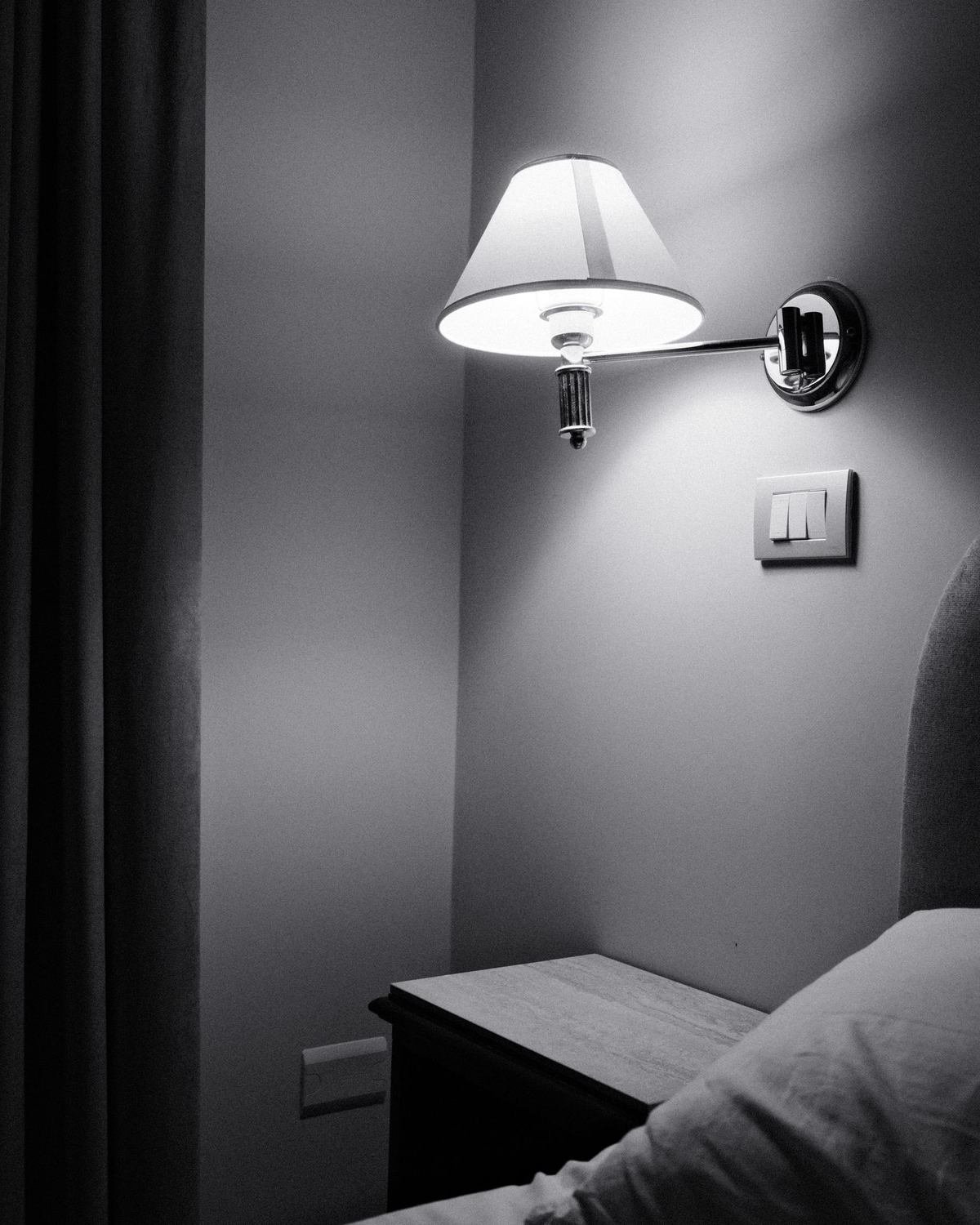
A table lamp can take up half of a small nightstand. Moving the light to the wall frees the whole top. Plug-in wall sconces are renter friendly because they hang on one or two small screws or adhesive mounts and use a cord instead of hardwiring.
A plug-in wall sconce with a swing arm is especially useful in a small room. You can point it at your book and push it back when you are done.
If you cannot put anything on the wall, try a clip-on lamp on the headboard or a slim lamp with a small base. Our guide to renter-friendly wall sconces covers mounting options, cord covers and bulbs.
Tip: Run the cord straight down the wall with a paintable cord cover. It looks built in and keeps the cord off the nightstand.
Light matters for sleep and reading. A warm white bulb, around 2700K, feels softer at night than a cool white one. A lamp with a dimmer or a smart bulb lets you go from reading light to a low glow without getting up. Whatever you choose, make sure you can switch it off from bed without stretching across the nightstand.
6. Keep a Short Book Stack

Books are one of the nicest things to keep by the bed, and one of the easiest to overdo. A tall stack takes over the top and slides onto the floor. Keep only the one or two books you are reading on the nightstand, and shelve the rest.
If you read a lot, use a small book caddy or a lower shelf for the “next up” pile. A book stack can also be a lamp riser if your lamp needs a little height. Just make sure it is stable.
Swap books out every Sunday. Finished books go back to the shelf or the library bag, and the next one comes in.
Tip: Keep a bookmark in each book you are reading. It stops half-read books from stacking open and face down.
E-readers are a great fit for small nightstands. One slim device can hold a whole stack of books, and it takes up less space than a single paperback. If you love paper books, consider keeping only the current one by the bed and storing the rest on a shelf in the living room.
7. Use Baskets on the Lower Shelf

If your nightstand has an open lower shelf, it can either look tidy or look like a pile. A basket or a lidded box decides which. Use one small woven basket for things like spare blankets, a laptop, magazines or a hot water bottle.
Measure the shelf opening before you buy. Baskets that are slightly smaller than the shelf slide in and out easily.
A basket also hides visual clutter. Even if the inside is a little messy, the front of the nightstand looks calm.
Tip: Avoid tall stacks on a lower shelf. Two or three items in a basket are much easier to keep tidy.
A lower shelf is also a good spot for a small box of bedtime extras, like a heating pad, an extra phone cable or a spare blanket in winter. Keep anything you use every night on top or in the drawer, and anything you use once a week in the basket. That simple split keeps the lower shelf from becoming a second junk drawer.
8. Hang a Bedside Caddy When There Is No Room

Some small bedrooms barely fit a bed against the wall, with no room for a nightstand at all. A bedside caddy solves that. It tucks between the mattress and the box spring or slips over the bed frame, giving you pockets for a phone, a remote, glasses and a book.
Caddies also work well in dorm rooms, bunk beds and lofted beds. Choose one with a cord hole if you want to charge your phone in it.
Keep the caddy light. Heavy items can pull it down or make it hard to make the bed.
Tip: Pair a caddy with a wall lamp or clip lamp and you have a full bedside setup with zero floor space.
If the bed is pushed into a corner, a caddy can go on the open side and a small shelf can go on the wall side. That way both people can reach their things without climbing over each other. Lofted and bunk beds can use a clip-on shelf as well, which grips the rail and holds a phone and a glass.
9. Try a Floating Shelf or Wall Niche

A floating shelf can replace a nightstand in a tight room. It holds a glass, a phone and a small lamp without blocking the floor, so the room feels bigger and is easier to clean.
Mount the shelf at mattress height or a few inches above. If you rent, look for adhesive floating shelves rated for light loads, or ask your landlord about small screw holes. Our guide to renter-friendly floating shelves covers which options hold up.
A shelf also forces the three-item rule. There is simply not enough space to pile things up.
Tip: Choose a shelf with a small lip or rail so a phone or glass does not slide off.
A wall niche is another option if your room has one. Many older apartments have a small recess or a deep windowsill near the bed. Add a small tray and a lamp and you have a nightstand with no furniture at all.
10. Do a Two-Minute Nightly Reset
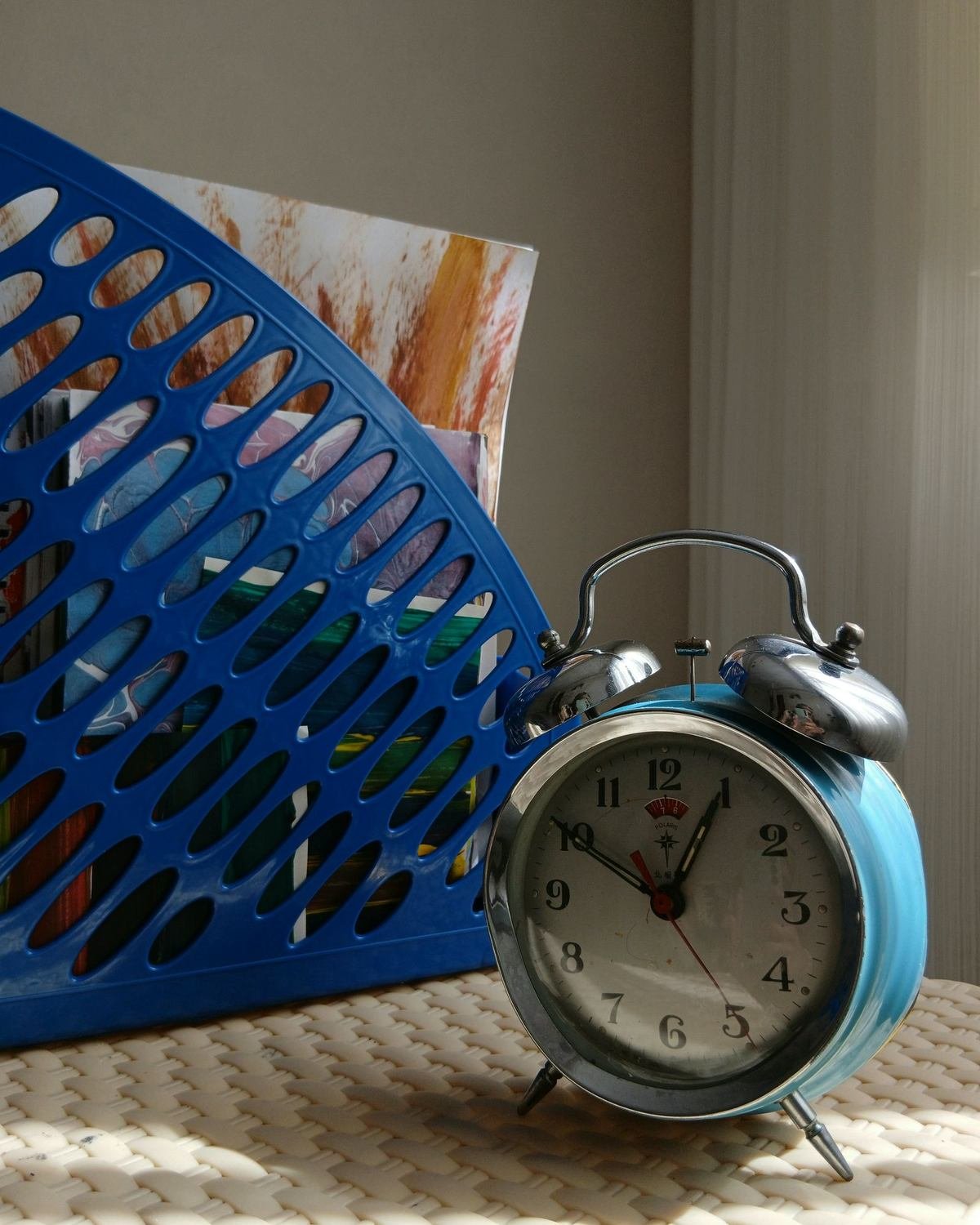
All the nightstand organization ideas above work best with a tiny habit. Before you turn off the light, spend two minutes resetting the nightstand:
- Take any mugs or dishes to the kitchen.
- Put small items back in the tray.
- Return stray things to the drawer or their real home.
- Plug in your phone in its charging spot.
- Straighten the book and the lamp.
That is it. The point is to wake up to a clear surface, not to spend time cleaning at midnight.
Tip: Link the reset to something you already do, like setting your alarm. The habit will stick much faster.
Once a week, give the nightstand a slightly longer reset. Wipe the surface, empty the tray, check the drawer and swap out books you have finished. Ten minutes on a Sunday evening keeps small problems from turning into a full afternoon of sorting later.
Small Nightstand Ideas When Space Is Tight

Sometimes the problem is not the clutter but the nightstand itself. If yours is too big for the room, or you have no space at all, try these options:
A slim nightstand. Look for bedside tables 12 to 15 inches wide. A narrow nightstand with one drawer can do more than a wide table with an open shelf.
A C-shaped side table. It slides over the edge of the bed and takes up almost no floor space.
A stool or small chair. A wooden stool is cheap, easy to move and holds a lamp and a glass.
A wall-mounted nightstand. A floating cabinet with one drawer gives you hidden storage and a clear floor below.
A stack of storage cubes. A two-cube unit can be both nightstand and storage.
Whatever you choose, keep the three-item rule. A smaller nightstand only works if it holds fewer things.
Two matching nightstands are not required. In a small bedroom, it often works better to have a full nightstand on one side and a small shelf, stool or caddy on the other, especially if one side of the bed is close to a wall or a door. The room will still look balanced if the lamps or the colors match.
Get the height right. A nightstand works best when its top sits level with, or an inch or two below, the top of your mattress. Too low and you reach down in the dark and knock things over. Too high and the lamp shines in your eyes. If your bedside table is too short, a sturdy tray or a couple of hardcover books under the lamp can help. If it is too tall, a lower stool or a floating shelf set at the right height is often the better fit for a small bedroom.
Budget Nightstand Organizers Worth Buying

You can get a tidy nightstand for very little money. These are the most useful buys:
- A small tray. The base of most nightstand organization ideas.
- Drawer dividers. Low trays in a few sizes.
- Cable clips. For the charging cord.
- A wireless charging stand. Optional, but nice.
- A plug-in wall sconce or clip lamp. To clear the top.
- A small basket. For the lower shelf.
- A bedside caddy. If you have no nightstand.
- A ring dish. For jewelry.
Shop your home first. A saucer can be a tray, a small box can be a divider and a mason jar can hold pens. Dollar stores sell small baskets and trays that work well too. Our Dollar Tree organization hacks for small spaces has more budget ideas.
Nightstand Organization Mistakes to Avoid

A few mistakes can undo good nightstand organization ideas.
- Using the nightstand as a dumping zone. Mail, receipts and dishes belong somewhere else.
- Choosing a lamp that is too big. A large base eats half the top.
- Leaving cords loose. Clip them or route them down the back leg.
- Stacking too many books. Keep the current one or two.
- Buying organizers before measuring. Drawer trays that do not fit just add clutter.
- Skipping the drawer. An undivided drawer becomes a junk drawer.
- Decorating with too many small things. One plant or photo is enough.
- Never resetting. Two minutes at night keeps the whole system working.
Most of these mistakes come from the same place: treating the nightstand as overflow storage instead of a small, specific tool for sleep. Once you see it that way, the decisions get easier. If an item does not help you fall asleep, wake up or read for a few minutes, it can almost always live somewhere else.
Nightstand Organization FAQ
What should you keep on your nightstand?
A light, your phone and charger, a water glass, the book you are reading and a small tray for things like lip balm and glasses. Anything else is usually better in the drawer or somewhere else.
How do I organize a nightstand without a drawer?
Use a tray on top for small items and a basket on the lower shelf for larger ones. A small lidded box can stand in for a drawer.
How do I hide charging cords on a nightstand?
Use a short cable, an adhesive cable clip on the back edge and route the rest down the back leg. A power strip on the floor keeps plugs out of sight.
What can I use instead of a nightstand in a small bedroom?
A floating shelf, a bedside caddy, a stool, a C-shaped table or a wall-mounted shelf with a lamp. All of them save floor space.
How big should a nightstand be for a small bedroom?
Usually 12 to 18 inches wide, about the height of the top of your mattress. Measure the space between the bed and the wall first and leave room to walk.
How do I keep my nightstand from getting cluttered?
Use a three-item rule on top, give small things one tray and do a two-minute reset each night before bed.
Should my phone be on my nightstand?
It is fine if it has a clear charging spot. If screens keep you up, charge the phone across the room and use a small alarm clock by the bed.
How do I organize two nightstands that do not match?
Tie them together with matching lamps, matching trays or the same color of basket. The pieces do not need to match as long as the tops follow the same simple rules.
What is the best way to store jewelry on a nightstand?
Use a small ring dish inside your tray for the pieces you wear every day, and keep the rest in a jewelry box or a drawer divider. Everyday pieces stay handy, and the rest stays safe and untangled.
Final Thoughts

The best nightstand organization ideas are simple and repeatable. Keep three things on top, give small items one tray, divide the drawer, give cords a home and reset the surface for two minutes each night.
Pick two ideas to try this week. A tray and a cable clip are the fastest wins. Add drawer dividers, a wall lamp or a floating shelf as you go, and your bedside will feel calmer every night.
A clear nightstand is a small change that makes a small bedroom feel more like a retreat. When it is done, look at the rest of the room with our small bedroom storage ideas for adults and how to organize a small closet with lots of clothes guides.
Save this guide for your next bedroom reset, and share it with anyone whose nightstand has turned into a second dresser.