Small Kitchen Organization Ideas on a Budget (25 Renter-Friendly Fixes)
Disclosure: This post contains affiliate links. As an Amazon Associate I earn from qualifying purchases. If you buy through these links, I may earn a small commission at no extra cost to you. Read our full disclaimer.
A small kitchen can be a lovely place to cook, right up until the counter disappears under the toaster, the dish rack and a pile of mail. When every cabinet is full, cooking means moving three things to reach one pan. You don’t need a remodel or a big budget to change that. Most small kitchens just need a few smart changes: better use of the walls, clear zones in the cabinets, and fewer things on the counter.
These small kitchen organization ideas on a budget are grouped by area, and nearly all of them work in a rental. Where something needs screws, we say so, and we suggest a no-drill alternative when there is one.
Quick answer: The best budget organization ideas for a small kitchen add storage on the walls and inside cabinets instead of on the counter: shelf risers to stack dishes, a rail with S-hooks for utensils, a pegboard or rack for mugs, drawer dividers, a rolling cart for overflow, and clear, labeled containers for pantry staples. Declutter first, keep only daily-use items on the counter, and store heavy or rarely used things down low or up high.
What Makes a Small Kitchen Feel Cramped (and What Actually Helps)
A small kitchen usually feels cramped for one of three reasons: too many things, things stored in the wrong place, or wasted space that nobody is using. Bins and organizers can only fix the last two. That’s why it’s worth spending twenty minutes clearing out first, using a simple room-by-room declutter checklist for the kitchen, before you buy anything.
A few principles to keep in mind as you go through the ideas below:
- Store things where you use them. Pans near the stove, mugs near the coffee maker, containers near where you pack lunches. Short trips make a small kitchen feel bigger.
- Use your prime space for daily items. The shelves between hip and shoulder height are the easiest to reach. Save them for what you use every day, and move the roasting pan or holiday platter up high.
- Think vertical. Most small kitchens have unused space on the walls, inside cabinet doors and above shelves. That’s often where the “extra” storage is hiding.
- Measure before you shop. Cabinet depth and drawer height vary a lot. A tape measure and a note on your phone will save you returns.
Cabinet and Shelf Organization Ideas
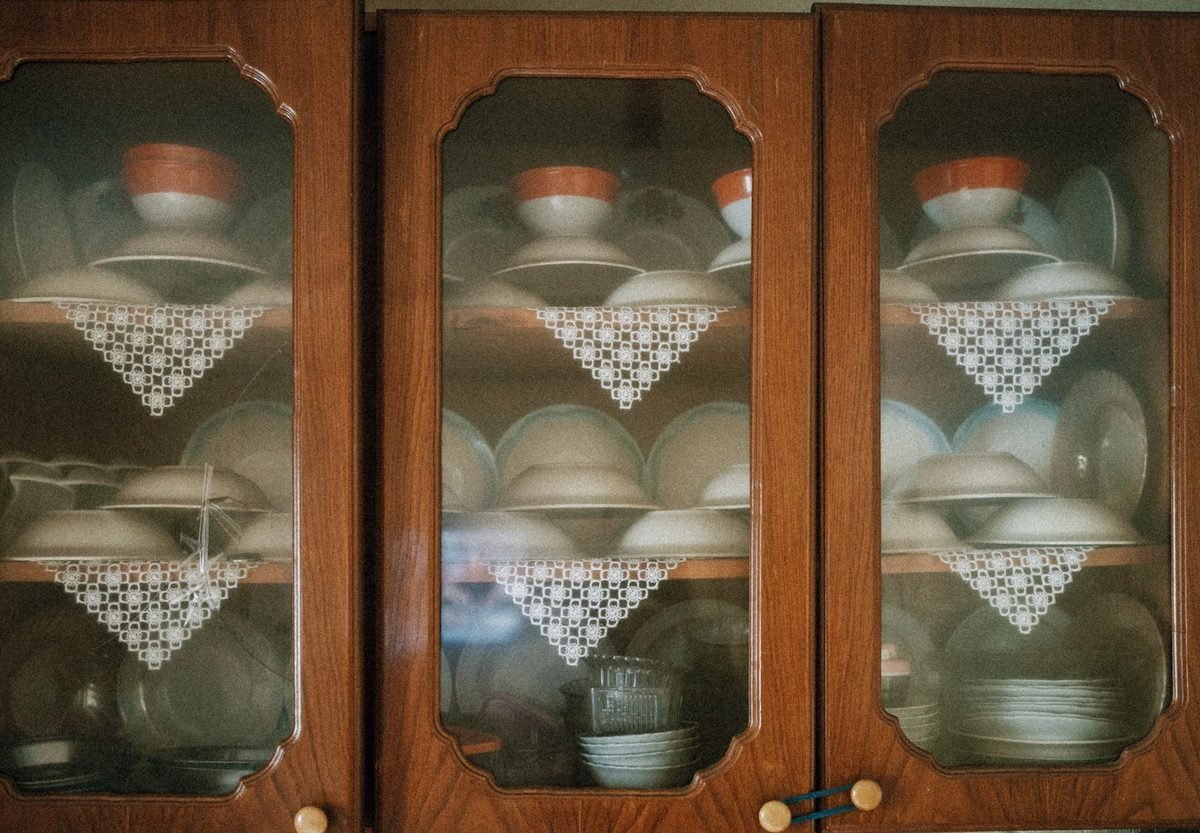
Cabinets and shelves do most of the heavy lifting in a small kitchen. The goal is to use their full height and keep everyday items within easy reach.
1. Keep Everyday Dishes on Open Shelves
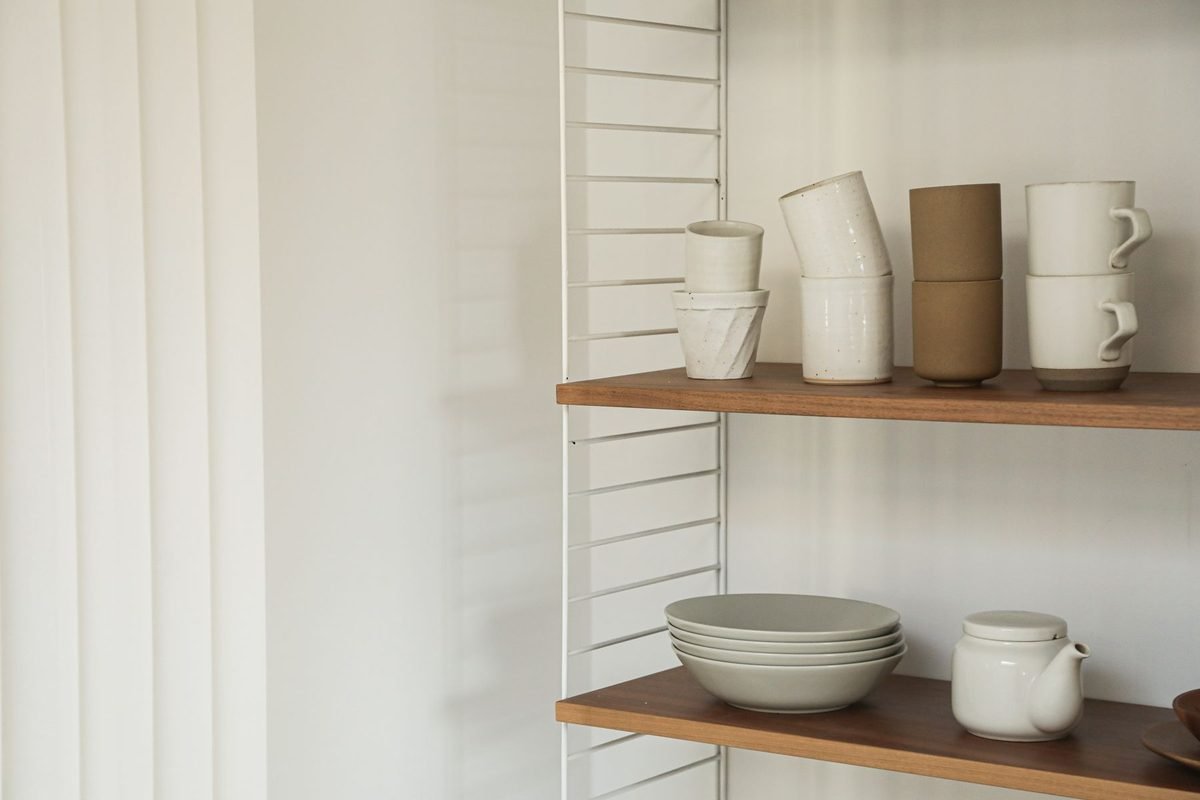
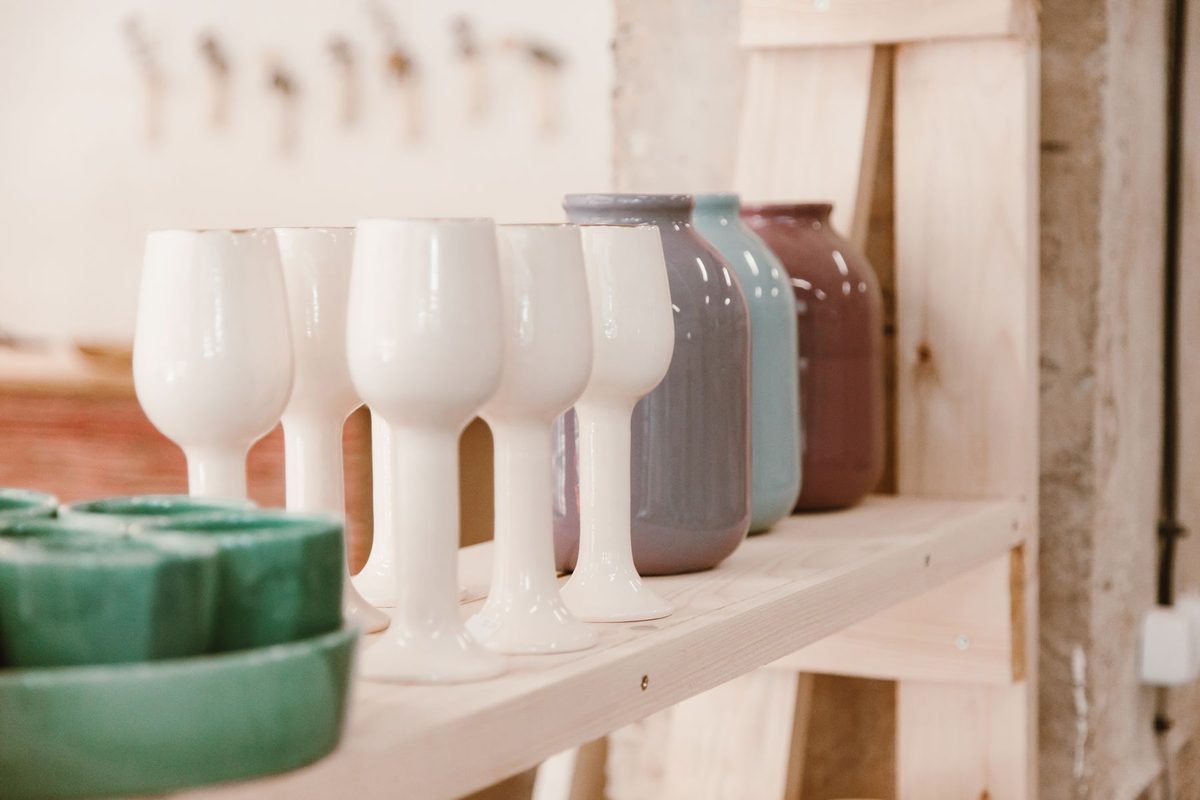
If you have open shelving, or room to add a couple of shelves, use it for the dishes you reach for every day. Plates, bowls and mugs you use daily get washed often, so they don’t sit long enough to gather dust. Keeping them out also frees up a cabinet for bulkier things like mixing bowls or small appliances.
Make it work: In a small kitchen, keep only what you use in a normal week on open shelves. Stack plates and bowls by size, and leave a little space between stacks so the shelf doesn’t look crowded.
2. Double Your Shelf Space With Risers
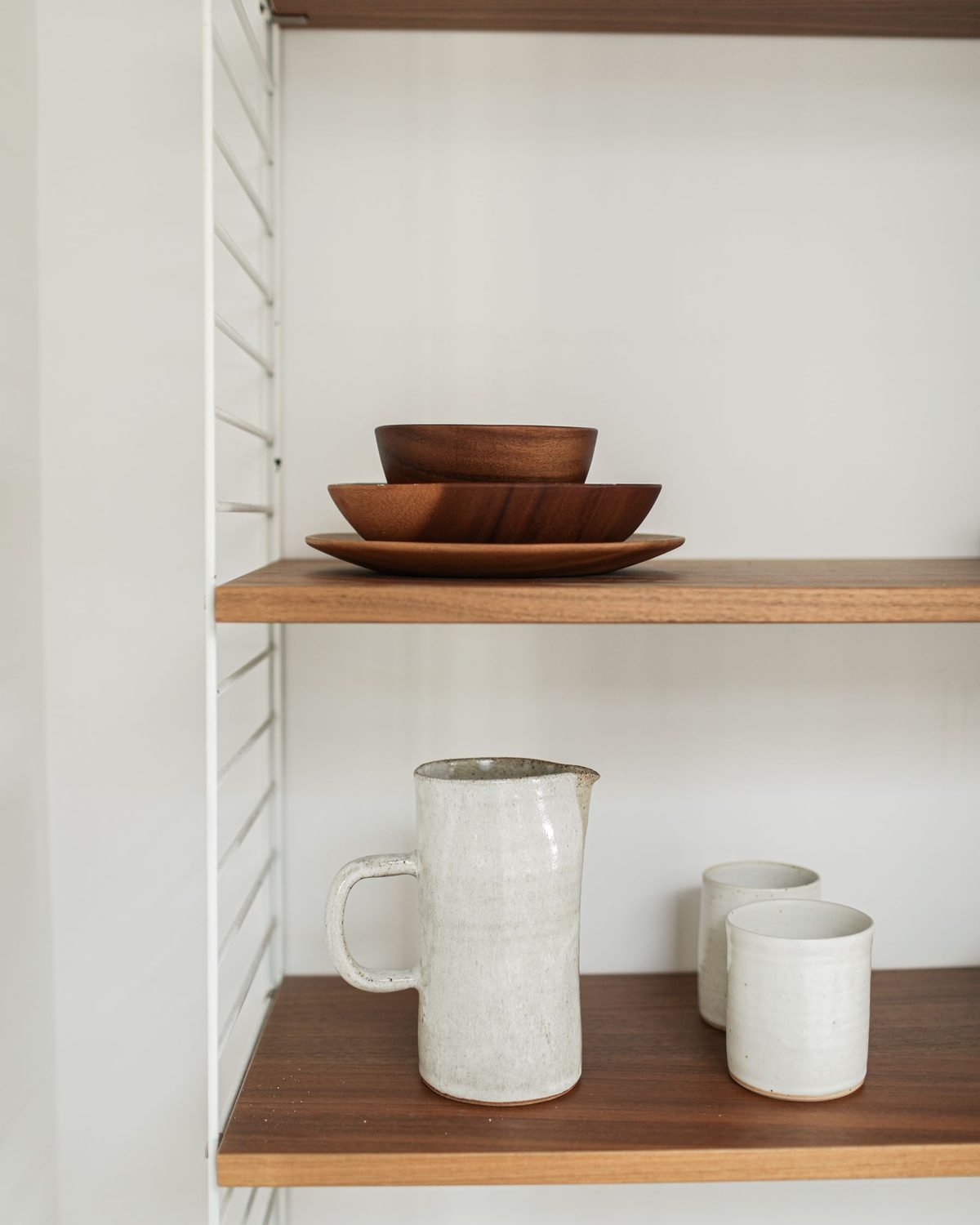
Kitchen shelves are usually spaced far apart, so there’s a lot of empty air above a stack of plates. A simple wire shelf riser creates a second level inside a cabinet: plates below, bowls or mugs on top. Look for risers that are adjustable or that come in different heights so they fit your cabinets. They don’t need any installation, which makes them ideal for renters.
Make it work: Small kitchen cabinets vary a lot, so measure the shelf height and depth before buying a riser. Put plates or bowls under it and lighter items like mugs or small jars on top.
3. Add a Floating Shelf Above the Counter
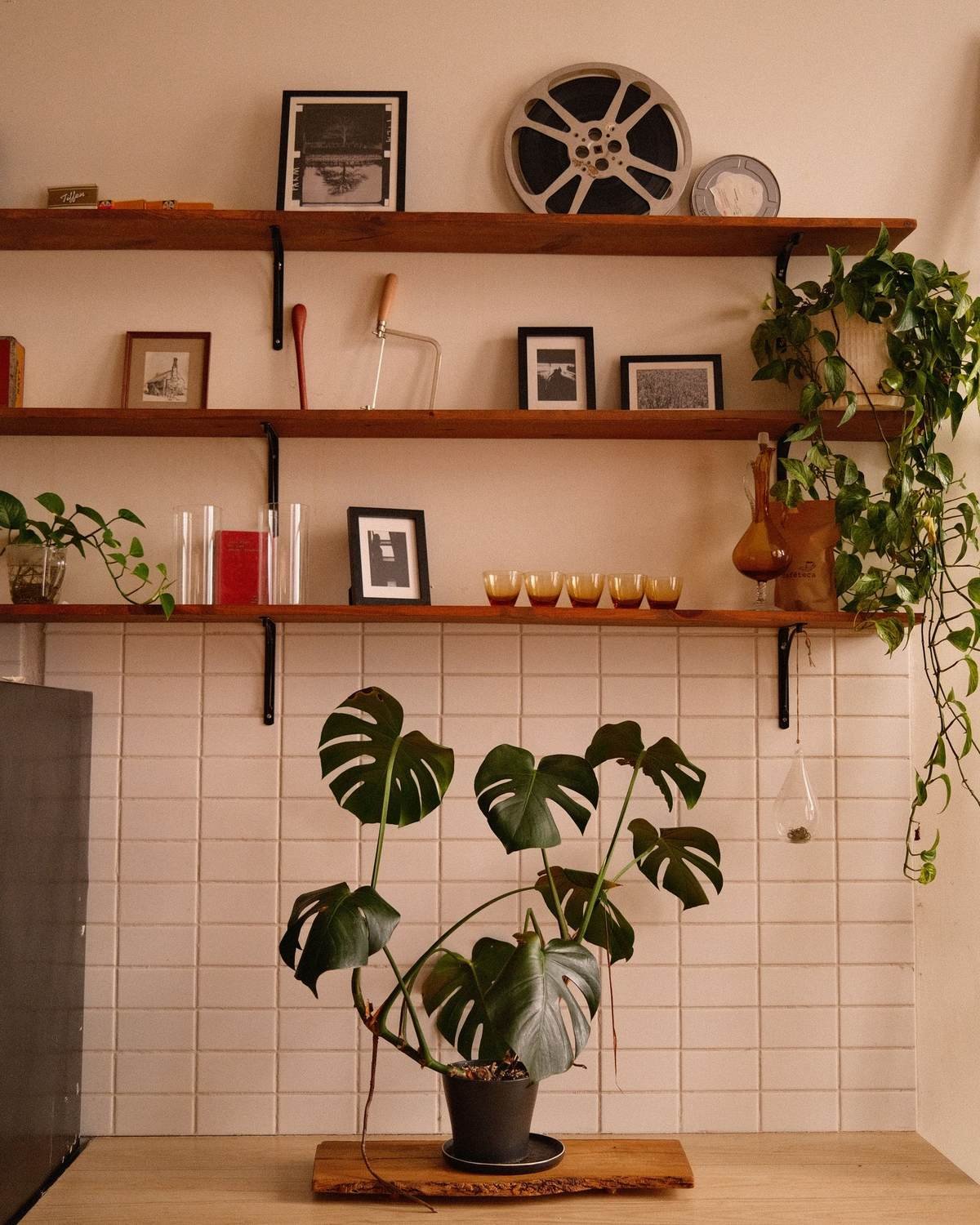
The wall between the counter and the upper cabinets (or the ceiling) is often bare. One or two floating shelves there can hold spices, oils, a few jars and a plant. Shelves usually need screws, so check your lease or ask your landlord first. If drilling isn’t allowed, a freestanding shelf unit that sits on the counter can give you a similar extra level.
Make it work: Use the right anchors for your wall and check your lease before drilling. Keep the shelf for light, everyday items like spices, oils or a few mugs.
4. Style One Shelf With Storage You Use
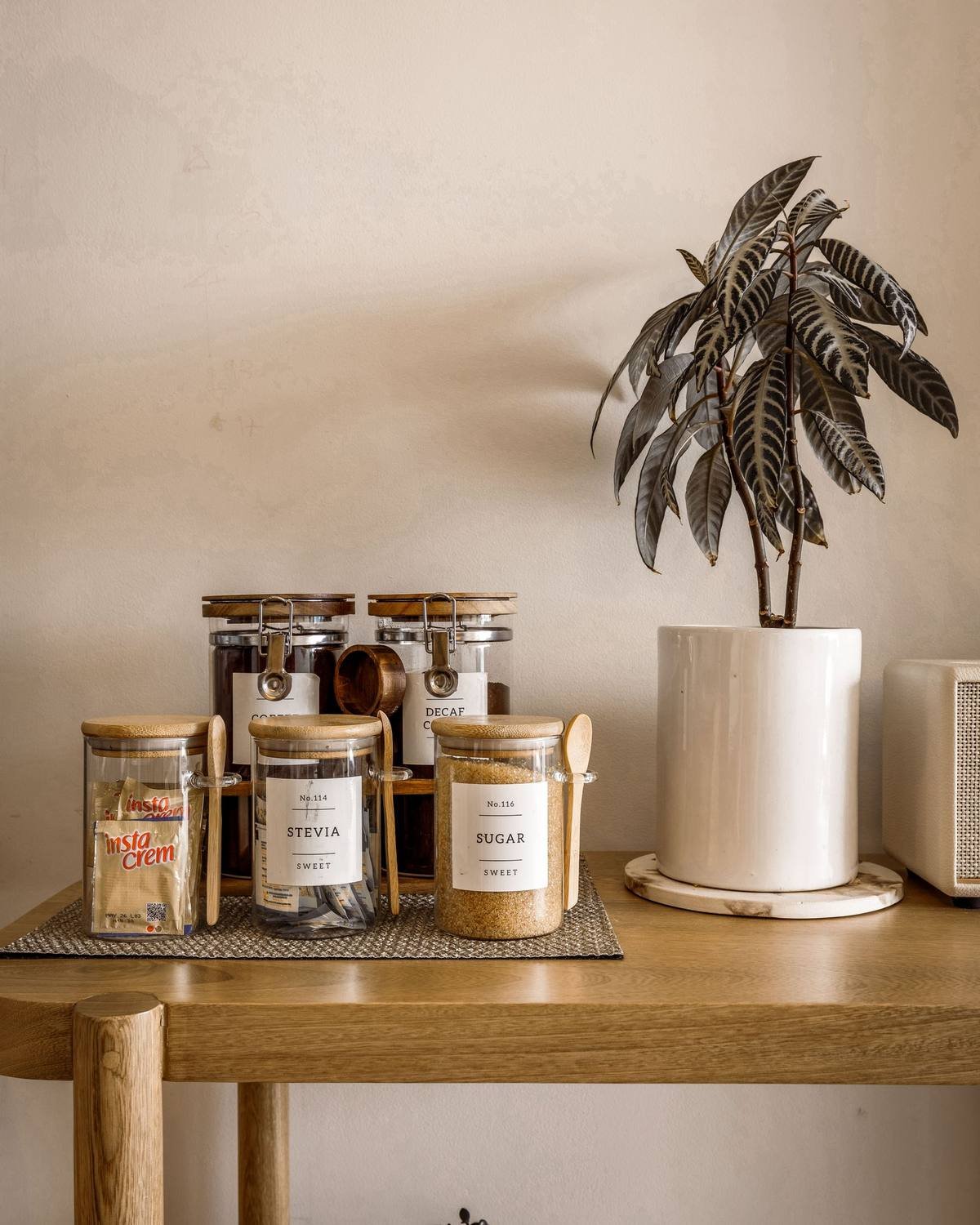
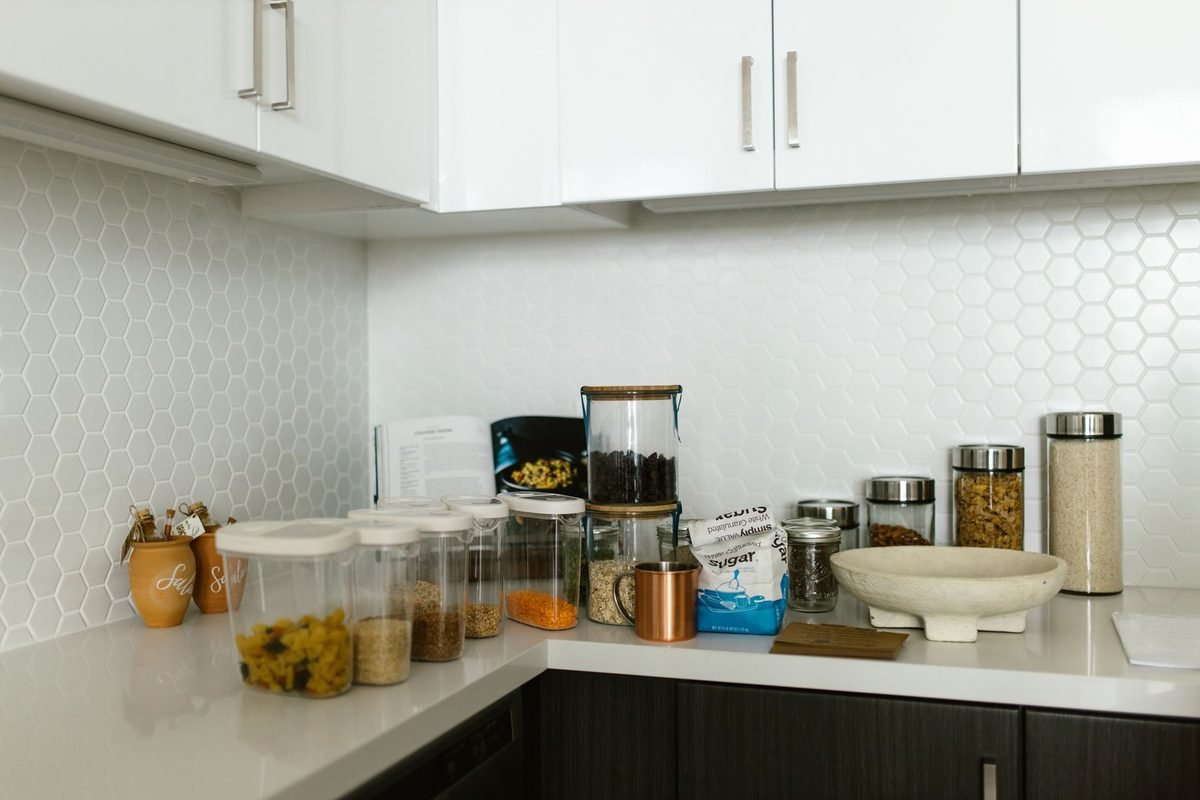
Open storage looks best when most of it is useful. Fill a shelf with things you actually use, like jars of pasta, rice or coffee, and add just one or two decor touches, such as a small plant. It looks intentional and keeps your counters clear at the same time.
Make it work: Limit styled shelves to one or two decorative pieces. Everything else should be something you reach for while cooking, so the shelf stays useful as well as pretty.
5. Label Pantry Jars So Everyone Knows Where Things Go
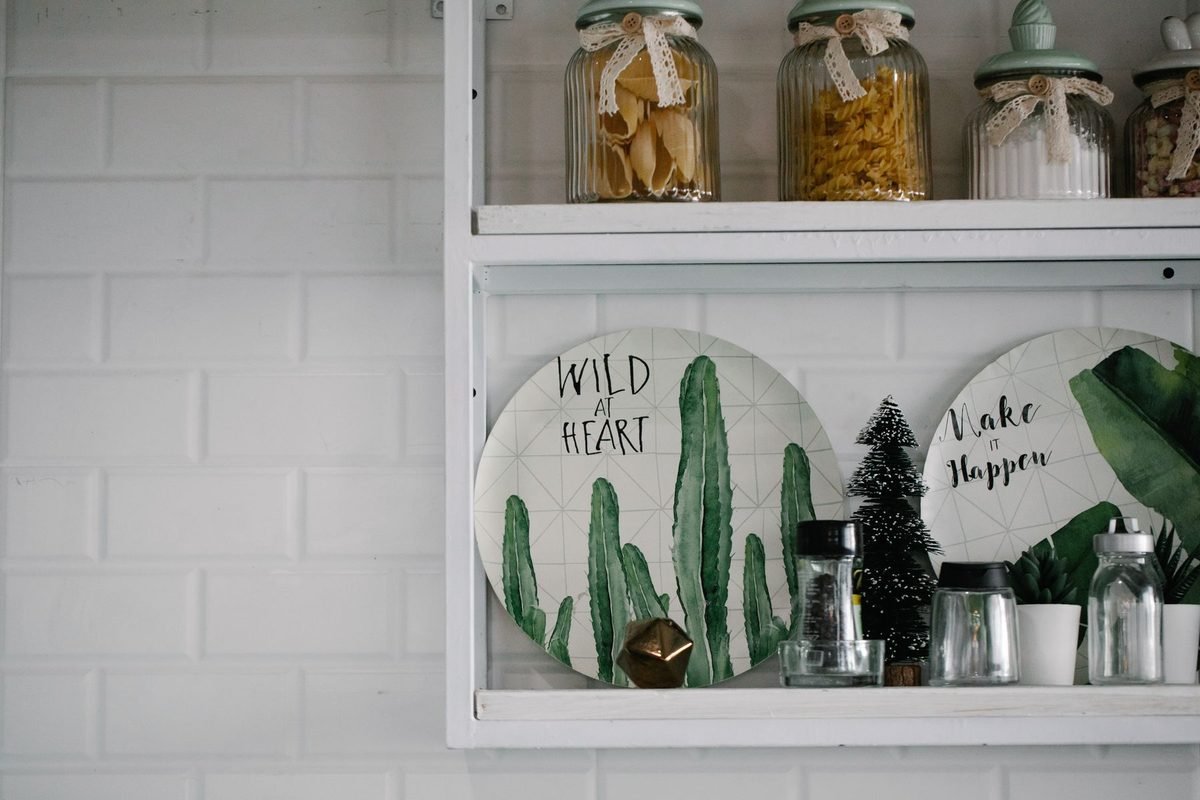
Labels aren’t just for looks. In a small kitchen shared by several people, they tell everyone where things go back, which is half the battle. Printed labels, a label maker or chalkboard stickers all work. Add the expiration date on a small piece of tape on the bottom or back when you decant something.
Make it work: Use simple, readable labels with the name of the food. Add the date you opened it on the back with a strip of tape if you tend to forget.
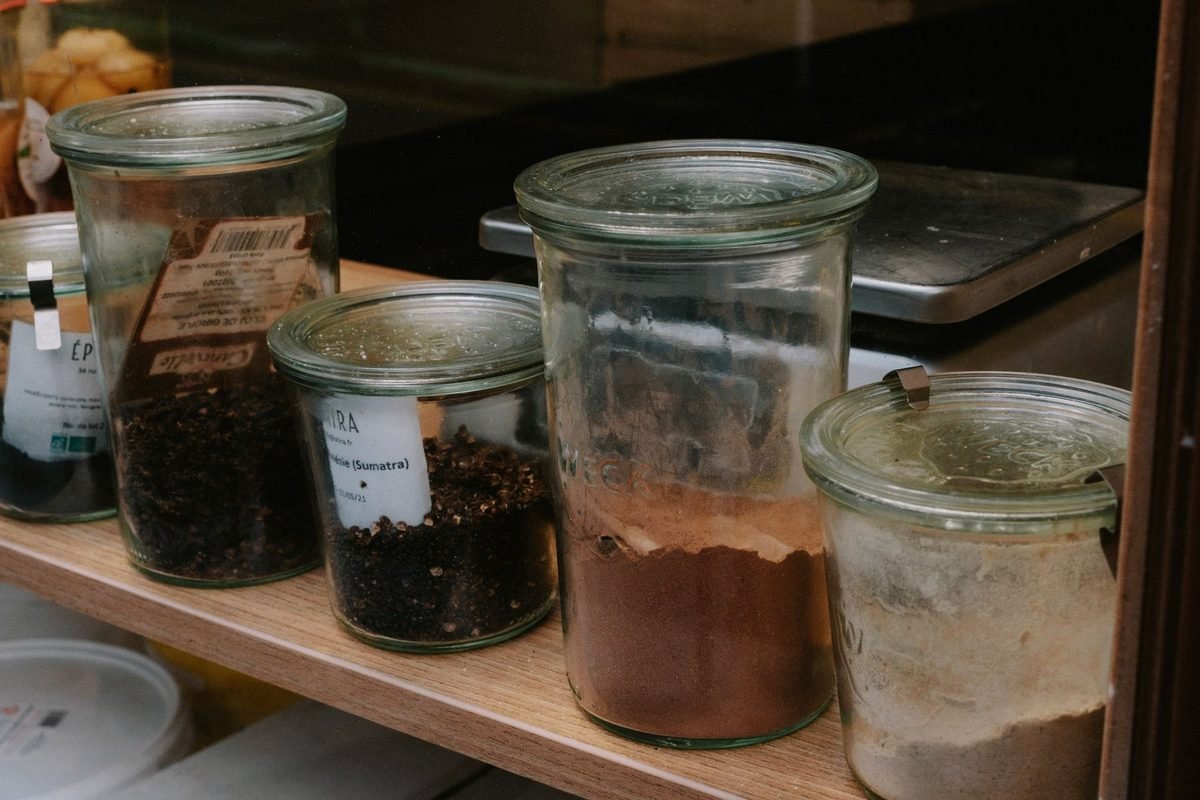
6. Store Bulk Staples in Wide-Mouth Jars
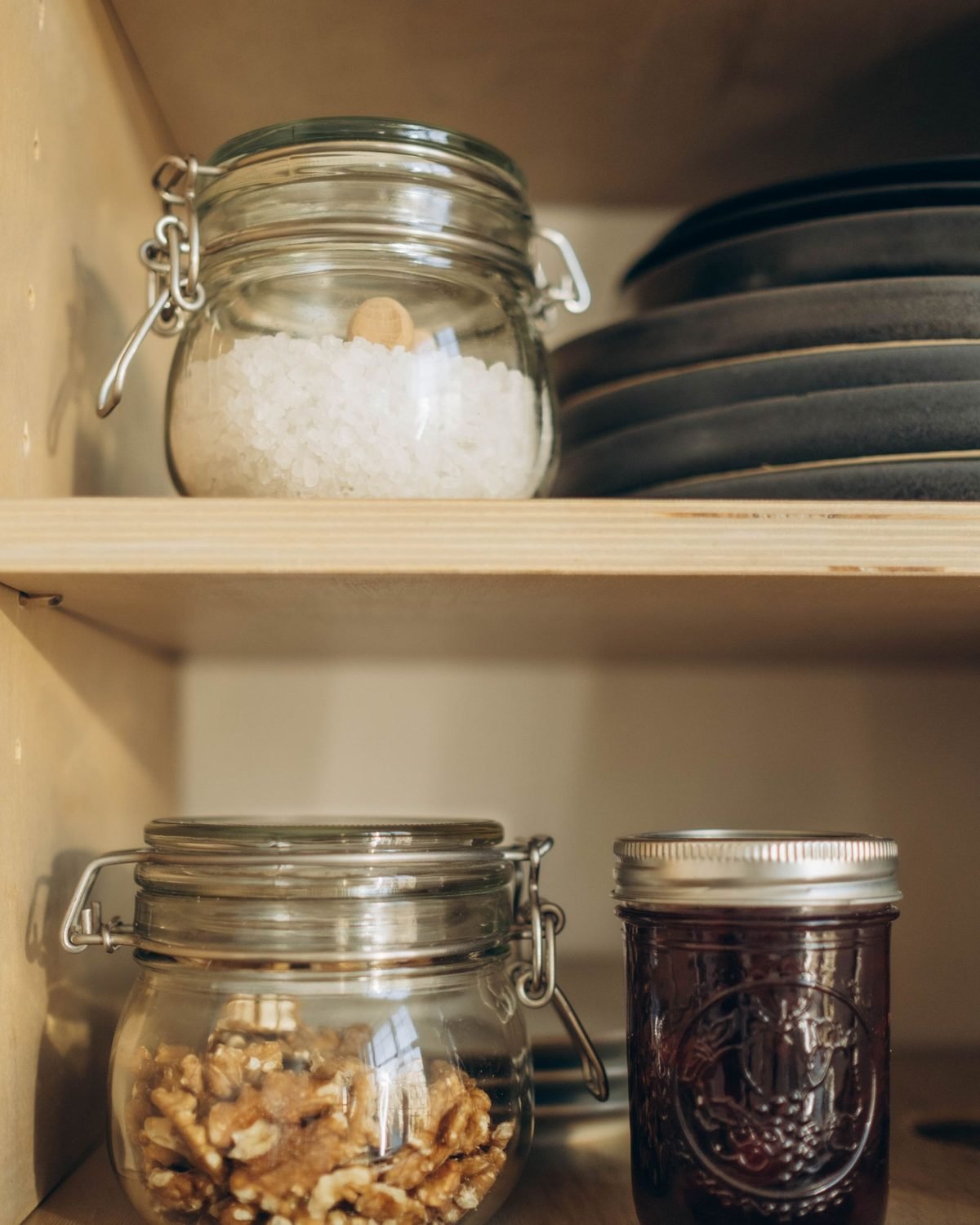
Flimsy bags of flour, sugar and oats take up more room than you’d think once they’ve been opened and folded over. Wide-mouth glass jars or square plastic canisters keep them sealed, stack neatly and make it easy to scoop. Square shapes use shelf space better than round ones, so choose them if you’re buying new.
Make it work: Only decant staples you use often and refill regularly. Wide mouths make scooping easy, and clear glass shows when you’re running low before you shop.
Wall Storage Ideas for Small Kitchens
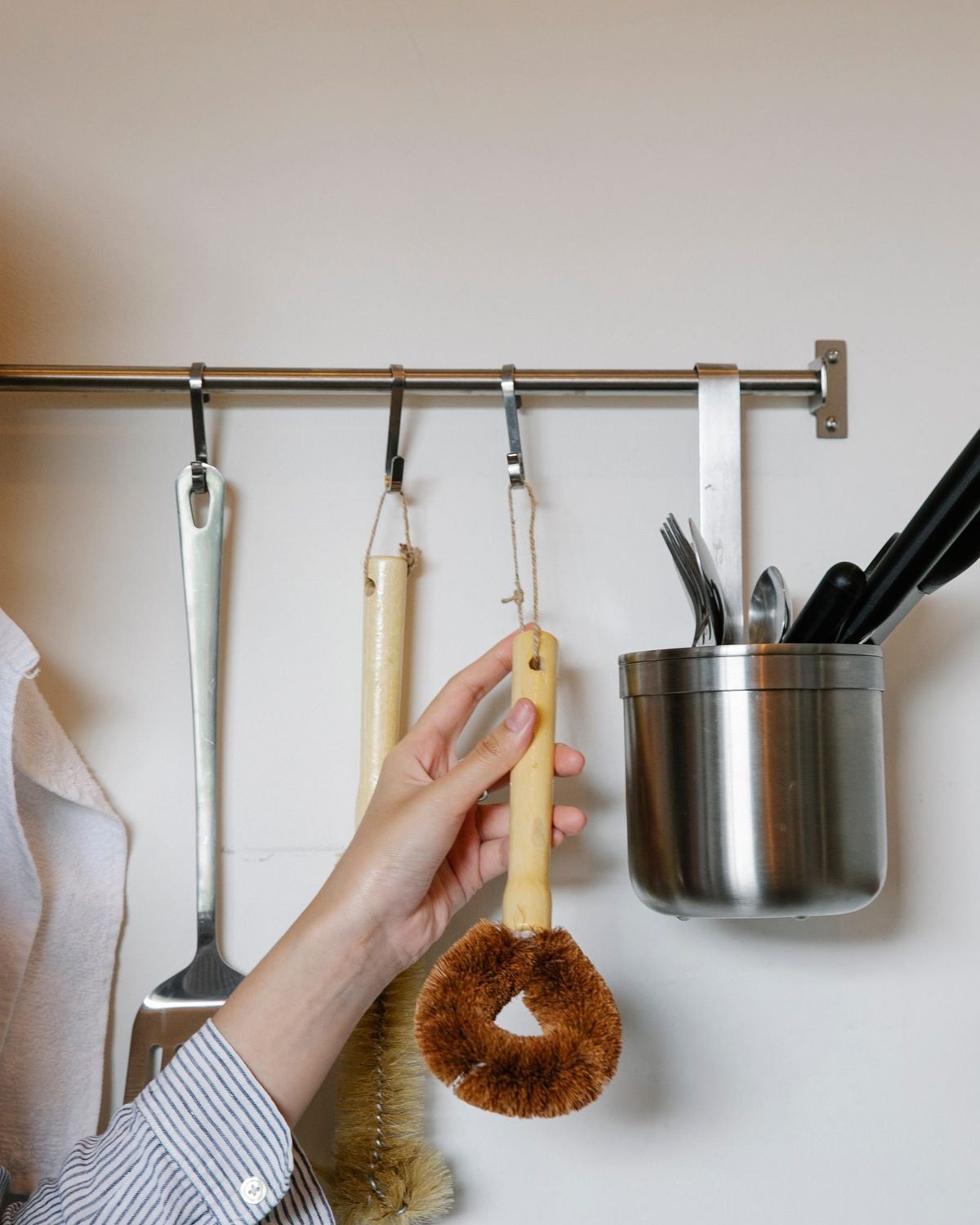
When the cabinets are full, the walls are your best friend. Rails, hooks and racks get things off the counter and into sight, which also makes them faster to grab while cooking.
7. Hang Mugs on a Wall Rack
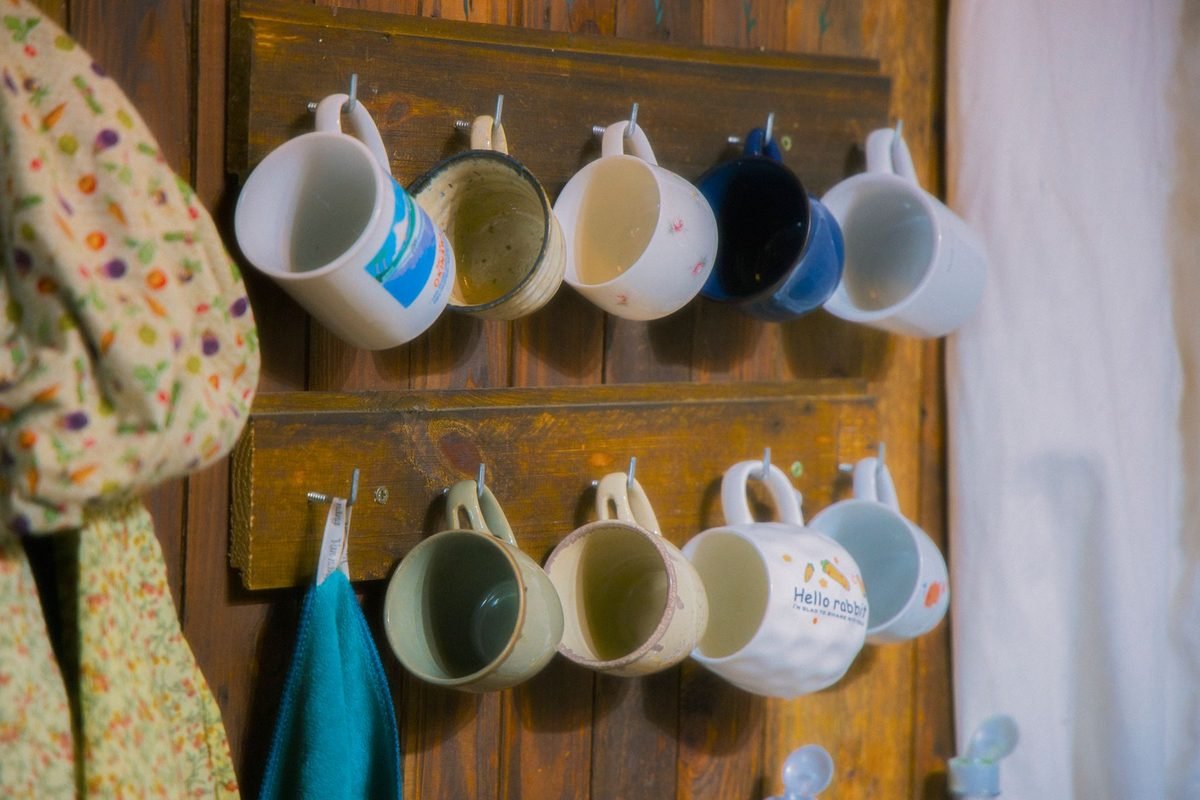
Mugs are awkward in a cabinet because you can’t stack them well. A wall-mounted peg rack or a row of hooks turns them into a display and frees up a whole shelf. If you can’t drill, an adhesive hook strip rated for the weight, or hooks screwed into the underside of an upper cabinet (with permission), can do the same job.
Make it work: In a small kitchen, hang mugs near the coffee maker or kettle so the whole routine happens in one spot. Leave a hook or two empty for guests’ or seasonal mugs.
8. Add a Rail With S-Hooks Along the Backsplash
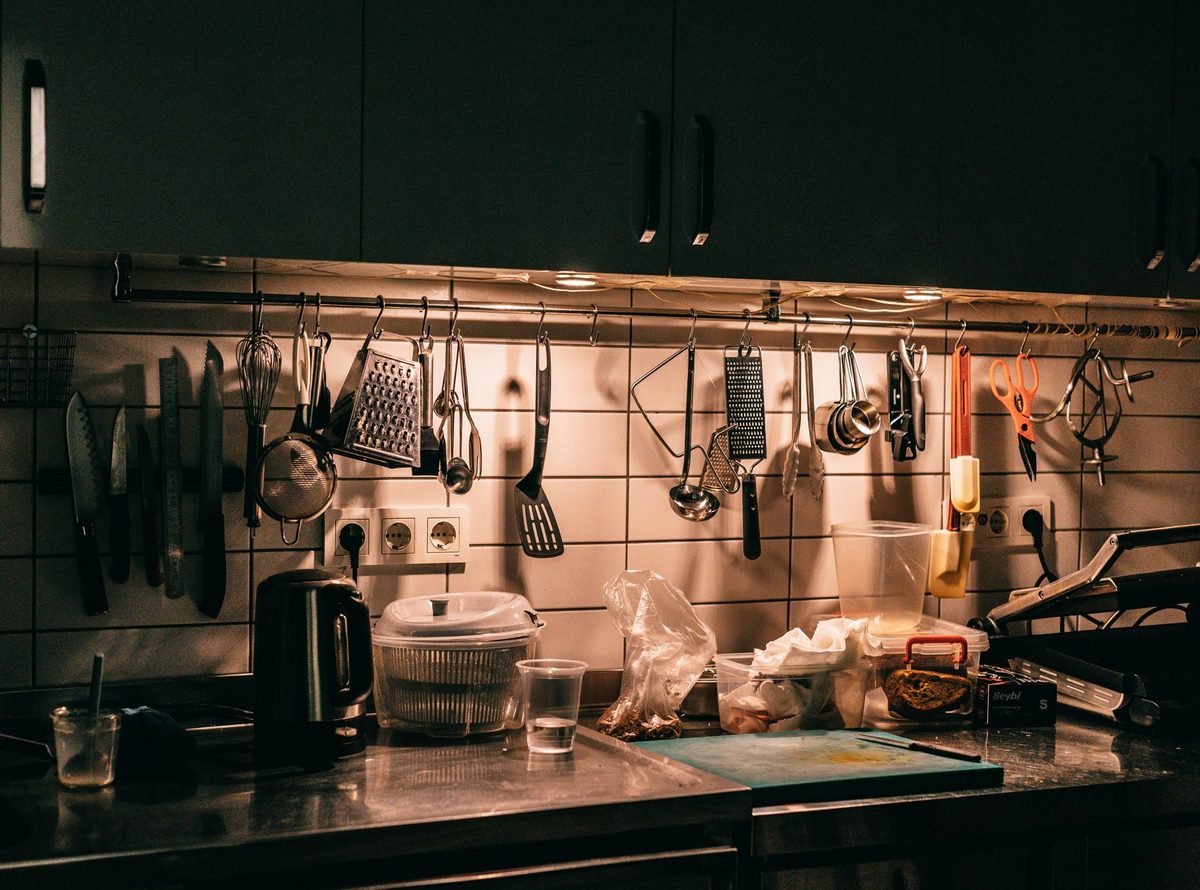
A metal rail with S-hooks is one of the most useful things you can add to a small kitchen. It holds ladles, spatulas, whisks, measuring cups and even small pans, all within reach of the stove. Rails usually need a few screws, but the holes are small and easy to patch when you move out.
Make it work: Hang the tools you grab while cooking, like spatulas, ladles and tongs. Anything that’s used less than once a week can go back in a drawer.
9. Get Knives Out of the Drawer
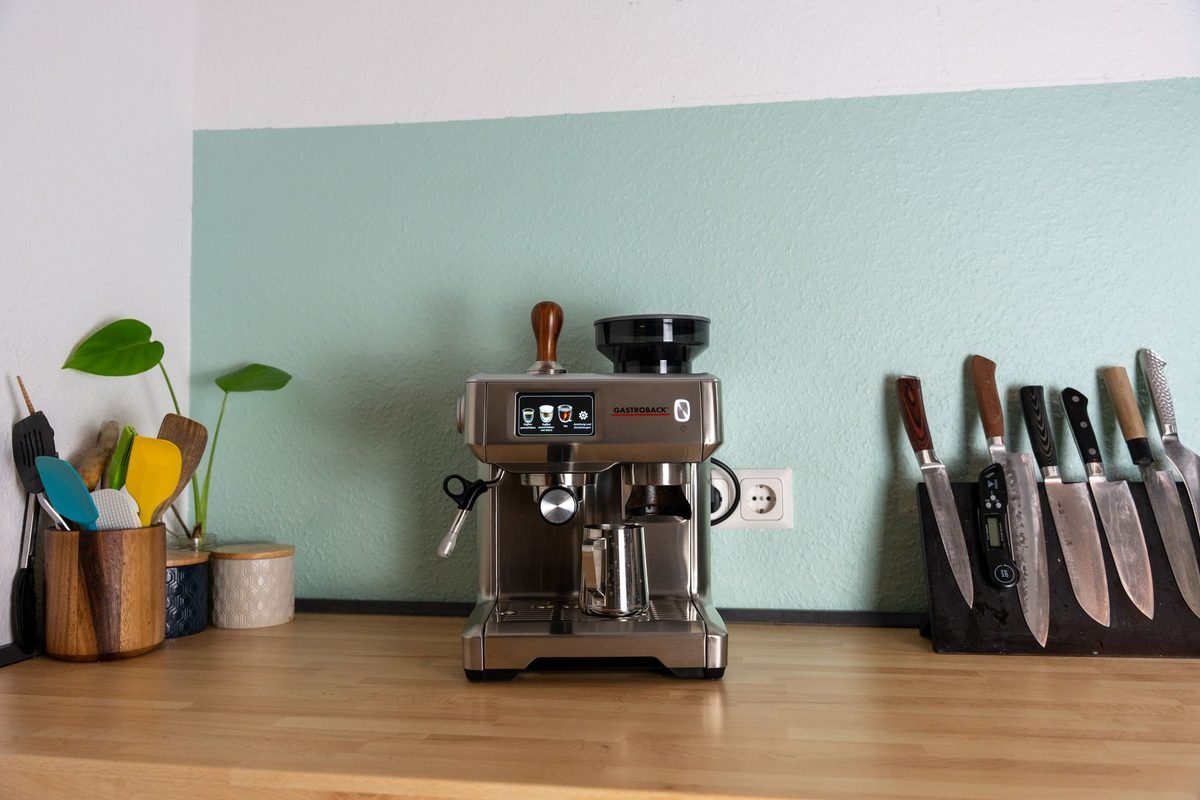
Loose knives in a drawer are hard to find and dull quickly. A slim knife block on the counter, an in-drawer knife organizer, or a magnetic strip on the wall keeps them safe and organized. A magnetic strip takes up no counter space at all, but it needs mounting. If you rent, a compact block that fits in a back corner of the counter is a good alternative.
Make it work: In a small kitchen, a magnetic strip frees counter space but needs screws, so a slim knife block or in-drawer knife holder is a good renter option.
10. Hang Pots and Pans
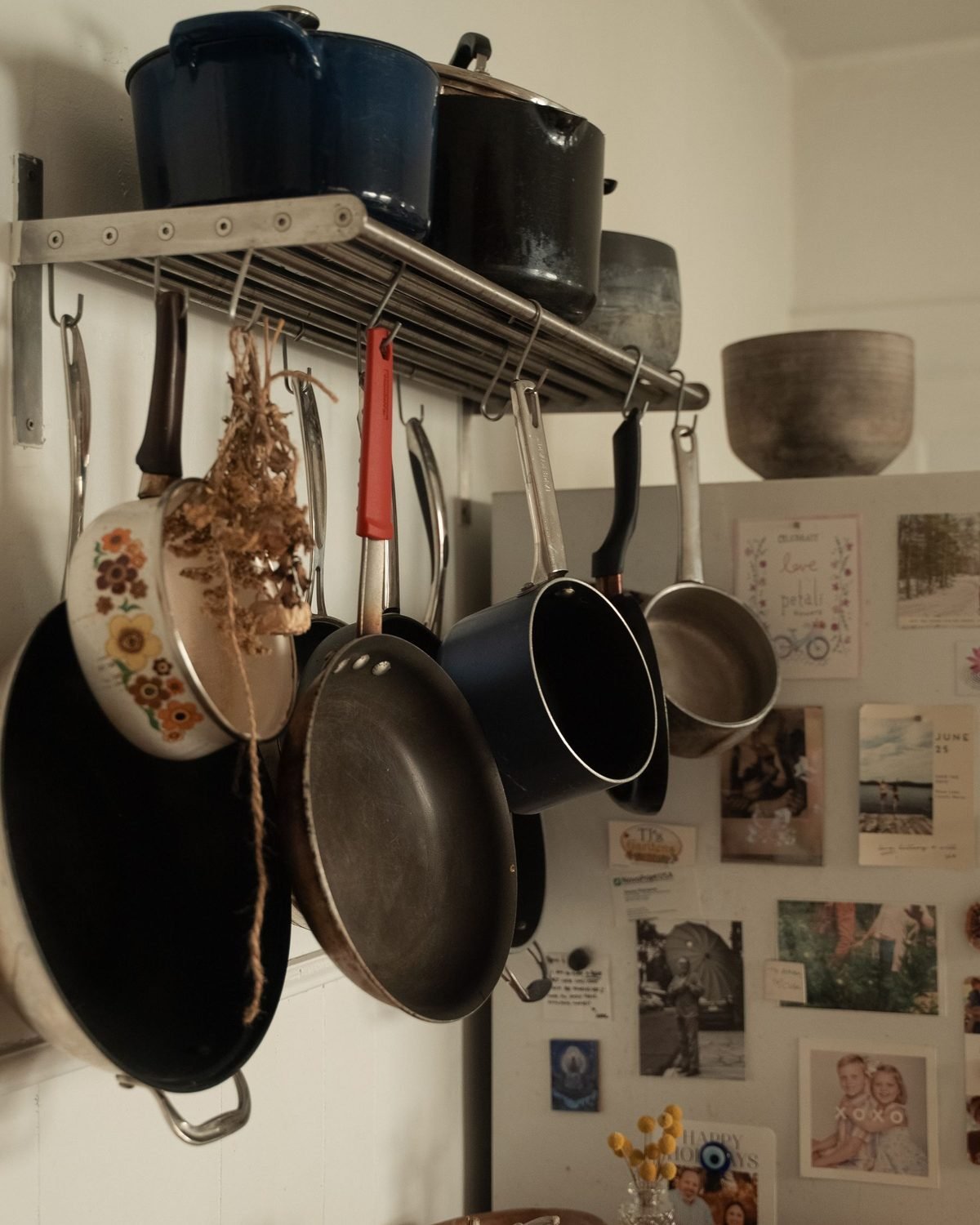
Pots and pans are some of the bulkiest things in any kitchen. Hanging the ones you use most from a wall rack, a ceiling rack or a rail frees up a full cabinet. If your walls are off-limits, a pan organizer rack that sits inside a cabinet lets you store pans on their sides like files, which is much easier than digging through a stack.
Make it work: Hang only pans you use often and keep them clean to avoid grease buildup. Heavy cast iron needs a rack rated for the weight.
11. Give Dish Towels Their Own Hook
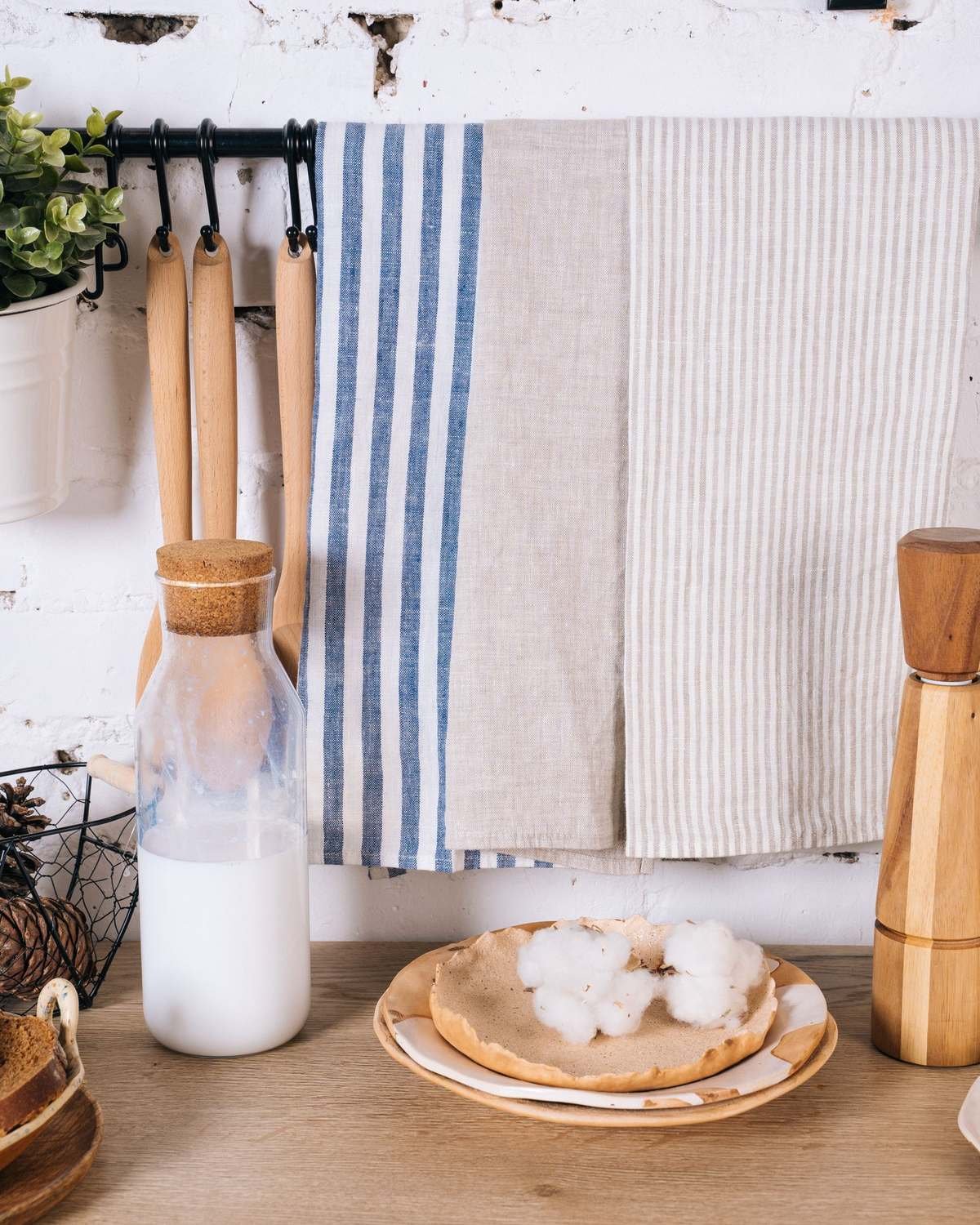
Dish towels end up draped over everything if they don’t have a home. One adhesive hook on the side of a cabinet, or an over-the-door towel bar on a cabinet door, gives them a spot to dry where they’re easy to grab. It’s a tiny change, but it keeps the counter and the oven handle clear.
Make it work: An adhesive hook on the side of a cabinet or the end of the counter works well. Replace towels often so the hook doesn’t turn into a laundry pile.
12. Pair a Shelf With a Hanging Rail Near the Stove
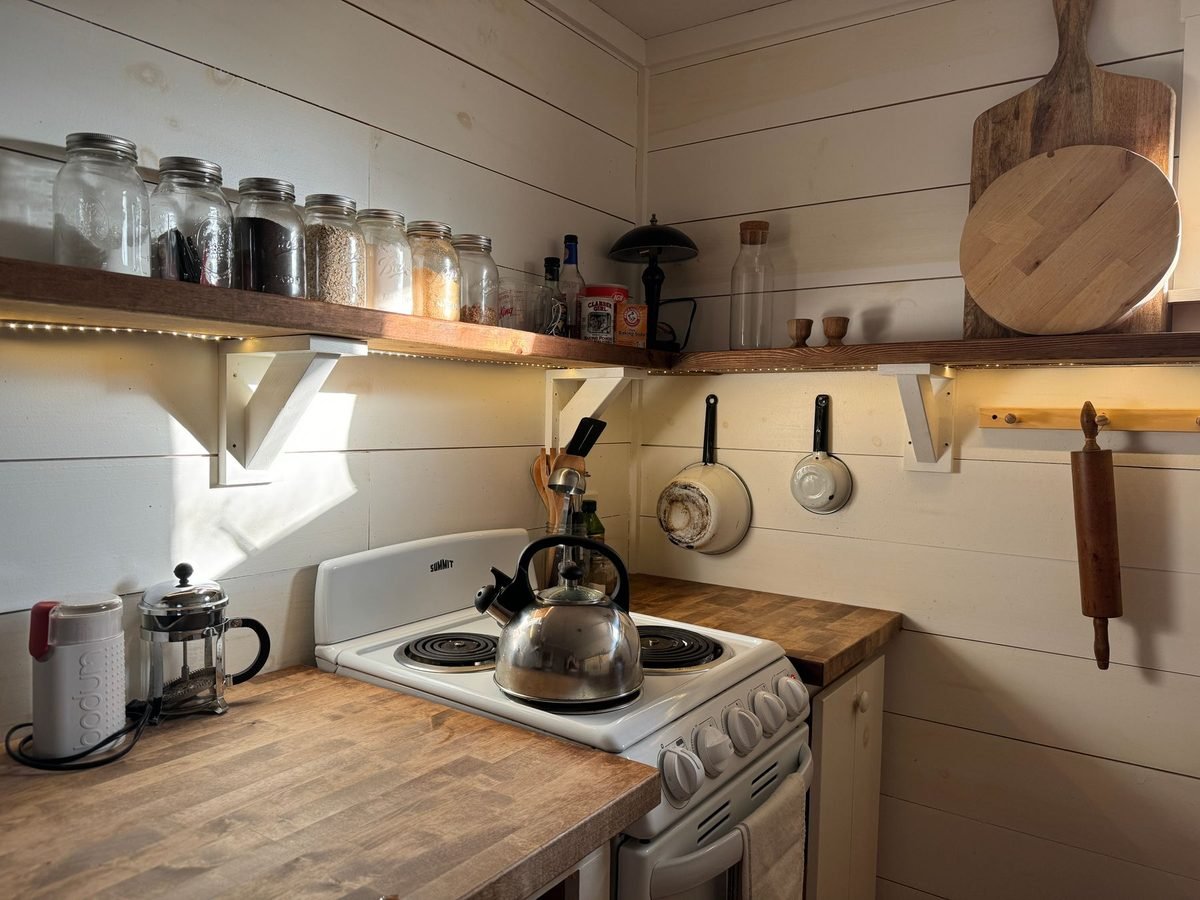
If you have room for just one wall upgrade near the stove, a shelf with a rail underneath gives you two kinds of storage in one spot: jars and oils on top, tools hanging below. You’ll find combination units sold as one piece, or you can mount a separate shelf and rail. Keep anything flammable, like paper towels, a safe distance from the burners.
Make it work: Keep heat-safe tools near the stove and move plastic or wooden items a little farther away. Wipe the shelf weekly because cooking grease settles there.
Drawer Organization Ideas
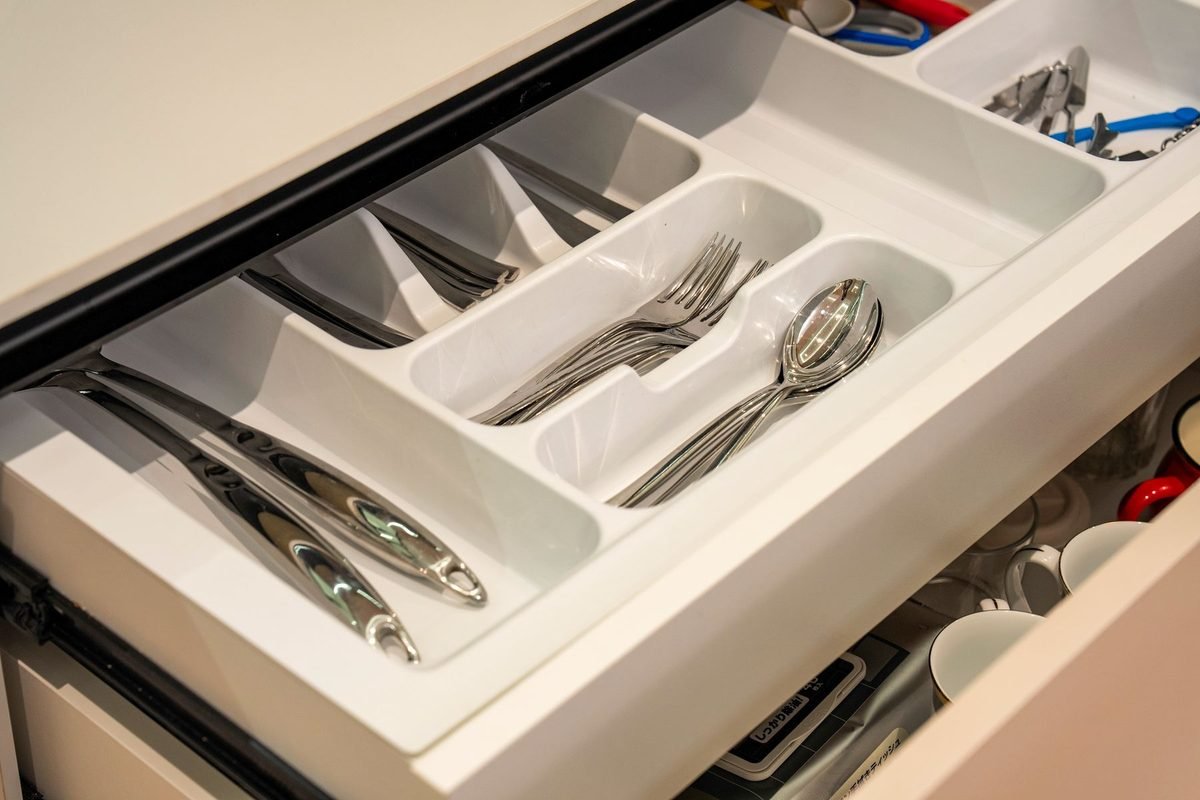
Drawers fill up fast in a small kitchen, and a jumbled drawer wastes more space than you’d think. Dividers keep each item in its own place.
13. Use an Expandable Drawer Divider
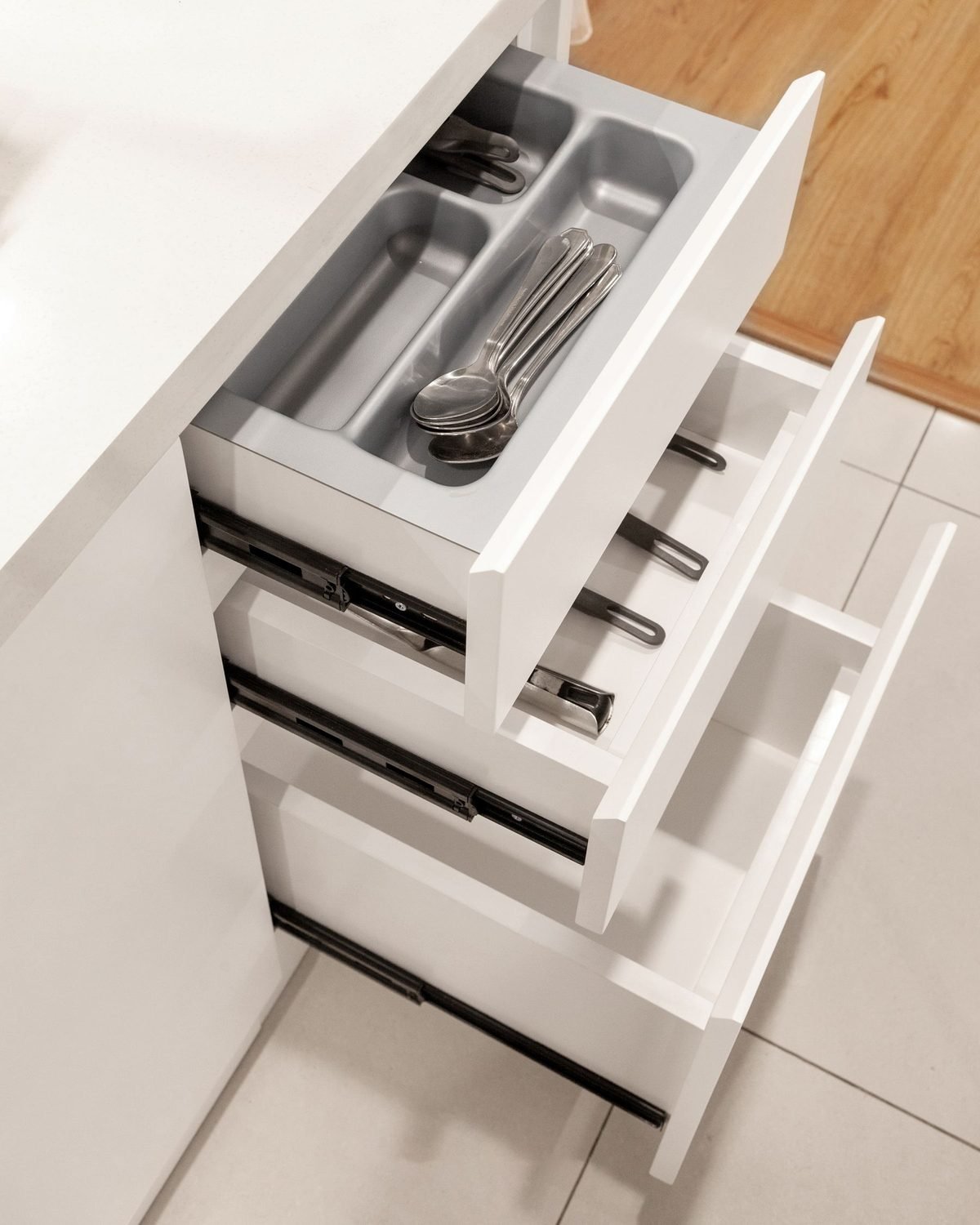
An expandable cutlery tray adjusts to the width of your drawer, so there’s no wasted gap at the sides. Use the extra sections for things like measuring spoons, a peeler and a pizza cutter. If you have a very narrow drawer, a few small separate trays can be arranged to fit better than one large organizer.
Make it work: Measure the drawer before buying and choose an expandable divider that fits its full width. Sort tools so the ones you use daily are at the front.
14. Store Tall Tools Upright in Deep Drawers
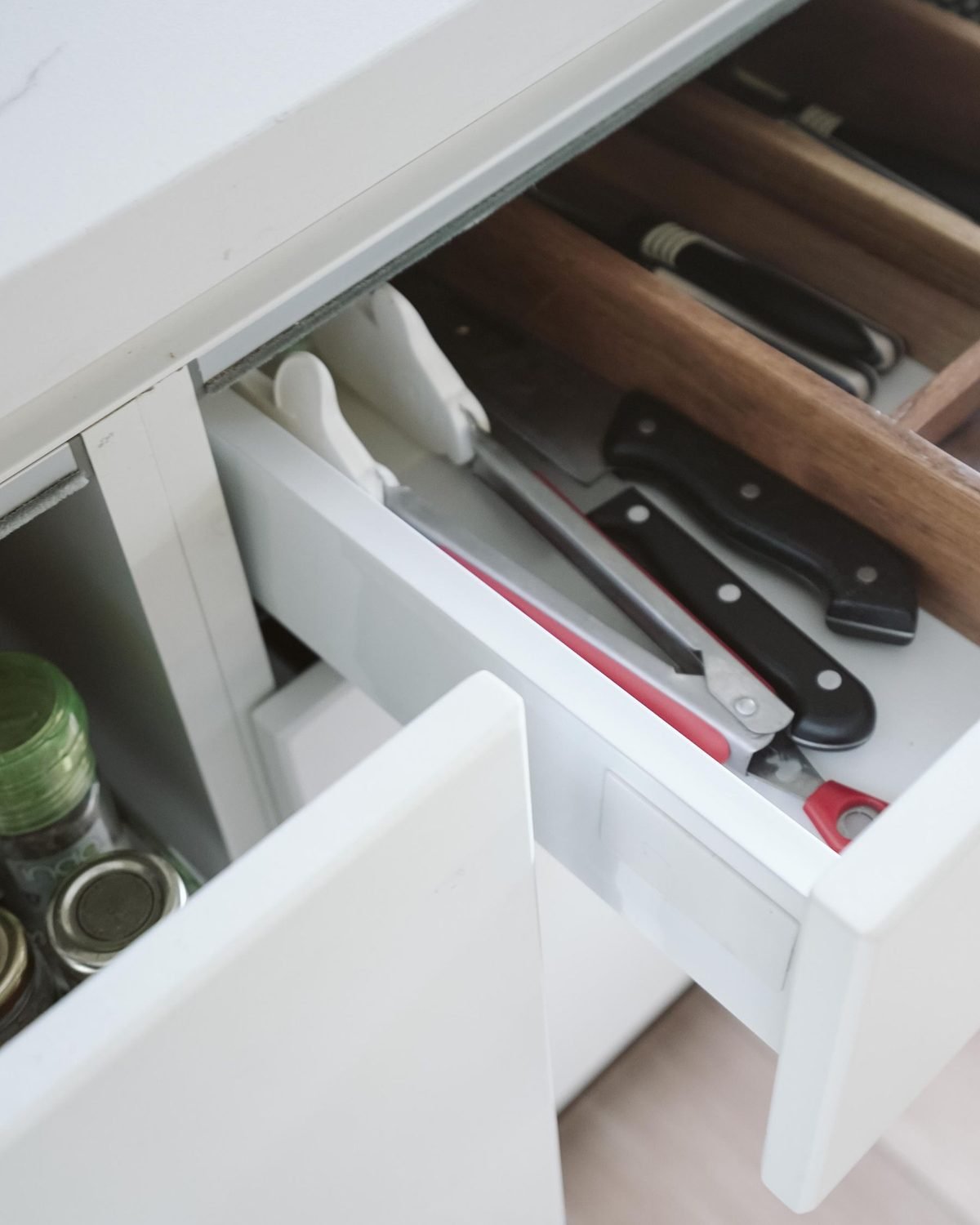
Deep drawers are often used as dumping grounds. Instead, use them for tall items stored upright, like rolling pins, cutting boards, baking sheets or food storage lids. A few file-style dividers or a tension rod across the drawer keeps things standing so you can see and grab them in one move.
Make it work: Lay the drawer out by height, with tall tools at the back and short ones at the front. Knives should have guards or a holder so you don’t cut yourself reaching in.
Counter Organization Ideas
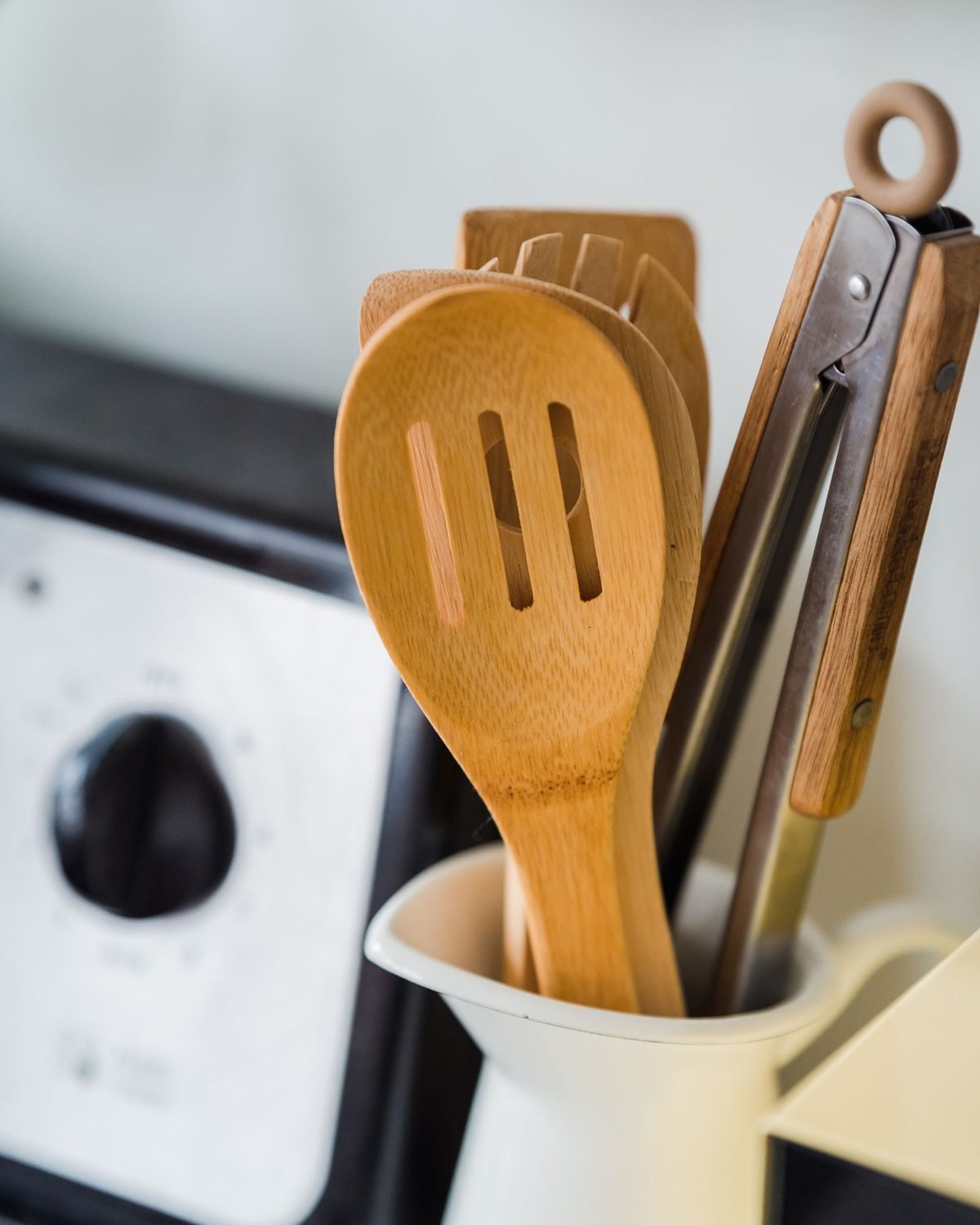
A clear counter makes a small kitchen feel bigger and more usable. The trick isn’t to keep nothing out, it’s to give the few things that stay out a defined spot.
15. Keep Cooking Utensils in a Crock by the Stove
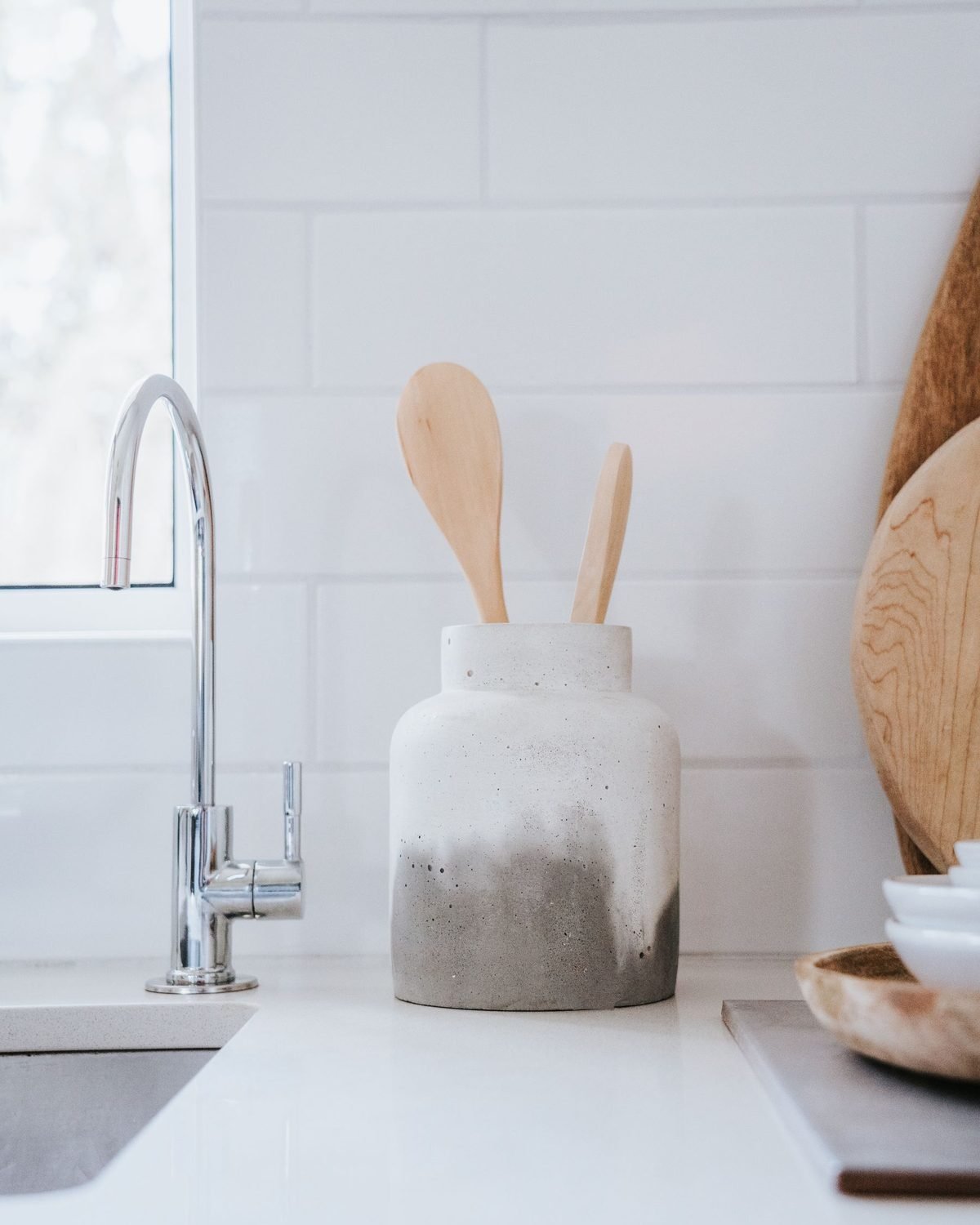
A single crock or tall jar holds your most-used cooking tools right where you need them. Keep it next to the stove, and edit it every few months: if a tool hasn’t left the crock in a while, it can move to a drawer or the donate box.
Make it work: Good kitchen organization means keeping only the tools you use every day in the crock. A heavy ceramic base won’t tip over when you pull out a spatula.
16. Corral Oils and Spices on a Small Counter Shelf
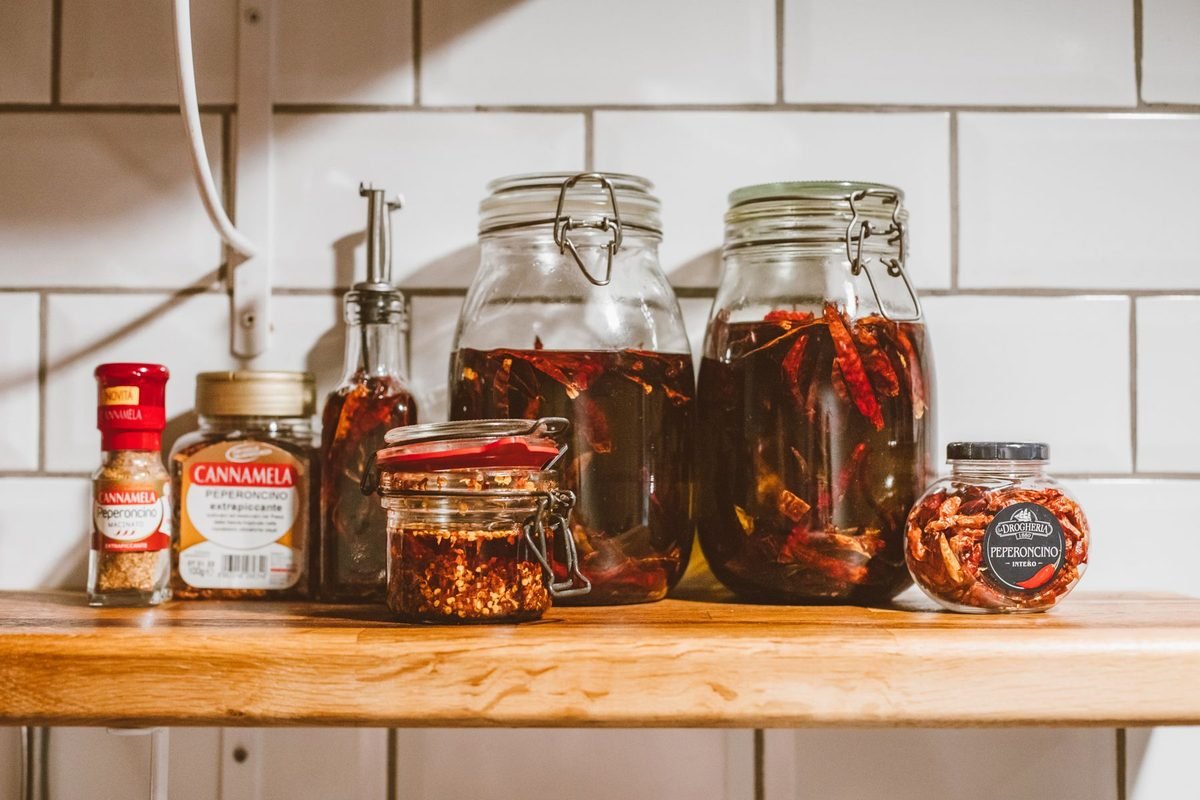
Bottles of oil, vinegar and sauces tend to spread across the counter. A small two-tier counter shelf or a turntable gathers them into one footprint. Put the ones you use daily in front and the rest in a cabinet.
Make it work: A small tray or turntable under oils keeps drips off the counter. Keep it close to the stove but not directly beside the burner.
17. Create a Compact Coffee Station
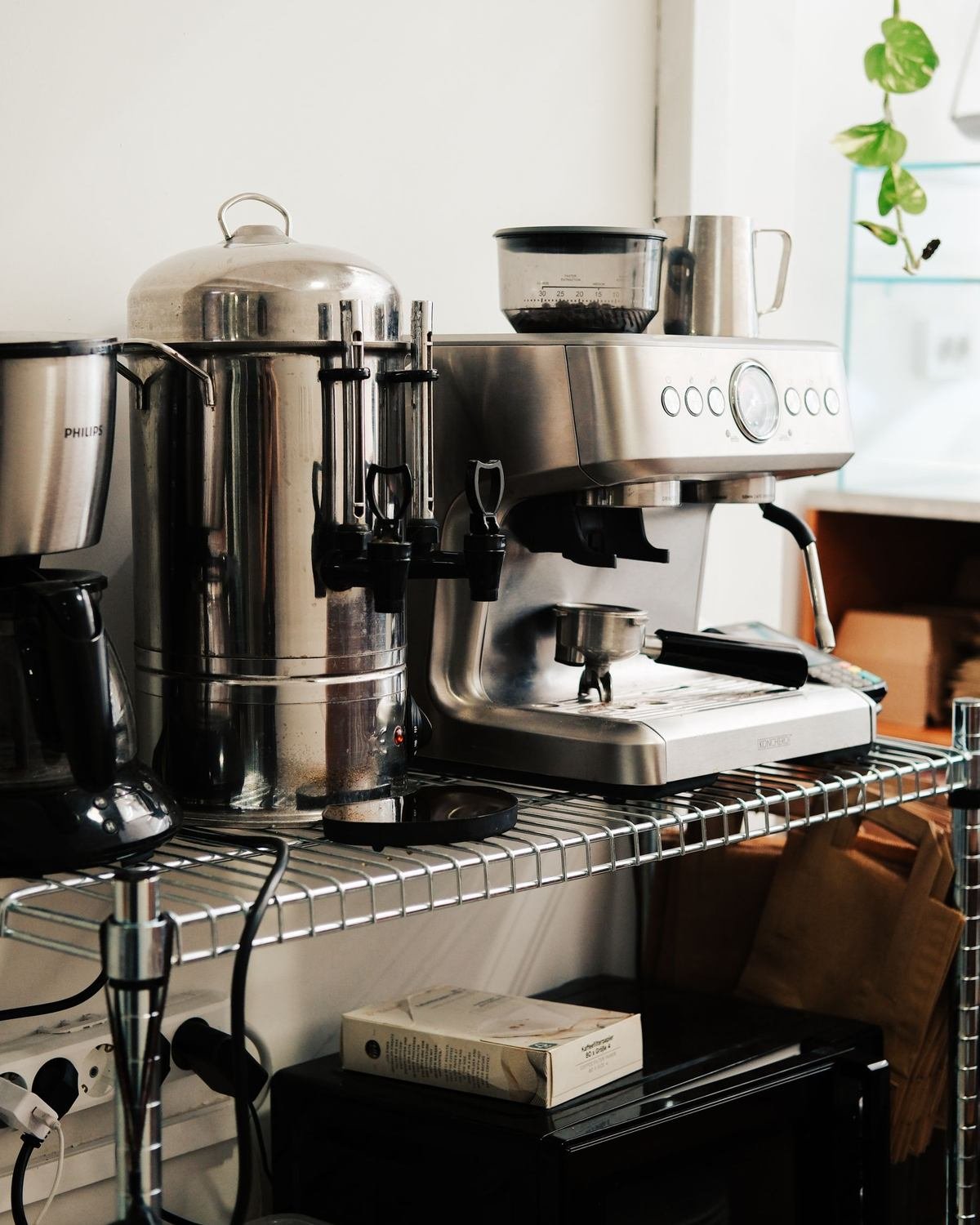
If you make coffee or tea every day, gather everything for it in one corner: the machine, mugs, filters and sugar. A tray or a small riser keeps it neat, and wall hooks above can hold mugs. When everything is in one place, the morning routine takes fewer steps and the rest of the counter stays clear.
Make it work: Store coffee, filters and mugs together, and keep the station to one tray or a single shelf section. Wipe it daily so coffee grounds don’t build up.
18. Put Sink Supplies on a Small Tray
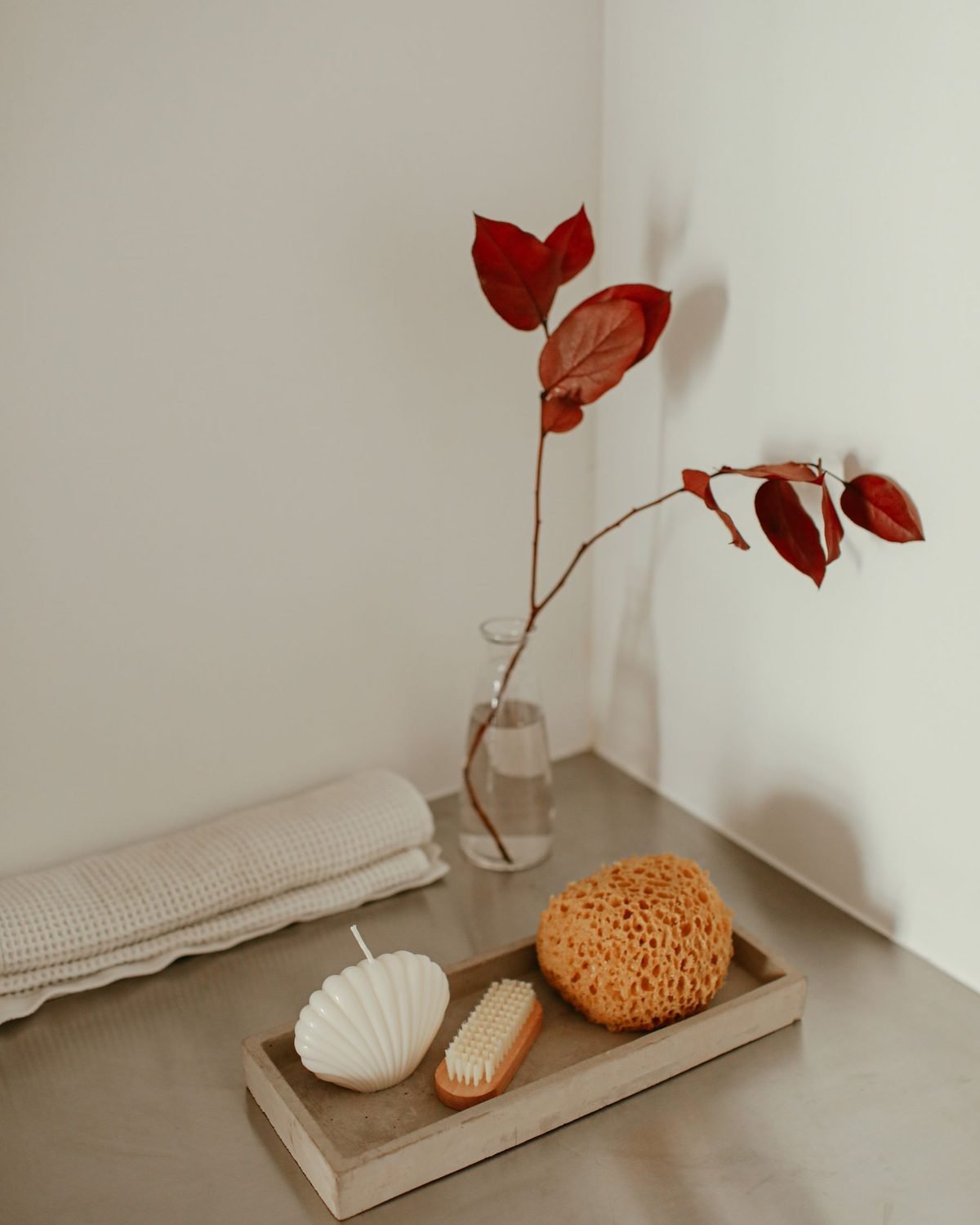
Sponges, brushes and soap left loose by the sink leave puddles and look messy. A small tray or a sink caddy keeps them together, helps them dry and makes it easy to wipe underneath.
Make it work: For kitchen organization by the sink, choose a tray that drains or is easy to rinse. Replace sponges regularly and keep only the soap and brush you use every day by the sink.
19. Lean Cutting Boards Against the Backsplash
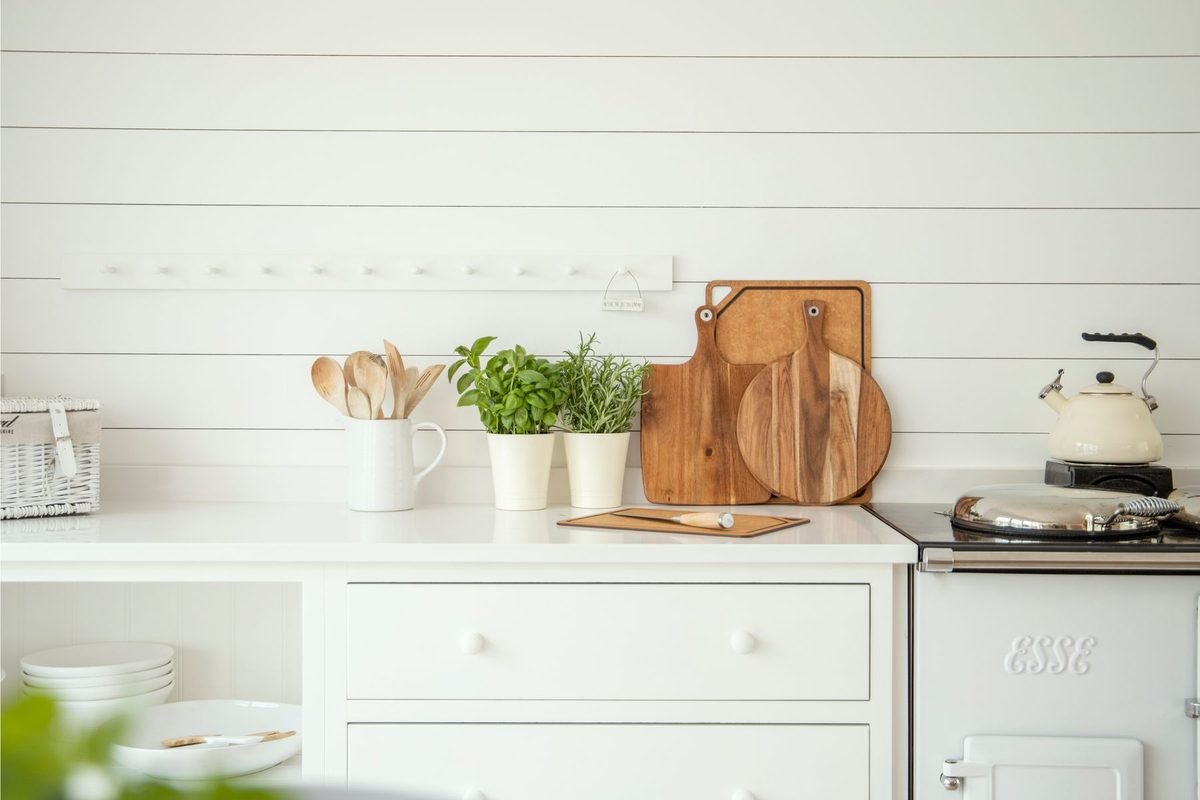
Cutting boards take up a lot of cabinet space when stacked flat. Standing them upright at the back of the counter, against the backsplash, keeps them handy and adds a warm wood touch. A couple of potted herbs beside them, if you get enough light, make that corner even more useful.
Make it work: Lean only the boards you use often, and store the rest upright in a cabinet with a file organizer. Dry boards completely before putting them back.
Pantry, Produce and Cleanup Ideas
Small kitchens rarely come with a real pantry, so food storage has to be creative. These ideas cover dry goods, produce, leftovers and the trash.
20. Add a Rolling Cart for Overflow
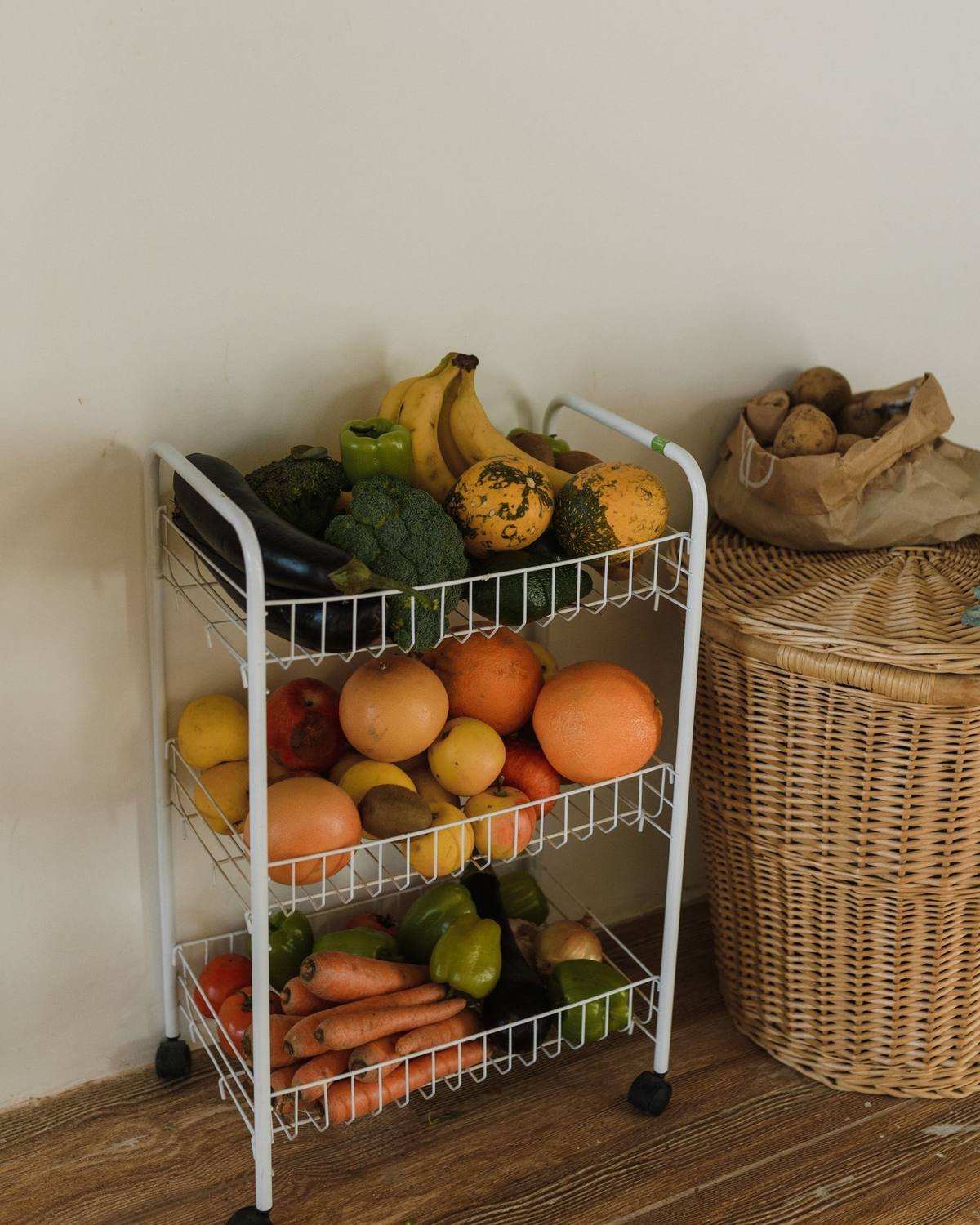
A slim three-tier rolling cart can be a mini pantry, a produce stand or a baking station. It slides into the gap next to the fridge or at the end of a counter and moves when you need the space. Measure the gap before you buy, since even a narrow cart needs a few inches of clearance.
Make it work: Small kitchen gaps are often only a few inches wide, so measure the gap before buying a cart and choose locking wheels. Put heavy items on the bottom shelf so the cart stays steady.
21. Keep Fruit in One Bowl on the Counter
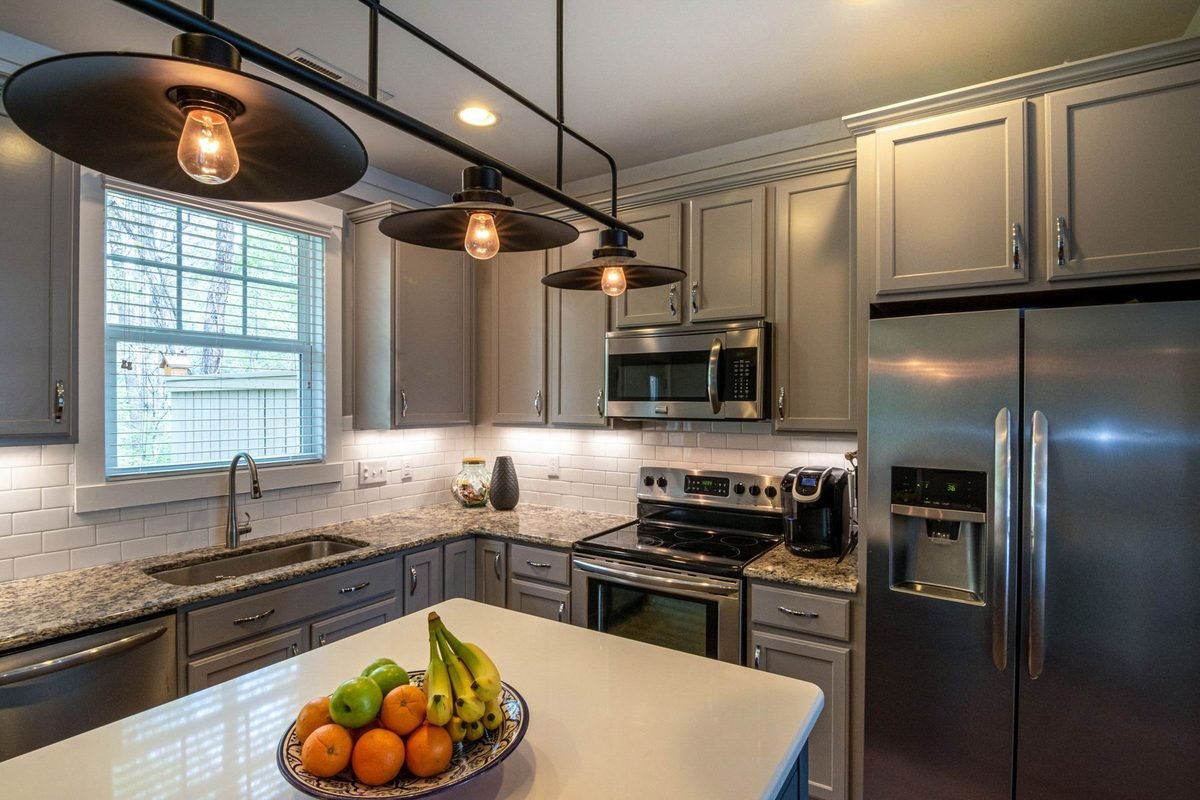
One fruit bowl is a simple way to keep produce visible so it gets eaten, and it keeps loose apples and bananas from rolling across the counter.
Make it work: Pick a bowl that fits your counter and only holds a few days of fruit. Keep ripening fruit like bananas separate if they speed up other produce.
22. Store Onions and Potatoes in Baskets
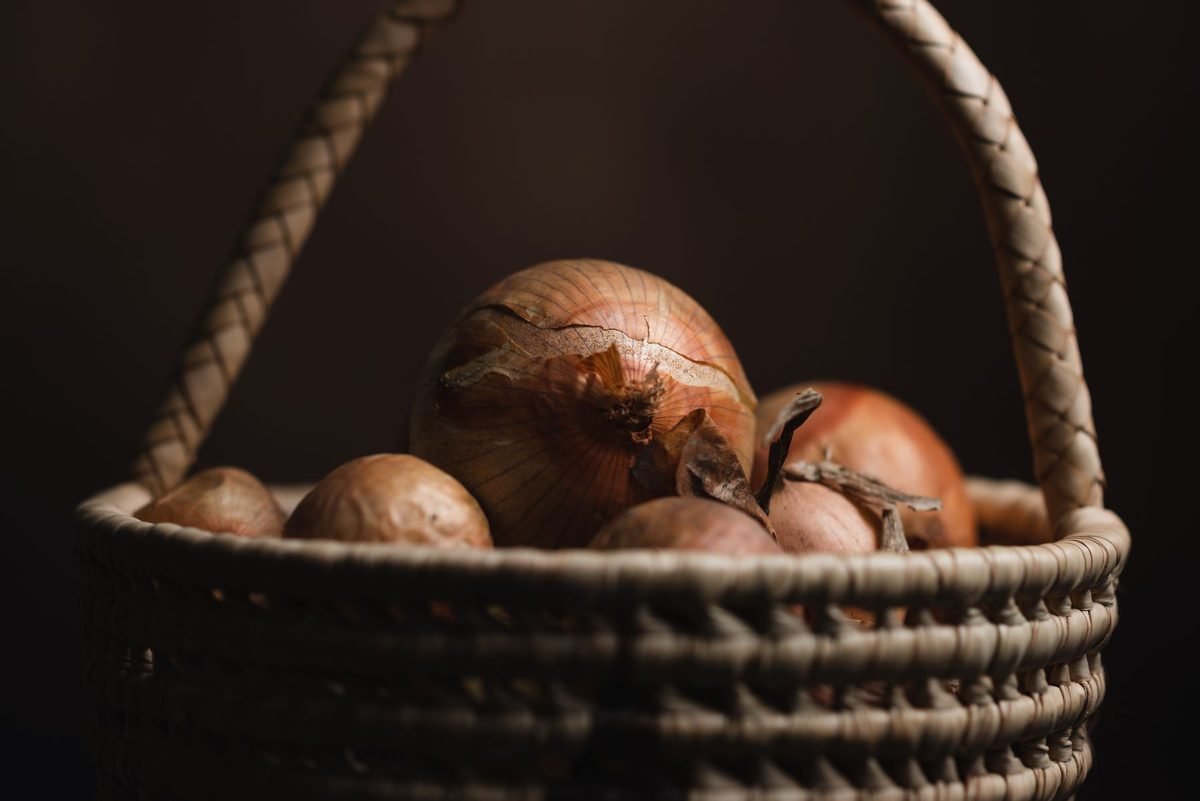
Onions, garlic and potatoes keep best in a cool, dark, dry spot with some airflow, so a woven or wire basket in a lower cabinet or pantry shelf works well. Store onions and potatoes separately, since they can make each other spoil faster.
Make it work: Store onions and potatoes in separate baskets in a cool, dark spot. Check them weekly and remove anything soft or sprouting.
23. Choose Stackable Containers With Matching Lids
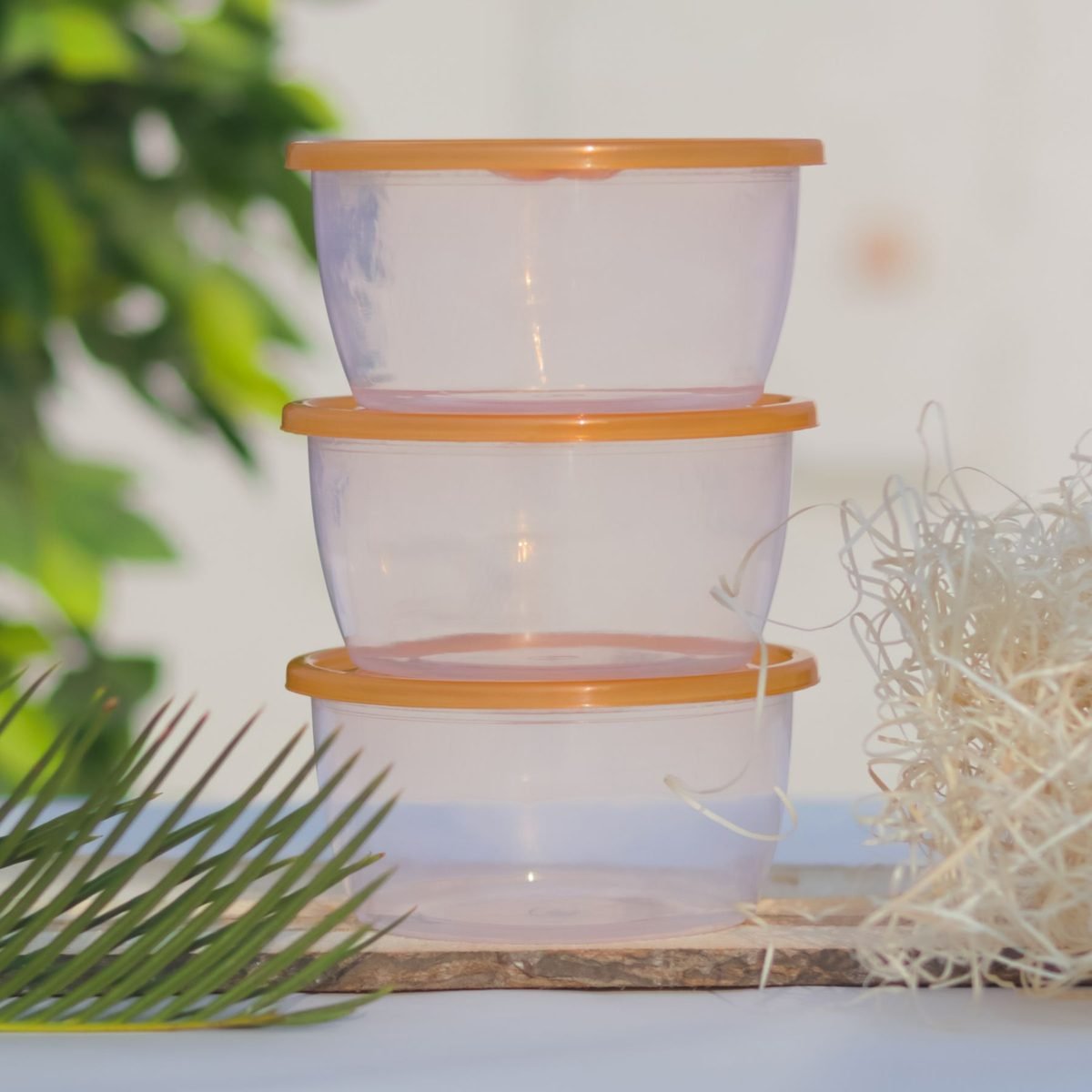
Mismatched containers are the reason so many cabinets overflow. A set of stackable containers with interchangeable lids nests neatly, takes up a fraction of the space, and ends the hunt for the right lid.
Make it work: For small kitchen organization, pick one brand and style so lids and containers stack together. Get rid of containers with missing lids or cracked bases.
24. Prep Meals in Matching Containers
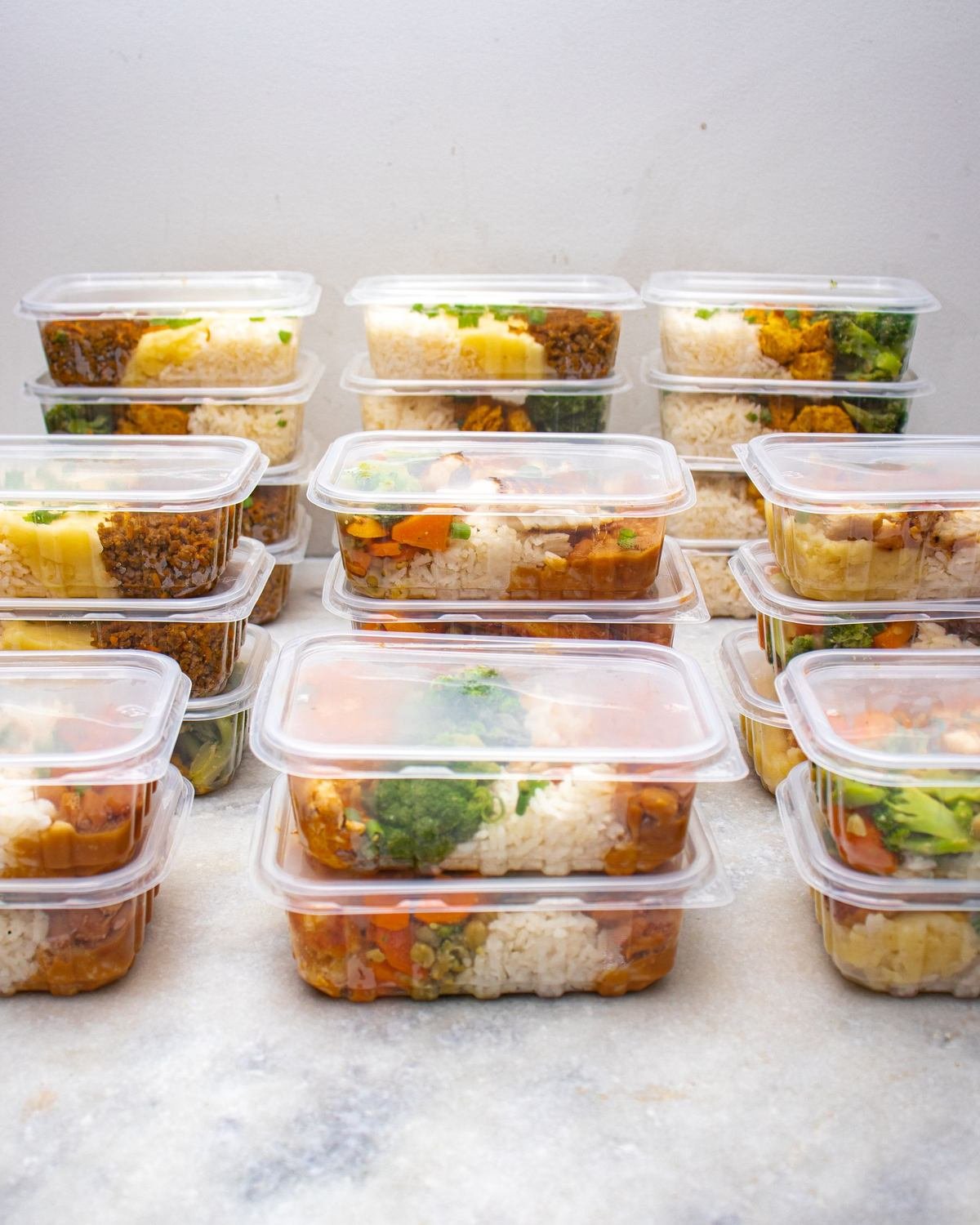
If you meal prep, uniform rectangular containers stack neatly in the fridge, which frees up space and makes it easy to see what’s ready to eat. Label lids with the date using masking tape so nothing gets forgotten at the back.
Make it work: Prep only what you’ll eat within a few days and label containers with the date. Stack them in the fridge with the oldest in front.
25. Hide Trash and Recycling Inside a Cabinet
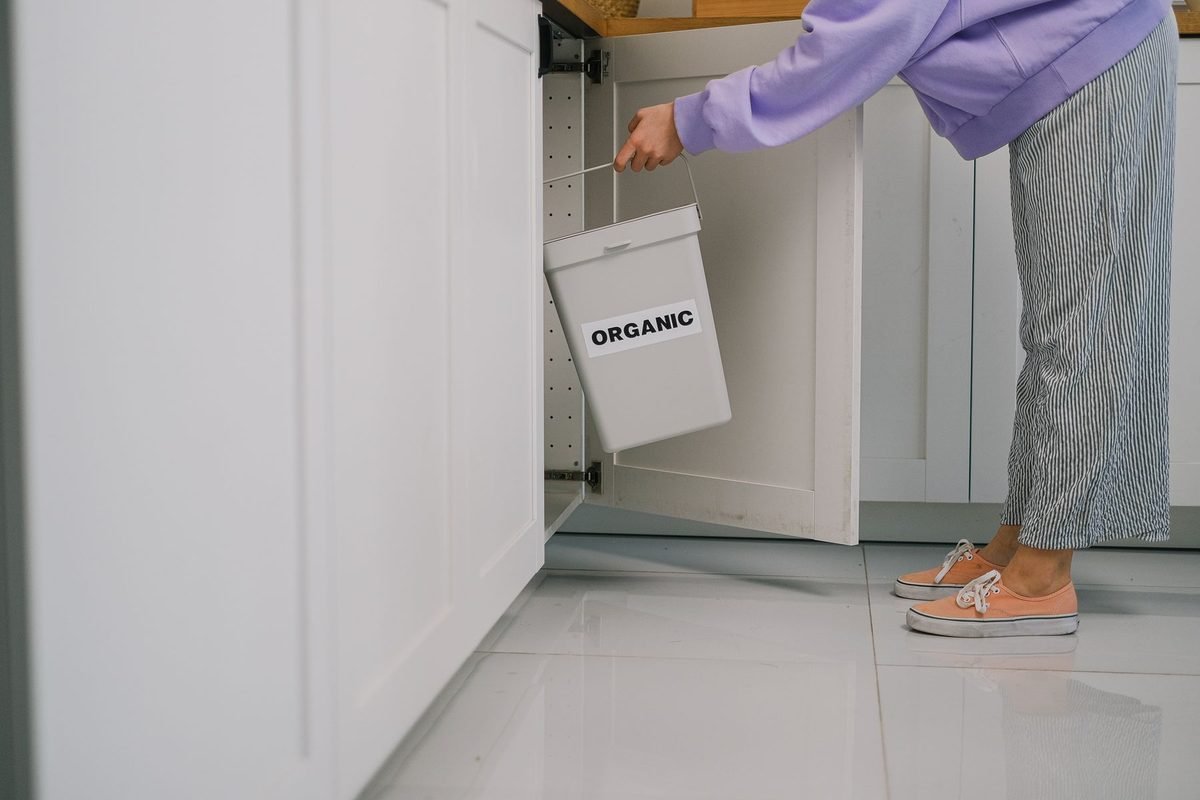
A trash can on the floor takes up precious space in a small kitchen. If you have a spare lower cabinet, a slim bin or a door-mounted bag holder keeps trash and recycling out of sight. Some pull-out bin systems need installation; there are also freestanding slim bins that fit into a cabinet without any hardware.
A few budget-friendly tools mentioned above are easy to find online: shelf risers, expandable drawer dividers, a three-tier rolling cart and stackable food storage containers. Measure your space before you order.
Make it work: Measure the inside of the cabinet, including the plumbing, before buying a pull-out bin. Line the bottom with a washable mat in case of leaks.
Small Kitchen Organization Ideas on a Budget for Every Layout
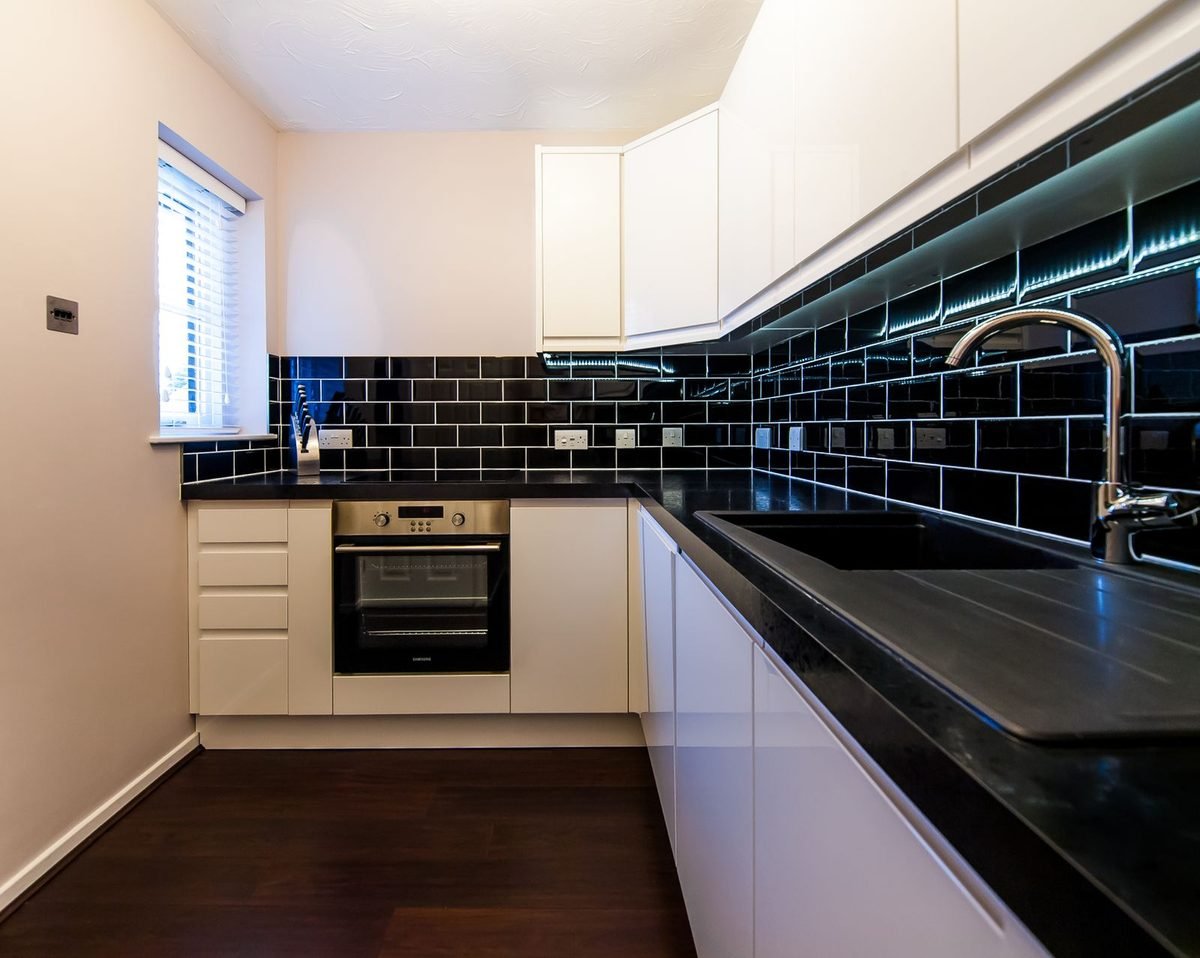
Not every small kitchen has the same problem. Here’s how to adapt these ideas to the most common layouts.
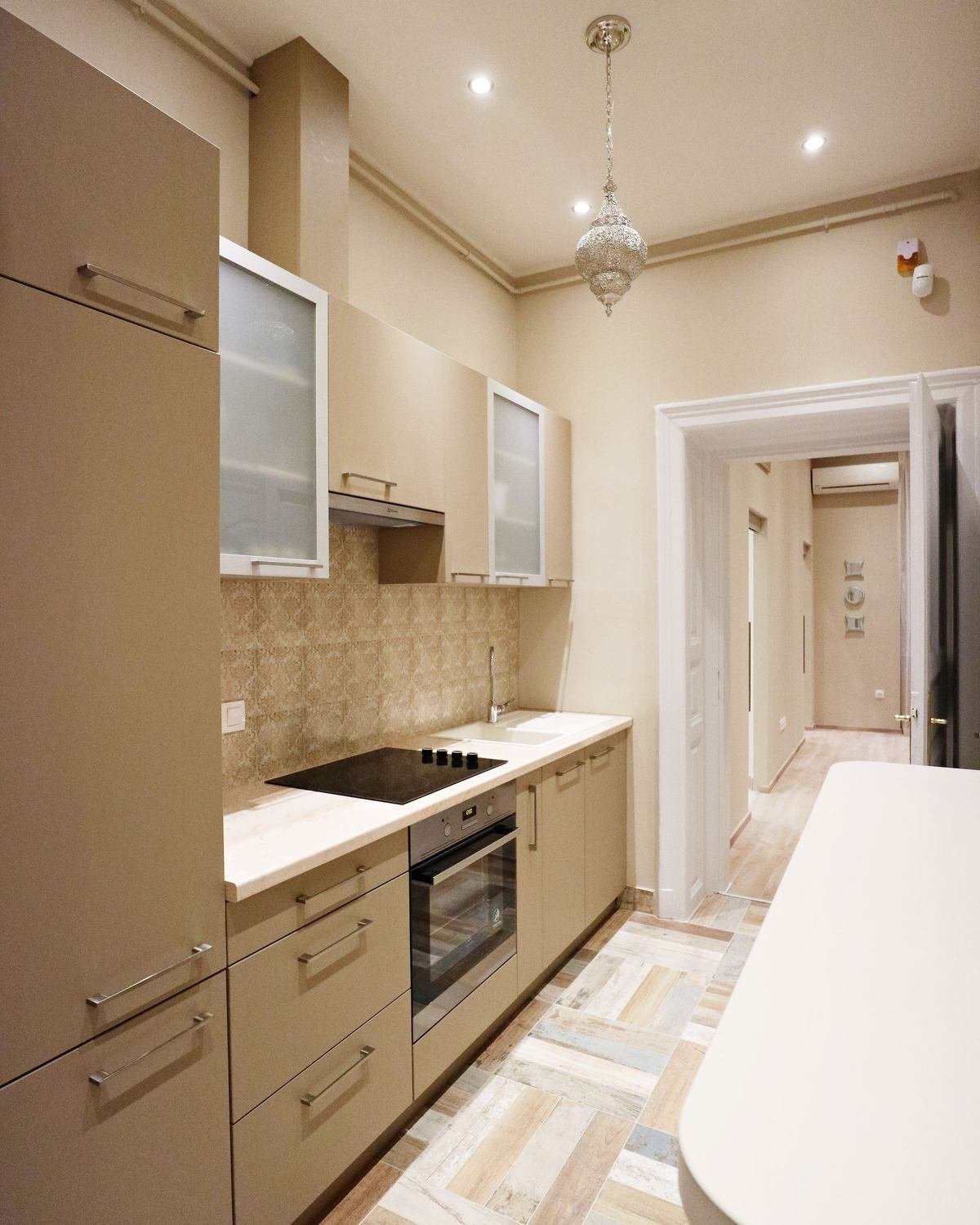
Galley kitchens. Two parallel walls give you plenty of wall space but a narrow walkway. Keep the floor clear, use rails and shelves on the walls, and put a slim rolling cart at one end instead of in the middle. Store prep tools on the side with the most counter space.
Studio kitchenettes. When the kitchen is one wall of the living room, closed storage keeps it from looking messy. Use baskets on open shelves, keep appliances to a minimum, and add a cutting board that fits over the sink for extra prep space.
L-shaped kitchens. The corner is the trouble spot. A turntable in the corner cabinet and a riser on the corner counter make it usable. Keep the two arms of the L for different jobs, like cooking on one side and coffee and dishes on the other.
Kitchens with no pantry. Pick one cabinet, a shelf or a rolling cart as your pantry and group food by type. Our guide to small pantry organization ideas has more ways to fake a pantry.
Shared kitchens. Give each roommate one shelf in the fridge and one cabinet or bin. Keep shared items, like oil, salt and cleaning supplies, in a clearly labeled common spot.
Rentals with dated cabinets. Shelf liners, new adhesive hooks and matching bins can make old cabinets feel fresh without changing anything permanent. For more ideas, see our renter-friendly decor ideas.
What to Buy First (and What to Skip)
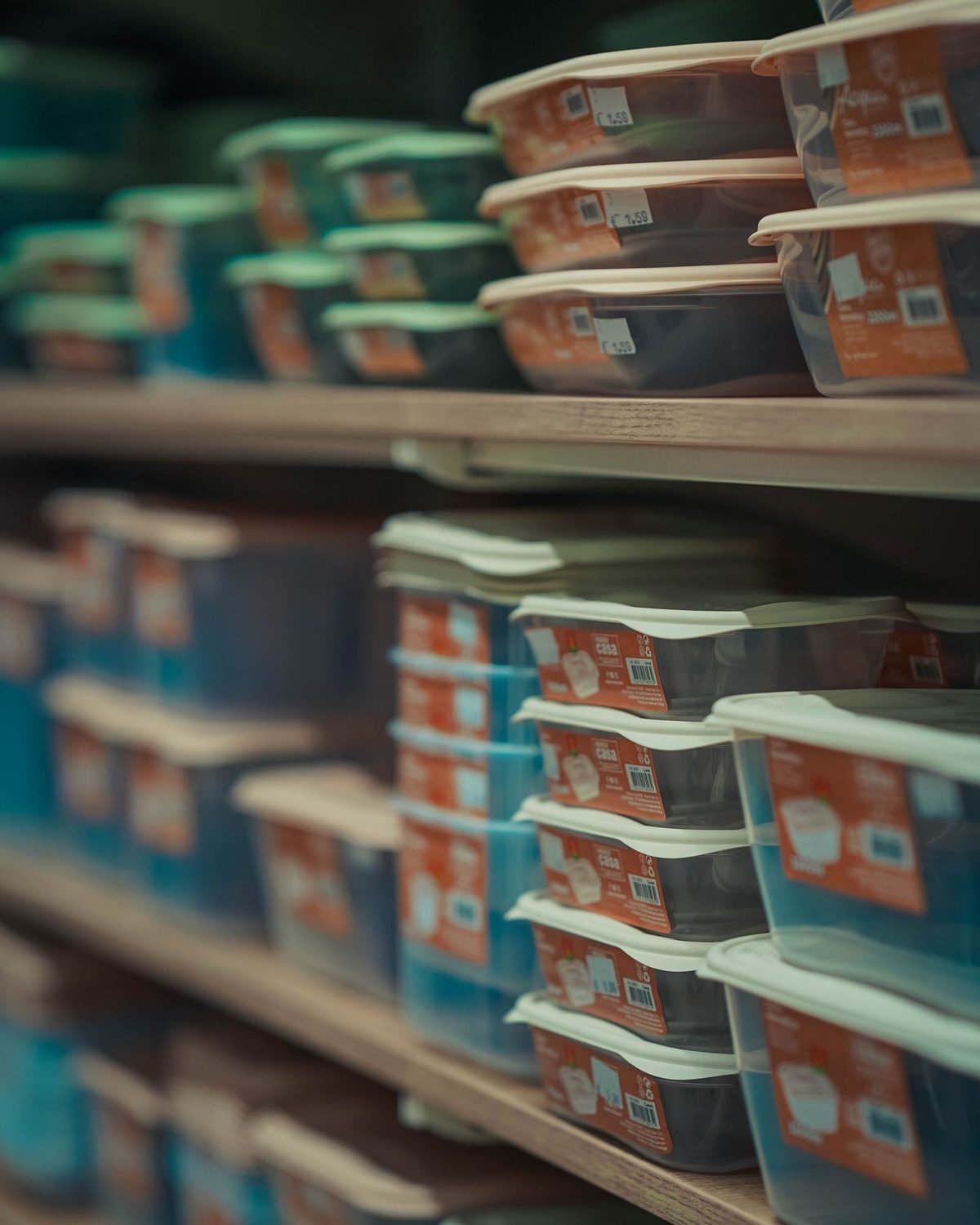
Organizers are only helpful if they solve a real problem. Buy in this order, and stop when the kitchen works:
- Shelf risers. They double the usable space in cabinets with tall shelves.
- A drawer divider. It turns a jumbled utensil drawer into one you can use in seconds.
- A wall rail or a few hooks. Moving tools to the wall frees drawer and counter space.
- A turntable. It makes deep and corner cabinets usable.
- Matching food containers. Choose one stackable style so lids are easy to match.
- A slim rolling cart. Buy one only if you have a gap to fill and food or tools to put on it.
What to skip: gadget organizers for single tools, decorative canister sets you won’t refill, and bins bought before you measure. Many small kitchen organization ideas on a budget work with things you already own, like a mug for utensils or a shoebox as a drawer divider. For cheap versions of these tools, see our Dollar Tree kitchen organization hacks.
Common Small Kitchen Organization Mistakes

Most small kitchens get cluttered for the same few reasons:
- Keeping too much on the counter. Every appliance you leave out takes prep space. Keep only daily items out.
- Storing by habit, not by use. Things you use every day should be easiest to reach, and the holiday platter should go high or in the back.
- Buying organizers before decluttering. You’ll organize things you don’t need. Clear out duplicates and old items first.
- Using deep bins for small things. Packets and spices get lost at the bottom. Use shallow trays or a turntable.
- Mixing food and non-food. Keep cleaning supplies away from food, ideally in a separate cabinet.
- Ignoring food storage basics. Organizing is also about keeping food safe. The FDA’s guide on storing food safely explains how long foods last and where to keep them.
Another mistake is setting up a system no one else in the home understands. Labels on shelves and bins help everyone put things back.
How to Keep a Small Kitchen Organized

A small kitchen gets messy quickly, but it also takes less time to reset. These habits keep it under control:
- Reset the counter every night. Put away appliances, wash or load dishes, and wipe the surface. It takes five to ten minutes.
- Check the fridge before you shop. Use up leftovers and move older food to the front. The USDA’s guide to leftovers and food safety explains how long they keep.
- Do a monthly cabinet check. Pick one cabinet or drawer each month and remove anything you don’t use.
- Follow one in, one out. When a new mug or gadget comes in, an old one goes.
- Wipe bins and shelves every few months. Crumbs and spills collect in bins and on shelf liners.
If you want a simple routine to keep the whole home on track, our weekly cleaning schedule breaks the work into short tasks.
Small Kitchen Organization Ideas on a Budget: FAQ
How do I organize a small kitchen with no pantry?
Turn a cabinet, a shelf or a rolling cart into your pantry. Group food by type (breakfast, baking, snacks, canned goods), use clear containers or bins to keep categories together, and keep the items you use most at eye level.
What can I do with no counter space?
Move everything you don’t use daily off the counter, then add storage on the walls with rails, hooks and shelves. A rolling cart or a small kitchen island on wheels can also act as extra prep space you can move out of the way.
How can I organize a rental kitchen without drilling?
Use shelf risers, drawer dividers, over-the-door racks on cabinet doors, adhesive hooks, tension rods and freestanding carts. All of these come out with no holes. Always check that adhesive products are rated for the weight you plan to hang.
What should I declutter first in a small kitchen?
Start with duplicates and things you haven’t used in a year: extra mugs, lidless containers, gadgets and expired food. Clearing those out often frees enough space that you need fewer organizers.
Where should I put things in a small kitchen?
Store items where you use them. Pots and pans near the stove, dishes near the sink or dishwasher, and food storage containers near where you pack lunches. Everyday items go between hip and shoulder height.
How do I make a small kitchen look bigger?
Clear the counters, use matching containers, and choose light colors for bins and shelf liners. Open shelves with a few neatly stacked dishes can also make the space feel lighter than closed cabinets full of clutter.
How do I store pots and pans in a small kitchen?
Nest pots by size and store lids upright in a rack or file holder. If you have wall space, a rail or pot rack frees up an entire cabinet.
What’s the best way to store spices in a small kitchen?
Use a turntable in a cabinet, a small tiered riser, or a narrow shelf on the wall. Keep only the spices you use regularly, and check dates once a year.
Are small kitchen organization ideas on a budget renter friendly?
Most of them are. Risers, dividers, bins, carts and adhesive hooks don’t need any changes to the kitchen. Wall rails and shelves usually need screws, so check your lease or choose a no-drill option.
How do I organize a small kitchen with lots of appliances?
Keep only the appliances you use daily on the counter. Store the rest in a cabinet, on a high shelf or on a rolling cart. If an appliance hasn’t been used in a year, consider letting it go.
Final Thoughts
A small kitchen works best when everything in it earns its place. Takeaway: declutter first, then use the space you’re not using yet, which is usually the walls, the inside of cabinets and the gaps beside appliances. Keep only daily-use items on the counter and give each of them a defined spot.
You don’t have to do all 25 ideas. Pick the one or two that solve your biggest daily frustration, whether that’s the overflowing utensil drawer or the pans you can never reach, and start there. Small fixes add up quickly in a small kitchen.
For more budget ideas, check out our Dollar Tree organization hacks for small spaces and small apartment storage ideas on a budget, or browse everything in our Kitchen Organization section.