
Realistic Cleaning Schedule for ADHD: A 7-Day Plan That Sticks
Disclosure: This post contains affiliate links. As an Amazon Associate I earn from qualifying purchases. If you buy through these links, I may earn a small commission at no extra cost to you. Read our full disclaimer.
If you have ADHD, you probably know the cycle. The house gets messy, you feel overwhelmed, you spend a whole Saturday cleaning everything at once, and two weeks later it looks exactly the same. What breaks that loop isn’t more willpower. It’s a realistic cleaning schedule: small daily jobs that fit the way your brain actually works, so the guilt has less to feed on.
A realistic cleaning schedule for ADHD breaks the cycle by doing the opposite of a marathon clean. It gives every day one small, clear job, keeps the daily basics tiny, and builds in rest so missing a day doesn’t wreck the week. This guide walks you through a seven-day plan, the tricks that make starting easier, the tools that actually help, and how to adjust the plan when life gets busy.
Quick answer: A realistic cleaning schedule for ADHD gives each day one focus area, like kitchen on Monday, laundry on Tuesday, floors on Wednesday, bathroom on Thursday, trash and paper on Friday, bedding on Saturday and planning on Sunday. Keep each task to 15 to 20 minutes, use a timer, keep supplies where you use them, and add three tiny daily basics: dishes, a surface reset and a quick pickup. If you miss a day, skip it and move on instead of trying to catch up.
Why Regular Cleaning Schedules Fail With ADHD

Most cleaning schedules you find online are built for brains that like long lists. They have 40 tasks a week, color-coded zones and a deep clean for every room. On paper they look great. In real life they fall apart by Wednesday.
ADHD affects attention, focus and how you organize tasks. The National Institute of Mental Health describes it as an ongoing pattern of inattention and/or hyperactivity and impulsivity that gets in the way of daily life. Cleaning hits several of those friction points at once.
Here’s where the usual schedules go wrong:
- Too many tasks at once. A long list makes it hard to know where to start, so you don’t start at all.
- Vague jobs. “Clean the kitchen” isn’t a task. It’s a project with twenty steps you have to plan in your head first.
- No room for bad days. If one missed day means you’re “behind,” the whole plan starts to feel like a failure.
- Boring by design. Repeating the same long routine with no reward gets old fast.
- Supplies are far away. If the spray is in the hall closet and the paper towels are in the kitchen, the bathroom doesn’t get wiped.
The schedule below is built to fix each of those. It has one focus per day, specific mini tasks, short time limits, a built-in skip rule and supplies stored right where you need them.
How This Realistic Cleaning Schedule Works

Before we get to the days, here are the five rules that make this plan different. Read them once, because they matter more than the exact tasks.
1. One focus per day. Each day has a single area. You don’t have to think about the bathroom on laundry day. That alone takes a lot of mental load off.
2. Fifteen to twenty minutes, then stop. Set a timer. When it goes off, you’re allowed to stop, even mid-task. Most days you’ll keep going a little because starting was the hard part. But knowing you can stop makes it much easier to begin.
3. Small, specific tasks. Instead of “clean the kitchen,” the plan says “empty the sink, wipe the counters, wipe the stovetop.” You can follow it without deciding anything.
4. The skip rule. If you miss a day, don’t double up tomorrow. Just do tomorrow’s task. The missed area will come around again next week, and the daily basics keep things from getting too bad in between.
5. Good enough is the goal. A wiped counter that’s 80% clean is far better than a spotless counter you never get to. You’re aiming for a home that works, not one that’s ready for a photo shoot.
You can write the plan on paper, put it in a notes app or use a whiteboard on the fridge. Pick whatever you’re most likely to look at. Many people with ADHD find a visible plan works better than one hidden in an app.
The 7-Day ADHD Cleaning Schedule

Here’s the full week at a glance. Each day has a focus area and three to five short tasks. Do them in any order. If you have extra energy, there’s a bonus task, but it’s always optional.
- Monday: Kitchen reset
- Tuesday: Laundry
- Wednesday: Floors
- Thursday: Bathroom
- Friday: Trash, recycling and paper clutter
- Saturday: Bedding and a quick room reset
- Sunday: Plan the week and rest
The order isn’t magic. If laundry works better on Saturday for you, swap it. The point is that each day has one clear job you can see in advance.
1. Monday: Kitchen Reset

Monday starts the week with the room you use most. A clean kitchen makes every other day easier because you’re not starting each meal in a mess.
Today’s tasks (15 to 20 minutes):
- Empty the sink and load or wash the dishes.
- Clear the counters. Put away anything that has a home and toss trash.
- Wipe the counters and the stovetop.
- Take out anything in the fridge that’s clearly spoiled.
- Wipe the microwave inside if it needs it.
Bonus task: Wipe the front of the fridge and cabinet handles.
Make it easier: Keep a spray bottle and a cloth under the kitchen sink so you don’t have to go looking. A soap-dispensing dish wand makes dishes faster because you don’t have to stop and add soap.
If the kitchen is very messy, start with the sink only. An empty sink is a visible win and usually gives you enough momentum to wipe one counter.
Minimum version: Empty the sink. That’s the whole job on a hard day.
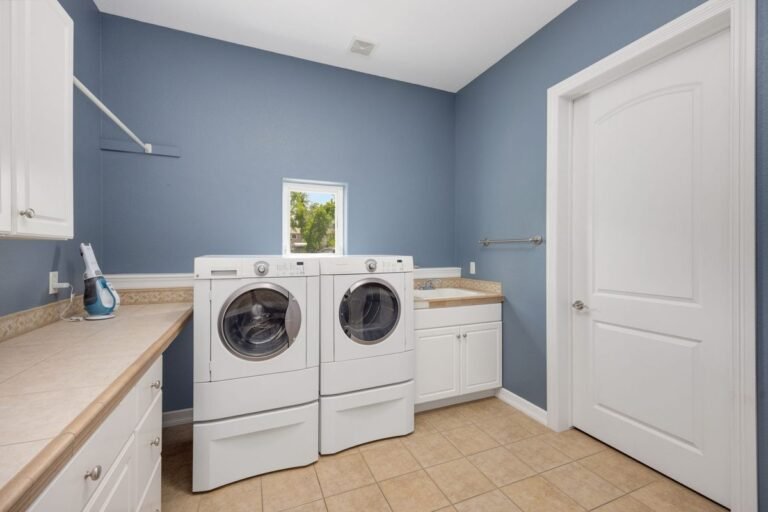
2. Tuesday: Laundry Day
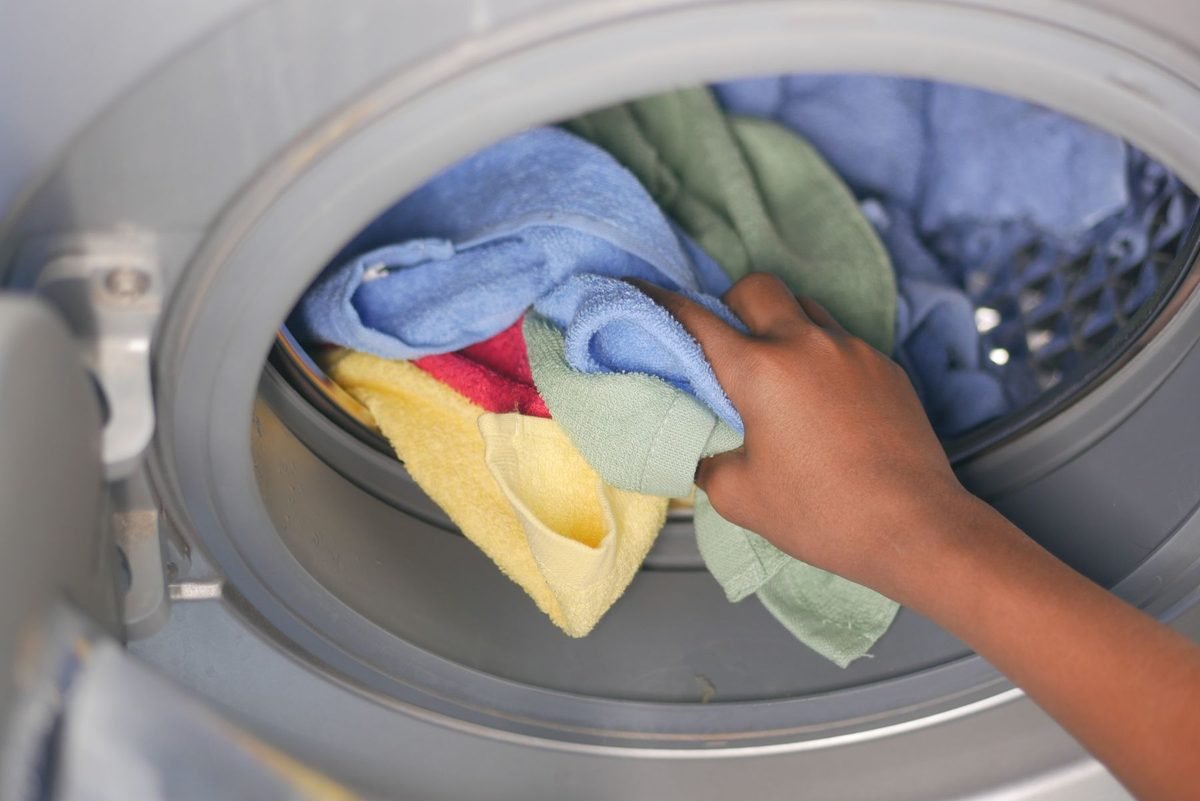
Laundry is a classic ADHD trap. The washing gets done, but the clothes sit wet in the machine, or clean clothes live in a basket for a week. The trick is to treat laundry as one full cycle on one day, from dirty to put away.
Today’s tasks:
- Start one load first thing, before anything else.
- Set a phone alarm for when the wash ends, so the clothes don’t sit.
- Move the load to the dryer or drying rack and set another alarm.
- Fold or hang the clean load and put it away right away.
Bonus task: Wash towels or a second load if you have time.
Make it easier: Skip folding what doesn’t need it. Socks, underwear, workout clothes and pajamas can go straight into bins or drawers. A few fabric drawer bins make this tidy enough.
If you share a home, give everyone their own laundry basket. You wash and dry, and each person puts away their own clothes.
Minimum version: Wash, dry and put away one load. Leave the rest for next week.
3. Wednesday: Floors

By midweek, crumbs, dust and hair have built up. Floors are a great ADHD task because the result is easy to see and the job has a clear end.
Today’s tasks:
- Do a two-minute pickup of anything on the floor so you can vacuum.
- Vacuum the main living areas: kitchen, living room and hallway.
- Spot-clean any sticky spots in the kitchen.
- Shake out the entry mat.
Bonus task: Vacuum the bedroom or mop the kitchen floor.
Make it easier: If dragging out a heavy vacuum is the barrier, a cordless stick vacuum that stays charged and ready can make a big difference. Store it where you’ll see it, not in the back of a closet.
Put on a podcast or a playlist while you vacuum. Many people find that pairing a boring task with something enjoyable makes it much easier to start.
Minimum version: Vacuum the one room you walk through most, usually the kitchen or living room.
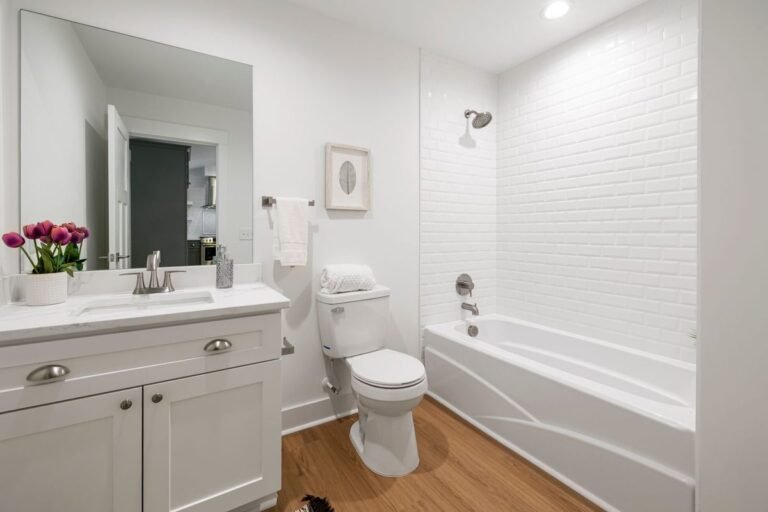
4. Thursday: Bathroom

The bathroom feels like a big job, but a quick weekly clean takes less time than you think. The key is having the supplies right there.
Today’s tasks:
- Spray the toilet, sink and tub or shower, then let it sit while you do step 2.
- Clear the counter and put things away.
- Wipe the sink and counter, then the mirror.
- Clean the toilet, inside and out.
- Swap the hand towel for a clean one.
Bonus task: Scrub the tub or shower, or wash the bath mat.
Make it easier: Keep a full set of bathroom supplies under the bathroom sink. A toilet brush with a holder next to the toilet and a shower squeegee in the shower let you do small cleans every day without thinking.
For ideas on keeping those supplies tidy, see our guide to under bathroom sink organization ideas.
If you’re looking for gentler products, the EPA’s Safer Choice program lists cleaners that meet its safety criteria. Whatever you use, follow the label and never mix cleaners, especially bleach and ammonia.
Minimum version: Wipe the toilet and the sink with a disinfecting wipe. Two minutes, done.
5. Friday: Trash, Recycling and Paper Clutter

Friday is about getting stuff out of the house. Trash, recycling and paper clutter are small jobs, but they pile up fast when nobody owns them.
Today’s tasks:
- Empty every small trash can into one bag and take it out.
- Break down boxes and take out the recycling.
- Go through the mail pile: recycle junk mail, put bills in one spot.
- Clear one surface that collects paper, like the kitchen table or a desk.
Bonus task: Wipe out the trash can or clean out your car.
Make it easier: Put a small recycling bin right where you open mail. Most junk mail can go straight in it, so it never hits the counter. Then keep a single mail sorter or tray for anything you need to act on.
Paper is often the biggest source of visible clutter for people with ADHD. If it’s overwhelming, set the timer for ten minutes and only sort. Don’t open, read or pay anything yet. Just split it into recycle, action and keep.
Minimum version: Take out the kitchen trash and recycle the junk mail on the counter.
6. Saturday: Bedding and a Quick Room Reset

Saturday has a light focus so you can enjoy the weekend. Clean sheets are one of the most satisfying small wins, and a quick room reset makes the bedroom calm again.
Today’s tasks:
- Strip the bed and start the sheets in the wash.
- Do a five-minute pickup in the bedroom: clothes, cups and anything that belongs elsewhere.
- Put the clean sheets back on the bed.
- Do a five-minute pickup in the living room.
Bonus task: Dust the nightstand and dresser.
Make it easier: Keep a second set of sheets so you can make the bed right away and wash the first set later. Many people find that making the bed is the hardest part, so a duvet cover instead of a top sheet plus blankets can make it quicker.
If you live with others, Saturday is a good day to ask everyone to do a ten-minute pickup at the same time. Putting on music and setting a timer turns it into a group task.
Minimum version: Pick up the bedroom floor. Wash the sheets next Saturday.
7. Sunday: Plan the Week and Rest

Sunday is for rest and a little planning. It’s not a cleaning day, and that’s on purpose. A planned rest day keeps the schedule from feeling endless.
Today’s tasks (ten minutes):
- Look at your week. Note which days are busy and might need a lighter cleaning task.
- Write a short grocery list so Monday’s kitchen reset doesn’t happen in an empty fridge.
- Put out anything you need for Monday, like clean dish towels.
Bonus task: Choose one “someday” task, like the oven or the closet, and write it on a day next week where it fits.
Make it easier: A weekly planner pad on the fridge or a whiteboard makes the plan visible. Seeing the plan is often half of following it.
Use Sunday to notice what worked. If Wednesday floors never happen because you work late, move floors to a different day. The schedule should fit your week, not the other way around.
Minimum version: Glance at tomorrow. Knowing what Monday holds is enough.
The Daily Basics: Three Tiny Habits

The weekly schedule handles the big areas, but three small daily habits keep the house from sliding back into chaos between them. Each one takes five minutes or less.
1. Dishes before bed. Load the dishwasher or wash what’s in the sink. Even if the counters are messy, a clean sink makes the morning feel better.
2. A surface reset. Pick one surface that matters to you, like the kitchen counter, the coffee table or your nightstand, and clear it once a day. That’s it. Just one.
3. A five-minute pickup. Set a timer and put things back where they belong. Start with the room you’ll see first in the morning.
If you only manage one habit, make it dishes. If you manage none on a hard day, that’s fine too. Tomorrow is a new day, and the weekly schedule will still be there.
A launch pad helps too. Many people with ADHD lose time every morning looking for keys, wallets and bags. A small tray or hook by the door gives those things a home. Our small entryway organization ideas have plenty of renter-friendly options.
ADHD-Friendly Cleaning Tools Worth Buying

The right tools won’t clean your house for you, but they can remove the friction that keeps you from starting. Here’s what tends to help most, and what to skip.
Worth buying:
- A visual timer. A visual countdown timer shows time passing, which makes “15 minutes” feel concrete and finite.
- Duplicate supplies. A spray bottle and cloth in the kitchen and another set in the bathroom means no hunting. This is one of the best changes you can make.
- A cleaning caddy. A cleaning caddy you can carry from room to room keeps everything together.
- Microfiber cloths. A pack of microfiber cloths works on almost every surface with just water or a little spray.
- Easy-access trash cans. A small can in every room means trash goes in the can instead of on the floor.
- Open bins. Lids are an extra step. Open bins and baskets make it easier to put things away.
Worth skipping:
- Big cleaning systems with lots of special products.
- Gadgets you’ll need to set up, charge and store, unless they solve a real problem you have.
- Anything you’ll need to read a manual to use.
Buy one or two things at a time and see if they help before buying more. The goal is fewer barriers, not more stuff to manage.
Where to keep supplies so you actually use them:
- Kitchen: spray, cloths, dish soap and a scrub brush under the sink, with trash bags folded in the bottom of the trash can.
- Bathroom: spray, a toilet brush, wipes and a spare roll of toilet paper under the sink or on a small shelf.
- Living room: a small basket for stray items and a roll of lint tape or a lint roller in a drawer.
- Bedroom: a laundry hamper right where you take off your clothes, not in the closet.
- Entry: a mat, a small trash can for receipts and a hook or tray for keys.
If you have to walk to another room to get a supply, that’s a reason to skip the task. Every duplicate removes one excuse.
Tricks That Make Starting Easier

Starting is often the hardest part of cleaning with ADHD. Once you’re moving, it gets easier. These tricks help you get past that first step.
Body doubling. Clean while someone else is in the room or on a video call, even if they’re doing their own thing. Many people with ADHD find it much easier to stay on task with another person around.
The “just one thing” start. Tell yourself you’ll do one tiny thing, like putting three cups in the sink. Often you’ll keep going. If you don’t, you still did one thing.
Pair it with something fun. Save a favorite podcast, audiobook or playlist for cleaning time only. It gives you something to look forward to.
Race the timer. Set a timer for 10 minutes and see how much you can do before it goes off. Turning the task into a game can make it feel lighter.
Start in the middle. You don’t have to start in the “right” spot. Start wherever you’re standing. Pick up the thing closest to you.
Use a “doom box” sparingly. When you’re short on time, put loose clutter in a box to sort later. It works for a quick reset, but set a reminder to go through the box within a few days, or it becomes another pile.
Reward yourself. A cup of coffee, a walk or a show after your task makes the routine more appealing. Small rewards matter.
When the house is already a disaster: the three-pass reset. Sometimes you’re not starting from a normal week. You’re starting from a home that hasn’t been cleaned in a while, and the schedule feels pointless. Do this once, then start the weekly plan the next day.
- Pass one: trash. Take a big bag through every room and throw away only obvious trash. Wrappers, empty bottles, old receipts, packaging. Don’t sort anything else.
- Pass two: dishes. Collect every cup, plate and bowl from every room and bring them to the kitchen. Wash or load what fits. Stack the rest neatly by the sink.
- Pass three: laundry. Gather every piece of clothing off the floor and furniture into baskets. Start one load. The rest can wait for laundry day.
Each pass has one rule and one kind of item, so you don’t have to make decisions. Take a break between passes. Most homes look dramatically better after just these three, and the weekly schedule can take over from there.
Mistakes to Avoid

A few common habits can make any cleaning plan harder to follow. Watch out for these:
Trying to catch up all at once. If you’ve fallen behind, it’s tempting to spend a whole day cleaning. That often leads to burnout. Just start today’s task and let the schedule do its job.
Making the list too long. If you keep adding tasks, the plan gets overwhelming again. Keep each day to three to five tasks. Bonus tasks are optional.
Waiting until you’re motivated. Motivation usually comes after you start, not before. Use the tricks above and start small.
Comparing your home to social media. Most clean-home photos are staged. Your home only needs to work for you.
Organizing before decluttering. Buying bins for stuff you don’t need just organizes the clutter. If a room is hard to clean because it has too much stuff, try our room-by-room declutter checklist first.
Being hard on yourself. Shame makes it harder to start next time. Treat a missed day as information, not failure. Ask what got in the way and adjust.
How to Adapt the Schedule to Your Life

No schedule fits everyone. Here’s how to change this one so it fits your home and your week.
If you live in a small apartment or studio: Combine days. For example, do kitchen and bathroom on Monday, laundry on Wednesday and floors and trash on Friday. Fewer rooms means fewer focus days, so you can take more rest days.
If you have kids: Give each child a small, specific task on each focus day, like putting shoes away on floor day or matching socks on laundry day. Picture charts work well for younger kids.
If you live with a partner or roommates: Split the days. One person takes Monday, Wednesday and Friday, and the other takes Tuesday, Thursday and Saturday. Agree on what “done” looks like so no one feels like they’re doing more.
If you work long or irregular hours: Use a “minimum version” of each day. For the kitchen, it might just be the sink. For the bathroom, it might just be the toilet. The minimum keeps things from building up.
If you have pets: Add a quick pet task to floor day, like washing the pet bed or vacuuming the couch. Daily litter or poop cleanup can be one of your daily basics.
If you also have a busy family schedule: Our weekly cleaning schedule for working moms uses 15 minutes a day around school and work and can pair well with this plan.
If energy changes by season or medication timing: Plan your focus tasks for the time of day you tend to have the most energy. For some people that’s morning, for others it’s right after work. There’s no wrong time.
Add a monthly deep-clean rotation. The weekly plan keeps things under control, but some jobs only need doing once a month. Instead of a big deep-clean day, give each week of the month one bigger job and add it to a quiet day:
- Week 1: Wipe the inside of the fridge and toss old condiments.
- Week 2: Clean the stovetop grates, the microwave and the outside of appliances.
- Week 3: Wash shower curtains, bath mats and kitchen rugs.
- Week 4: Dust shelves, baseboards and ceiling fan blades.
One big job a week is far less overwhelming than four at once. If a week gets busy, skip that job and pick it up next month.
Keeping the schedule going long term:
- Review the plan once a month and remove tasks you never do.
- Move tasks to the days they naturally happen.
- Add one new habit at a time, only after the current ones feel easy.
- Keep a short list of “big jobs” (oven, windows, closet) and add one to a quiet week when you feel up to it.
Realistic Cleaning Schedule for ADHD: FAQ

What makes a cleaning schedule realistic?
A realistic cleaning schedule matches the time and energy you really have, not the time you wish you had. It has short tasks, one focus a day, a minimum version for bad days and no penalty for skipping. If you can follow it in a hard week, it’s realistic.
How do I make a cleaning schedule if I have ADHD?
Keep it simple: one focus area per day, three to five small tasks, and a 15 to 20 minute timer. Make the plan visible, keep supplies where you use them and allow yourself to skip a missed day.
What’s the easiest way to start cleaning when I’m overwhelmed?
Pick one tiny task, like clearing the sink or taking out one bag of trash, and set a timer for five minutes. Small visible wins help you keep going.
How long should I clean each day?
Fifteen to twenty minutes for the day’s focus area, plus a few minutes for daily basics. That’s often enough to keep a small home in good shape.
What should I do if I miss a day?
Skip it and do the next day’s task. Don’t try to catch up. The missed area comes around again next week.
Is body doubling really helpful?
Many people with ADHD say it helps them start and stay on task. You can clean while a friend is over, on a video call, or while watching a “clean with me” video.
What if I get bored of the same routine?
Change it up. Try a new playlist, a different order, a new cleaning product scent or a reward. Small changes can make it feel new again.
How do I keep my house clean with ADHD and kids?
Give kids small, specific tasks, use picture charts and do short group pickups with music. Keep bins and hooks low so kids can put things away themselves.
Should I use an app or paper for my cleaning schedule?
Use whatever you’ll actually look at. Many people find a whiteboard or paper on the fridge works better than an app, because it’s always visible.
How do I stop clutter from coming back?
Give everything a home, keep fewer things out, and do a short daily pickup. Declutter once in a while, so there’s less to manage.
Is it OK if my home is never perfectly clean?
Yes. The goal is a home that feels good and works for you. A home that’s “clean enough” most of the time is a real success.
How do I clean when I have no energy at all?
Use the minimum version of today’s task, or just do one daily basic. Sitting tasks help too, like sorting mail at the table or folding laundry while watching TV. Some cleaning is always better than none.
Can I clean my whole house in one day if I prefer?
You can, but many people with ADHD find it leads to burnout and a long gap before the next clean. If you love a big clean day, try keeping the daily basics during the week so your big day is shorter.
What cleaning tasks should I do daily versus weekly?
Daily: dishes, a quick surface reset and a short pickup. Weekly: bathroom, floors, laundry, bedding, trash and a kitchen wipe-down. Monthly: fridge, appliances, baseboards and anything you rarely touch.
The Takeaway

A realistic cleaning schedule works because it’s small, clear and forgiving. One focus a day, a short timer, supplies where you use them and permission to skip a day all make cleaning feel doable. Start with the daily basics and Monday’s kitchen reset, and add the rest one day at a time.
You don’t need a perfect home or a perfect week. You just need a plan that’s easy to start. For more ideas, browse our cleaning and printables category.