
12 Closet Organization Ideas for Sliding Door Closets
Disclosure: This post contains affiliate links. As an Amazon Associate I earn from qualifying purchases. If you buy through these links, I may earn a small commission at no extra cost to you. Read our full disclaimer.
Sliding door closets look tidy from the outside, but inside they can be a puzzle. Only half the closet is open at any time, the middle gets lost behind two overlapping panels, and the ends hide deep corners you can barely reach. If you have been hunting for closet organization ideas for sliding doors that actually work with that layout, you are in the right place.
This guide walks through 12 practical ideas built around the way sliding doors open. You will learn how to split the closet into two zones, add a second hanging rod, place a shelf tower where it will not block the doors, use the hidden end walls, choose slim hangers and add light to dark corners. Most of the ideas are cheap, renter-friendly and take an afternoon or less.
You will also find a simple placement map, a budget plan, tips for renters, a quick fix for sticky doors, common mistakes and answers to the questions people ask most. If your closet is small and packed, our guide on how to organize a small closet with lots of clothes pairs well with this one.
Quick answer: The best closet organization ideas for sliding doors are to split the closet into a left zone and a right zone, keep daily clothes behind the door you open most, add a second rod for double hanging, place shelves or drawers where a door can fully clear them, use the end walls and corners for hooks and narrow shelves, store shoes on a slim rack, use matching slim hangers, label bins on the top shelf and add stick-on lights. Keep drawer fronts set back from the door track so they open freely.
The 12 ideas at a glance:
- Plan the layout: 1. Split the closet into two zones, 2. Add a second rod for double hanging, 3. Place a shelf tower where doors clear it
- Use every inch: 4. Divide the top shelf, 5. Hang a fabric shelf organizer, 6. Keep shoes on a slim floor rack, 7. Add drawers set back from the track, 8. Use the hidden end walls
- Finish the system: 9. Make the doors work for you, 10. Switch to slim matching hangers, 11. Hang scarves, belts and bags on vertical organizers, 12. Light up the dark corners
Why Sliding Door Closets Are Tricky to Organize

A sliding door closet, sometimes called a bypass closet, has two or three panels that slide past each other on a track. That design saves floor space because nothing swings into the room. It is the reason sliding doors are so common in apartments, condos and small bedrooms across the US.
The catch is access. With two panels, you can only open half the closet at a time. Whatever lives in the middle sits behind the spot where both doors overlap, so you end up shuffling doors back and forth to find one shirt. With three panels, two thirds of the closet stays hidden at any moment.
The ends are the second problem. The closet opening is often narrower than the closet itself, so there is a deep pocket of space at each end, tucked behind the wall. Clothes pushed into those corners tend to vanish for months.
Finally, the track sets limits. Anything that sticks out past the front edge of the closet, like a drawer handle, a tall shoe rack or a bin on the floor, can stop a door from sliding. Good closet organization ideas for sliding doors plan around all three issues: half access, hidden corners and the track.
Before You Start: Measure and Map the Closet

Take everything out first. It is the only way to see the true shape of the closet and to edit what goes back in. Sort clothes into keep, donate and repair piles, and be honest about pieces you have not worn in a year.
Now measure. Write down the width of the opening, the full inside width wall to wall, the depth from the back wall to the door track, and the height of the rod and shelf. Measure how wide each door panel is, too. On a standard two-panel closet, each door covers about half the opening, so the open section is roughly half the width.
Mark the overlap zone. Slide both doors to one side and then to the other, and notice which section of the closet is never fully open. That stretch, usually a foot or so in the center, is where you should not put drawers or anything you need to pull straight out.
Last, decide which side you open most. Most people favor the door closest to the bedroom door, the bed or the mirror. That side will become your everyday zone. This small step is what turns a list of closet organization ideas for sliding doors into a plan that fits your own closet.
12 Closet Organization Ideas for Sliding Doors
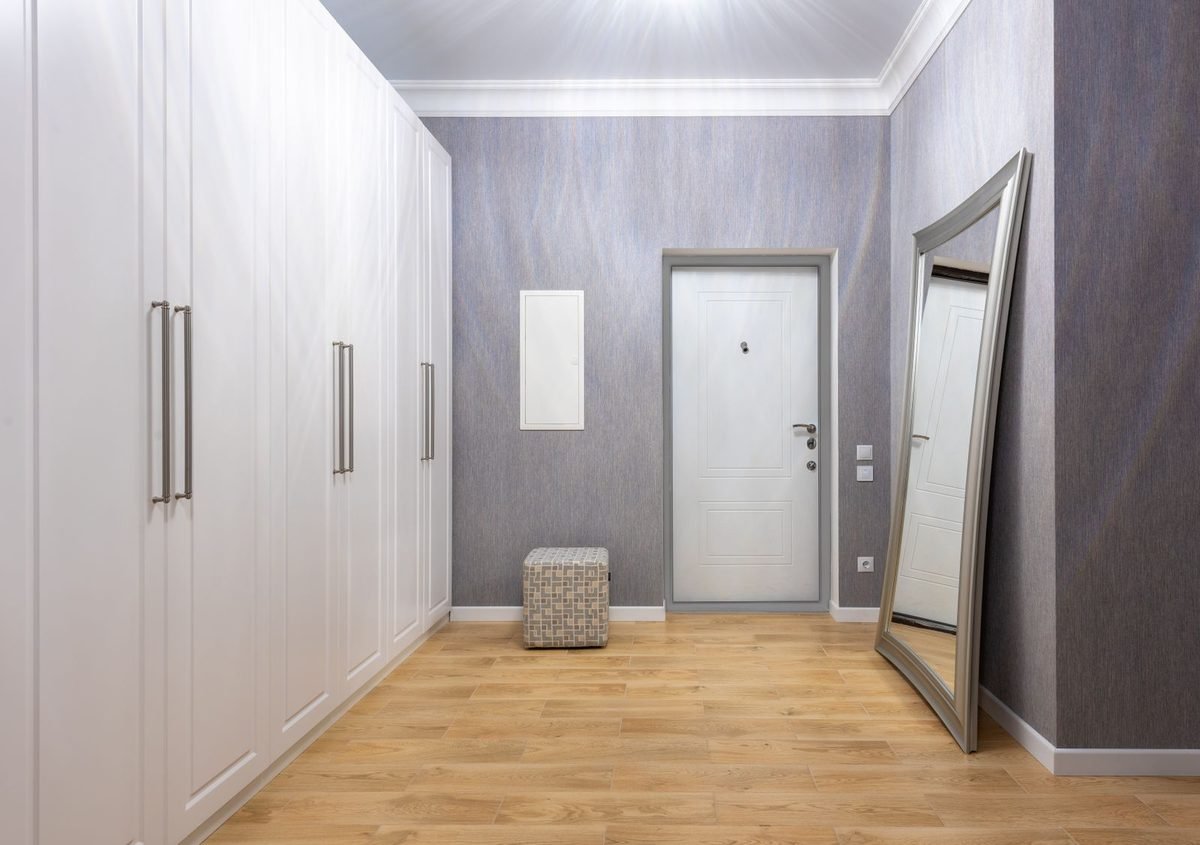
These ideas are grouped in the order you would actually set up a closet. Start with the layout, then add storage to every inch, and finish with the details that keep it easy to use. You do not need to do all 12. Pick the ones that fix your biggest frustration first.
Most of these sliding door closet ideas work in reach-in closets of any width, from a narrow 48-inch hall closet to a wide 96-inch bedroom closet. Where an idea needs drilling, you will find a no-drill version too, so renters can follow along.
1. Split the Closet Into Two Clear Zones

The simplest fix for half access in a sliding door closet is to stop treating the closet as one long rod. Instead, think of it as two closets, one behind each door. When you know exactly which door to open, you stop sliding panels back and forth.
Put the clothes you wear most behind the door you open most. That might be work tops, everyday jeans and your go-to jacket. Behind the other door, store occasional pieces: formal wear, off-season coats, suitcases and the things you reach for once a month.
You can also split by person if you share the closet. One partner gets the left door, the other gets the right. It ends the morning traffic jam and makes it clear who owns the mess.
Use a simple divider so the zones stay put. A set of closet rod dividers or even a bright ribbon tied around the rod marks the line. Keep the overlap zone in the middle for items that are long and slim, like dresses or a garment bag, which you can easily pull from either side.
2. Add a Second Rod for Double Hanging
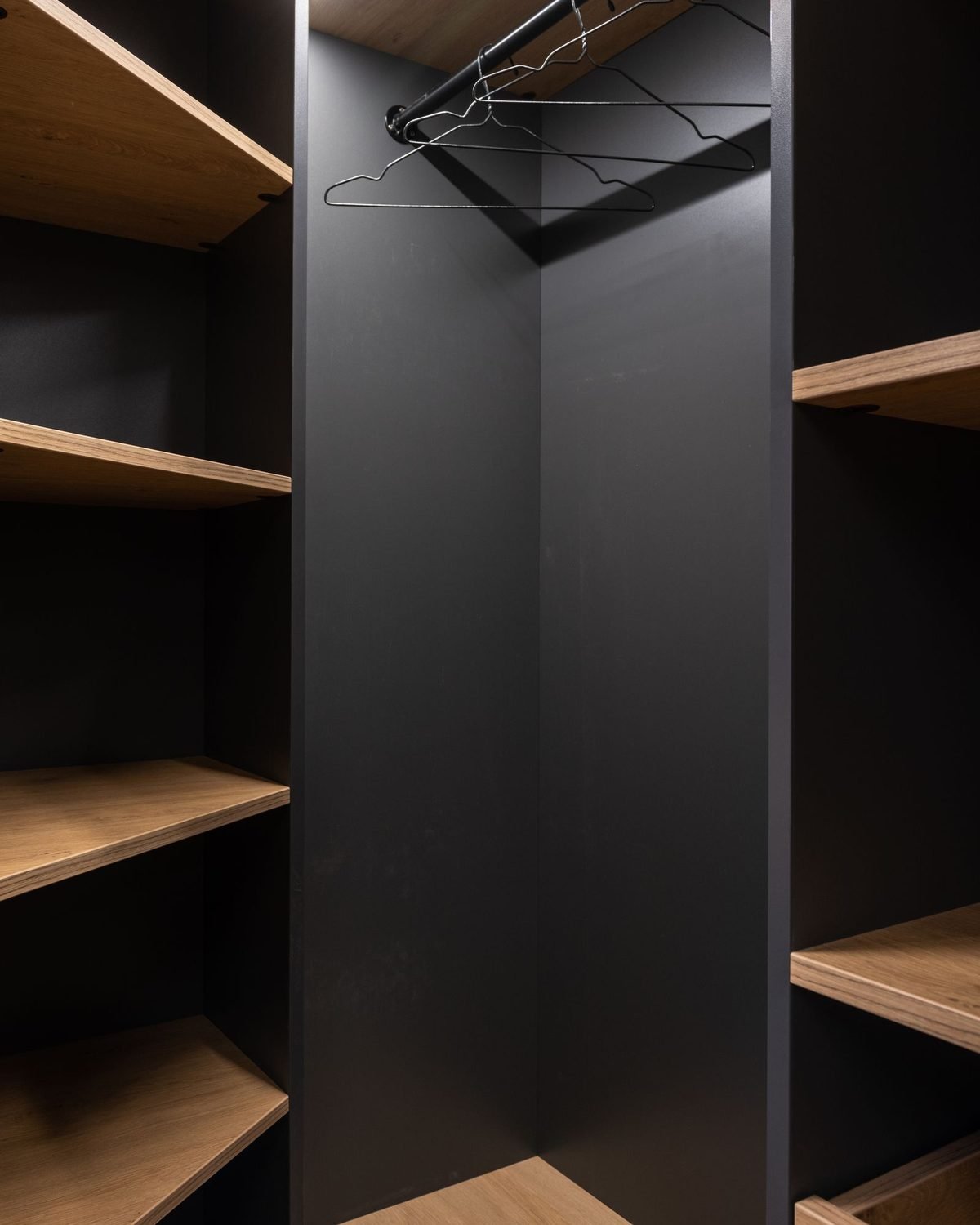
Most reach-in closets have one rod set high, with a lot of empty air under short items like shirts and skirts. A second rod below the first can nearly double your hanging space without taking any extra floor.
The easiest version is a hanging double closet rod that hooks over the existing rod and drops a second bar about 3 feet lower. It takes two minutes to install and needs no tools, which makes it perfect for renters. Adjustable versions let you set the height to fit your clothes.
Put double hanging behind your everyday door. Shirts go on top, folded pants or skirts go below. Leave one section of the closet with a single high rod for long dresses, coats and robes. A common split is two thirds double hang and one third long hang.
Check the weight limit. Heavy coats and jeans can bend cheap rods. If the hanging rod sags, add a center support bracket or keep the heaviest pieces on the main rod and lighter tops on the lower bar.
3. Place a Shelf Tower Where the Doors Clear It
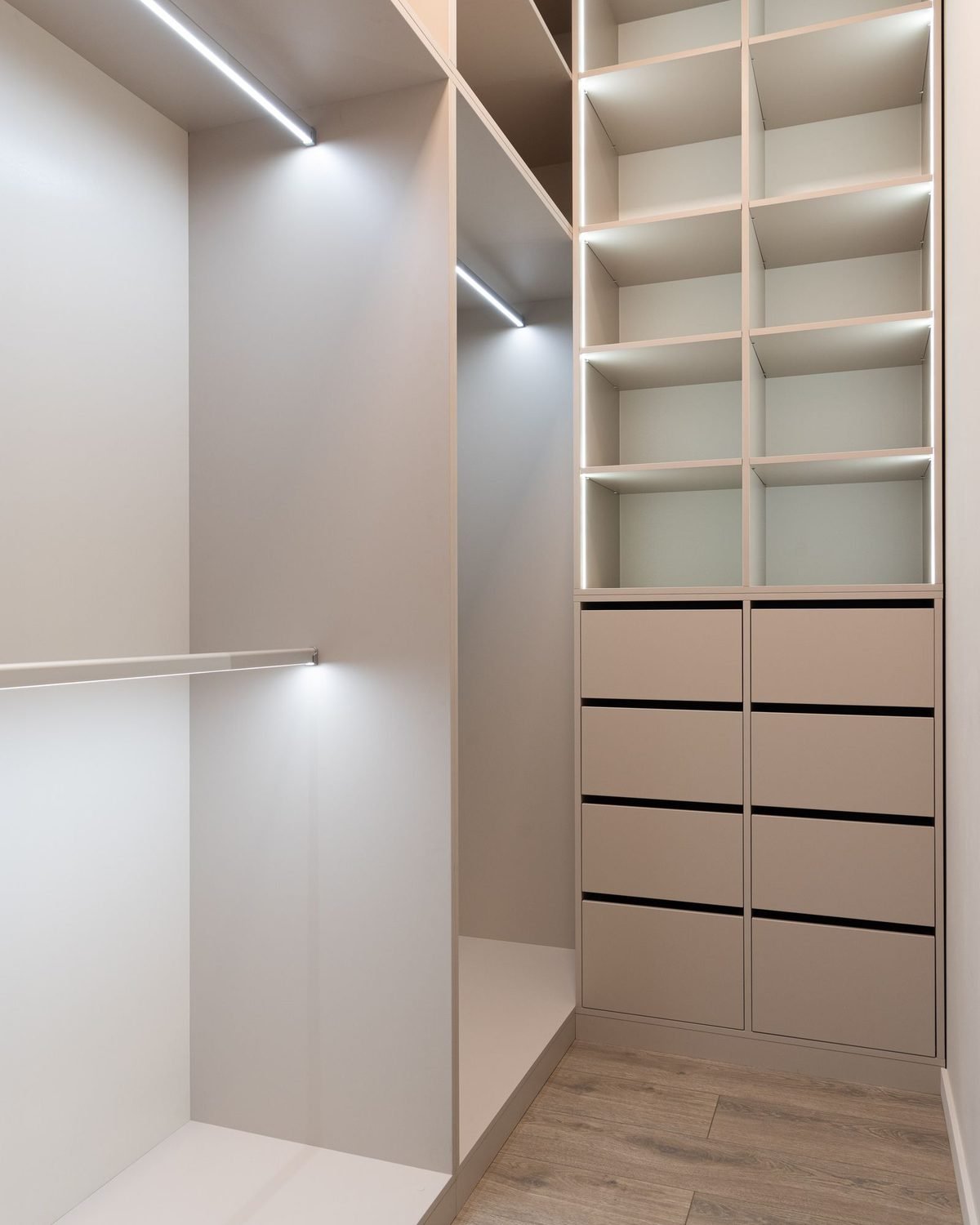
Shelves and drawers bring order to folded clothes, but in a sliding door closet they need a smart spot. If you put a shelf tower right in the overlap zone, you will only ever see half of it at a time. Instead, set the tower inside one of the zones so that one door can fully clear it.
A good layout for a two-door closet is a narrow tower at the end of your everyday zone, about 12 to 18 inches wide. You get open shelves for sweaters, jeans and bags, while hanging space fills the rest. In a wide three-door closet, a center tower can work because the middle door slides away from it on either side.
You can build in a tower, but a freestanding freestanding closet shelf tower is easier and leaves the walls untouched. Measure the depth carefully. The tower plus any baskets should sit at least an inch or two behind the door track so the panels never catch.
Any tall unit with drawers should be anchored to the wall to prevent tipping, especially in homes with kids. The U.S. Consumer Product Safety Commission’s Anchor It campaign explains how to install an anti-tip kit in a few simple steps.
4. Divide and Contain the Top Shelf

The top shelf in a sliding door closet is often deep, high and hard to see. Sweaters stacked there fall over the minute you pull one out. Shelf dividers and bins fix that by giving every pile a wall.
Clip-on acrylic shelf dividers slide over the shelf and keep stacks of sweaters, jeans or towels upright. They take seconds to add and leave no marks. Space them about 12 inches apart for folded knits.
For items you use less often, choose lidded bins or fabric boxes with handles that face out. Store extra bedding, off-season clothes, swimwear or keepsakes. Label the front of each one so you can read it from the floor without pulling it down.
Remember the half-access rule. Put the bins you need most often above your everyday door. Long-term storage goes above the other door and into the hidden ends, where it can sit untouched for months.
5. Hang a Fabric Shelf Organizer From the Rod

If you cannot add a shelf tower, a hanging shelf organizer is the next best thing for a sliding door closet. It hooks over the rod and drops a column of fabric cubbies, giving you instant storage for folded tees, leggings, pajamas and handbags.
Choose a hanging closet shelf organizer with six cubbies for tall closets or a shorter four-shelf version if you also use a double rod. Some come with drawers that slide into the cubbies, which is handy for socks and underwear.
Hang it near the end of a zone rather than in the middle. That way one door fully reveals it and you can reach every cubby without moving the other panel. It also creates a soft divider between short and long hanging clothes.
The beauty of this idea is that it moves with you. There are no screws, no brackets and no paint touch-ups. When you move out, you simply lift it off the rod and pack it flat.
6. Keep Shoes on a Slim Floor Rack

The closet floor is prime real estate, and in a sliding door closet it often becomes a pile of shoes that blocks the bottom track. A slim shoe rack lifts shoes off the floor, keeps pairs together and lets the doors glide.
Pick a two- or three-tier stackable shoe rack that is shallow enough to fit behind the door track. Most racks are 11 to 13 inches deep, which works in a standard 24-inch closet. Set the rack at the back wall and leave a clear gap at the front.
Store the shoes you wear most behind your everyday door and place seasonal or dressy pairs at the far end. Boots can stand upright with boot shapers, or slide into a narrow bin in the hidden corner.
If you have more shoes than floor space, take a look at our guide to closet organization ideas for shoes for more ways to store them up, down and sideways.
7. Add Drawers Set Back From the Track
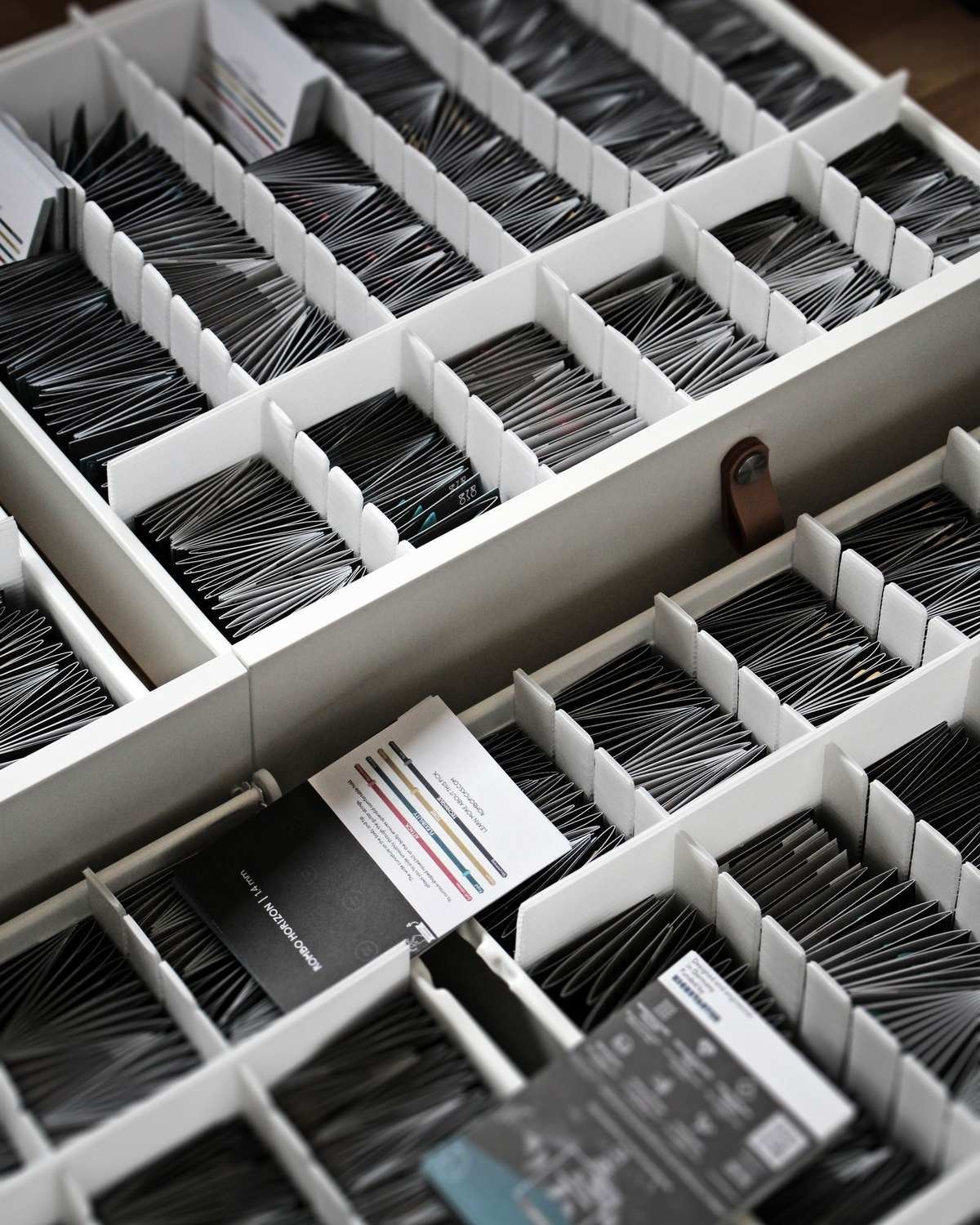
Drawers are great for socks, underwear, workout clothes and accessories. In a sliding door closet, though, they come with a rule: the drawer must open fully without hitting a door panel. That means placing drawer units so their fronts sit well behind the track, inside a zone that one door fully clears.
A slim set of fabric closet drawers or a small plastic tower fits under short hanging clothes. Test it before you fill it. Slide the door open, pull each drawer all the way out and make sure nothing scrapes.
Inside each drawer, use adjustable drawer dividers to keep rolled socks, belts and underwear in neat rows. Small items are the first things to turn into clutter, so giving them a home makes the whole closet feel calmer.
If you already have a dresser that crowds your bedroom, consider tucking a low one inside the closet under the rod. Just keep it out of the overlap zone and anchor it to the wall.
8. Use the Hidden End Walls and Corners

Those deep pockets at each end of a sliding door closet are wasted space for most people. The trick is to stop filling them with hanging clothes you cannot see and use the side walls instead.
Mount a column of heavy-duty adhesive hooks on each end wall for bags, hats, robes and tomorrow’s outfit. Hooks are easier to reach than hangers in a corner, and you can see everything at a glance.
Narrow corner shelves are another smart option. A set of wall-mounted shelves about 8 inches deep can hold folded scarves, clutches or baskets of small items. A tall, slim cart on wheels also works well in an end pocket because you can roll it out when you need something from the back.
The corners are also a great place for things you rarely use: the vacuum, a step stool, gift wrap or a suitcase. Just be sure whatever lives there does not stick out past the opening and catch the doors.
9. Make the Sliding Doors Work for You

You cannot hang an over-the-door organizer on a sliding door the way you can on a hinged one, because the panels need to slide past each other. But the doors can still pull their weight.
If your doors are plain, a set of peel-and-stick mirror panels on the outside turns them into a full-length mirror. You save the floor space a standing mirror would take, and the reflection makes a small bedroom feel bigger and brighter.
Some people remove one door entirely and replace it with a curtain on a tension rod. That gives full access to one side while keeping the other side closed. Store the removed panel and its hardware safely so you can put it back when you move out.
Avoid sticking hooks or pockets on the inside face of a bypass door. They will scrape the other panel or the clothes behind it. Keep door upgrades on the outside, and keep them flat.
10. Switch to Slim, Matching Hangers
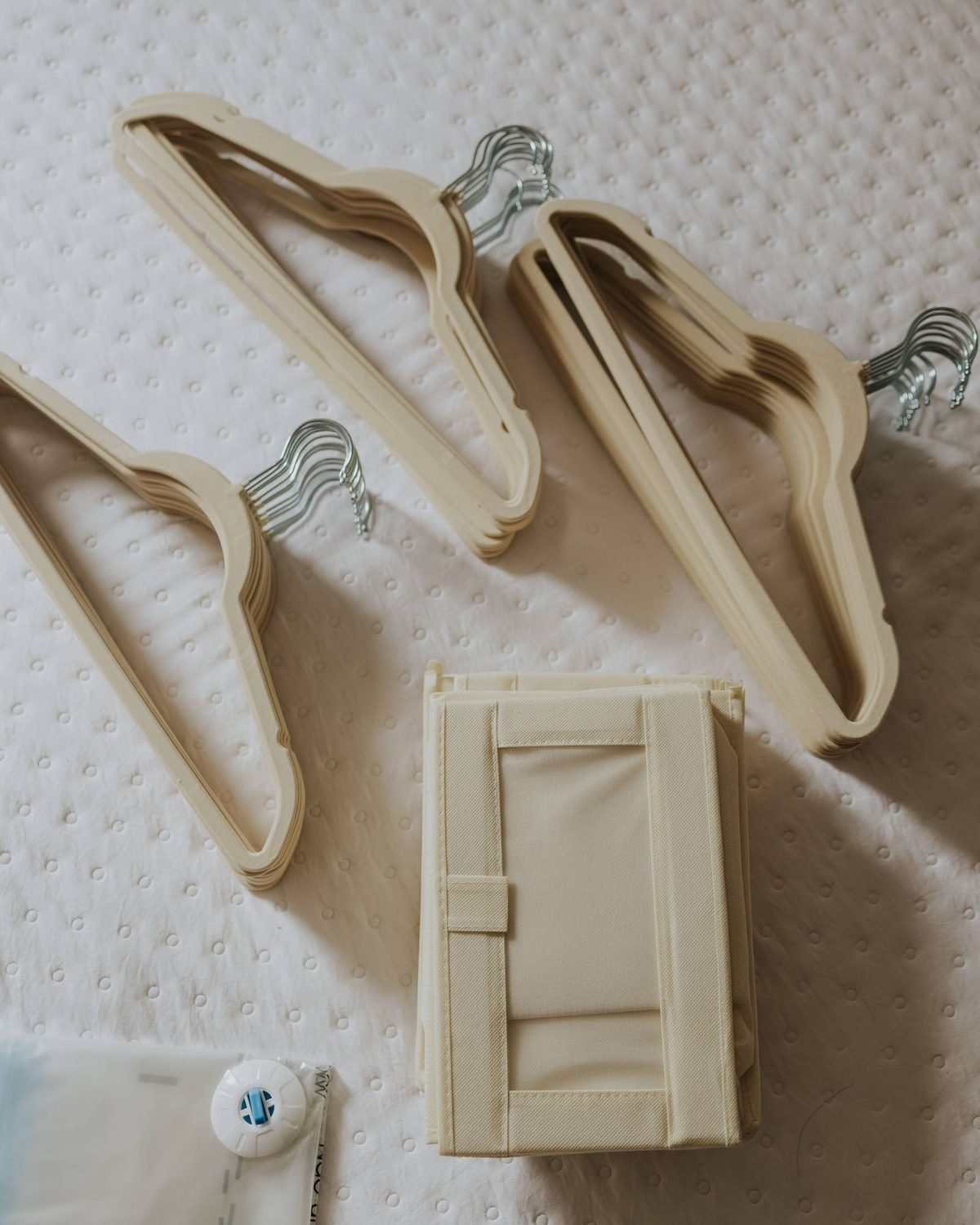
Bulky plastic and wooden hangers eat up rod space fast. Swapping them for slim velvet hangers is one of the cheapest ways to fit more clothes into a sliding door closet, often adding a third more room on the same rod.
Slim velvet hangers also stop silky tops from sliding off and landing on the closet floor, where they tend to block the door track. Matching hangers line up at the same height, so you can scan the whole zone in seconds.
Pick one color and buy enough to replace everything at once. Light neutrals look calm and airy, while black hangers hide dust. Keep a few specialty hangers for pants, skirts and heavy coats.
A bonus tip: hang all hangers facing the same way. At the start of the season, flip them backward. Each time you wear something, return it facing forward. After a few months, anything still backward is a strong candidate for the donate pile.
11. Hang Scarves, Belts and Bags on Vertical Organizers

Accessories are hard to store in any reach-in closet, and in a sliding door closet they often end up in a tangled heap on the shelf. Vertical organizers that hang from the rod keep them visible and take up only a few inches of rail.
A scarf hanger with loops holds a dozen scarves in a single hanger’s width. A belt and tie hanger does the same for belts. For handbags, a hanging purse organizer with clear pockets keeps bags upright and dust-free.
Put these organizers near the front edge of your everyday zone so you can grab what you need while you are getting dressed. If you have lots of accessories, give them their own end wall with hooks, as in idea 8.
Clear out accessories you never use as you go. A small closet only works when every item earns its place.
12. Light Up the Dark Corners

Sliding door closets are often dark, especially at the ends where light from the room never reaches. Good lighting helps you find clothes faster, match colors correctly and notice clutter before it builds up.
Stick-on motion-sensor closet lights are the easiest fix. Mount one in each zone under the top shelf and one in each hidden corner. They turn on when you slide the door open and turn off by themselves.
For a softer, built-in look, run a battery LED strip light along the underside of the shelf. Choose a neutral white light around 3000K to 4000K so clothes show their true color.
Clean the surface with rubbing alcohol before you stick anything on so the adhesive holds. Rechargeable lights with a USB port save you from buying batteries every few weeks.
What Goes Where: A Simple Placement Map
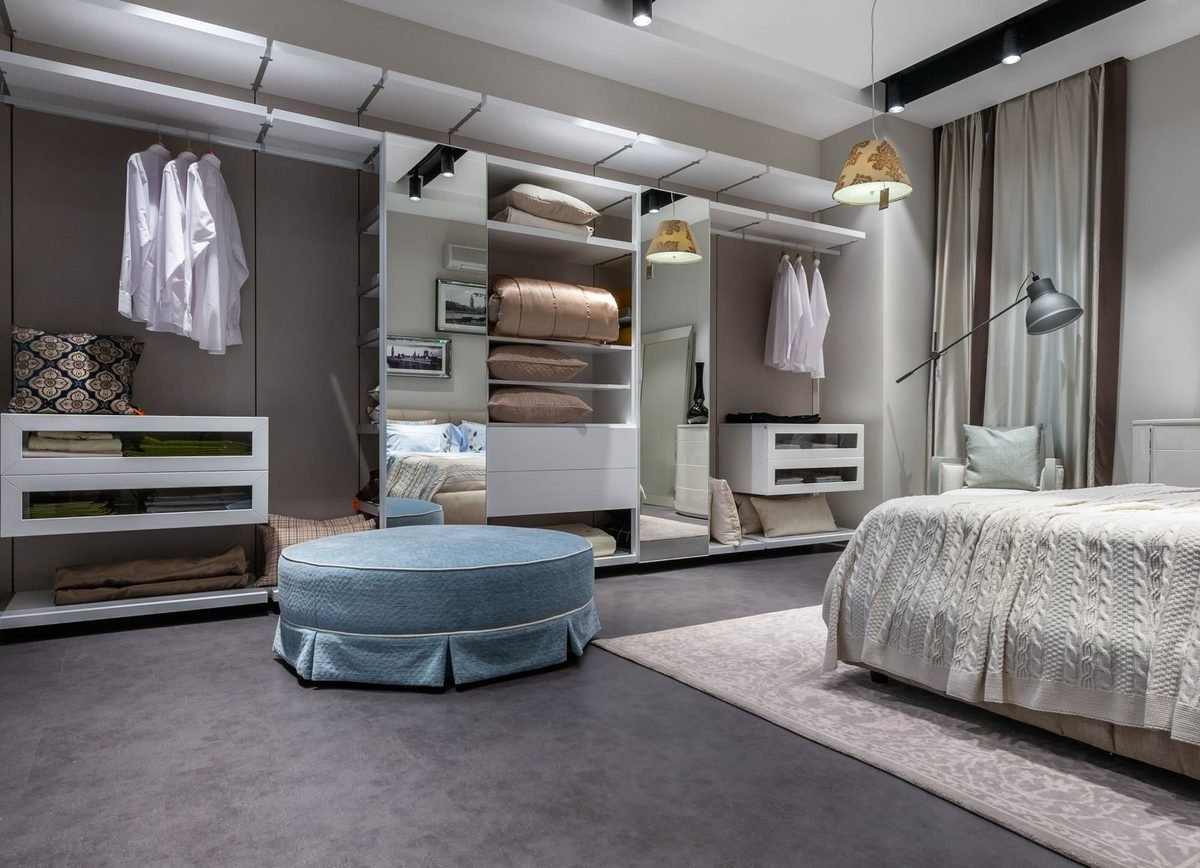
Once you have chosen your ideas, use this simple map to decide where everything lives. It works for most two-door reach-in closets.
- Everyday door: double-hung shirts and pants, a hanging shelf or tower for folded basics, drawers for socks and underwear, the shoes you wear most and bins for daily items on the shelf above.
- Occasional door: long dresses, coats and robes on a single high rod, formal shoes, seasonal clothes and labeled bins of off-season items on the top shelf.
- Overlap zone (center): slim items you can pull from either side, like dresses, garment bags or a long coat. No drawers here.
- Hidden end walls: hooks for bags and hats, narrow shelves for accessories, a rolling cart, the step stool and rarely used gear.
- Floor: a slim shoe rack at the back wall, a laundry hamper if it fits behind the track, and nothing loose that can roll into the door path.
For a three-door closet, treat the left and right sections as your two main zones and use the center section for anything you can easily reach from both sides, such as a shelf tower or drawers.
Draw this map on a sticky note or a phone photo of your closet before you buy anything. It helps you shop for exactly the organizers you need and nothing more.
Sliding Door Closet Organization on a Budget
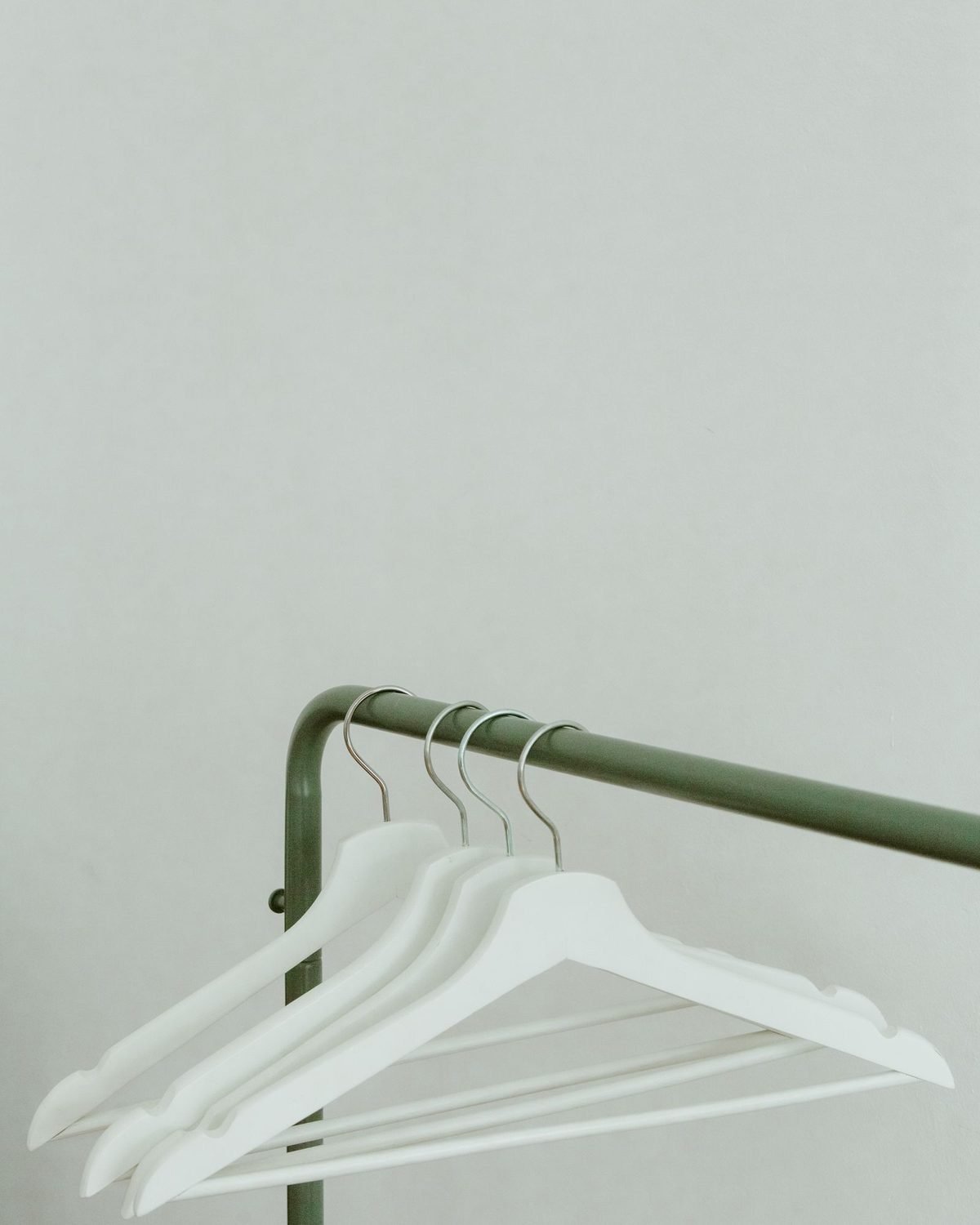
You do not need a custom system to get an organized sliding door closet. Many of the best sliding door closet upgrades cost very little, and some are free.
- Free: edit your clothes, split the closet into zones, flip hangers to track what you wear and move rarely used items to the hidden corners.
- Under $25: slim velvet hangers, a hanging double rod, shelf dividers and a few adhesive hooks.
- Under $50: a hanging shelf organizer, a slim shoe rack and a couple of stick-on lights.
- Under $100: a freestanding shelf tower, a small set of drawers and matching bins for the top shelf.
Shop your home first. Shoe boxes make good drawer dividers, baskets from other rooms can hold accessories, and a dresser that crowds the bedroom may fit inside the closet. Dollar stores also sell bins, hooks and labels that work well in a small closet.
Spread the spending out. Start with hangers and a second rod, because they free up the most space for the least money. Then add shelves, drawers and lighting as your budget allows. For more cheap ideas around the home, see our list of small apartment storage ideas on a budget.
Renter-Friendly Tips for Sliding Door Closets
Most sliding door closets are in rentals, so it helps to choose sliding door closet upgrades that leave no trace. The good news is that nearly every idea in this guide has a renter-friendly version.
Use freestanding pieces whenever you can. Shelf towers, drawer units, shoe racks and rolling carts stand on their own and move out with you. Hanging organizers and double rods hook over the existing rod, so they need no tools at all.
For walls, pick adhesive hooks and strips rated for the weight you plan to hang, and follow the removal instructions exactly when you move out. Peel-and-stick mirror panels and removable wallpaper also come off cleanly from most smooth, painted surfaces. Test a small piece first.
If a door panel is in the way, ask your landlord before removing it. Most will agree as long as you store the panel safely and put it back. Take a photo of the closet before you change anything so you can return it to the same condition. Our small apartment hacks for renters have more ideas you can undo in minutes.
How to Fix Sticky or Jumping Sliding Doors

An organized closet does not help much if the doors drag, stick or jump off the track. A few minutes of upkeep usually fixes the problem and makes the whole closet easier to use.
Start with the floor guide and bottom track. Vacuum out dust, hair and lint, then wipe the track with a damp cloth. A small item stuck in the track is the most common reason a door will not slide.
Next, look at the top track. Most bypass doors hang from rollers that run along an upper track. A little silicone spray on the track, not oil, helps the rollers glide quietly. Wipe away any extra so it does not collect dust.
If a door sits crooked or rubs the floor, adjust the rollers. On many doors, there is a small screw on each roller bracket that raises or lowers that corner of the panel. Turn it a little at a time with a screwdriver until the door hangs level. If a roller is cracked, replacement rollers are cheap and easy to swap. Finally, check that nothing inside the closet, like a bin or a shoe, leans against the doors.
Sliding Door Closet Mistakes to Avoid

Even well-planned sliding door closets go wrong in a few common ways. Avoid these and your new setup will stay easy to use.
- Putting drawers in the overlap zone. If a door always covers part of a drawer, you will never open it fully. Keep drawers inside a zone one door can clear.
- Letting things stick out past the track. Bins, shoe racks and baskets that are too deep will block the doors. Measure before you buy.
- Using one long rod for everything. A single rod wastes the space under short clothes. Add a second rod behind your everyday door.
- Hiding daily clothes in the ends. Anything in the deep corners is out of sight. Save those spots for rarely used items.
- Overstuffing the rod. Packed clothes wrinkle and make it hard to see what you own. If you cannot slide hangers easily, it is time to edit.
- Skipping light. A dark closet hides clutter. Add at least one stick-on light per zone.
- Ignoring the track. Dirt and debris in the bottom track make sliding doors stick. Vacuum it every month.
How to Keep a Sliding Door Closet Organized

The real test of any sliding door closet system is whether it still looks good a month later. A few small habits make that easy.
First, use the one-in, one-out rule. When you bring home a new piece of clothing, choose one to donate. It keeps the rod from slowly filling back up.
Second, do a five-minute reset every weekend. Rehang anything that slipped, put shoes back on the rack, return accessories to their hooks and toss empty hangers into a bin. Five minutes a week saves a full afternoon later.
Third, switch zones with the seasons. Twice a year, move warm-weather clothes to the occasional side and cold-weather clothes to the everyday side, or the other way around. This keeps the clothes you need right behind the door you open most.
Fourth, keep a donation bag on the closet floor or end wall. The moment something does not fit or feel right, it goes straight in the bag. When it is full, drop it off. For a bigger bedroom reset, our guide to small bedroom storage ideas for adults has more ways to clear the room around the closet.
Closet Organization Ideas for Sliding Doors: FAQ

How do you organize a closet with sliding doors? Split the closet into two zones, one behind each door, and keep everyday clothes behind the door you open most. Add a second rod for double hanging, place shelves or drawers where a door can fully clear them, use the hidden end walls for hooks and narrow shelves, and keep the floor clear so the doors glide.
What should go in the middle of a sliding door closet? The middle is the overlap zone, which is never fully open. Use it for slim items you can pull from either side, such as dresses, garment bags or long coats. Avoid drawers or deep shelves in the middle of a two-door closet.
Can you use an over-the-door organizer on a sliding door? Not usually. Bypass doors need to slide past each other, so hooks or pockets on the inside face will scrape. Use hanging rod organizers, wall hooks on the end walls or peel-and-stick mirror panels on the outside face instead.
How do I use the dead space at the ends of my closet? Mount hooks or narrow shelves on the side walls, or slide in a slim rolling cart. The ends are also a good spot for rarely used items, such as a suitcase, a step stool or gift wrap.
How deep should a shoe rack be in a sliding door closet? Most standard closets are about 24 inches deep. A shoe rack 11 to 13 inches deep fits easily and leaves room in front of it so the doors can pass. Always measure the space between the back wall and the track.
Should I remove my sliding closet doors? You can, but ask your landlord first if you rent. Removing one door and adding a curtain gives full access to one side. Removing both opens the whole closet, but you will need to keep it tidy because it will always be on display.
What is the cheapest way to get more space in a sliding door closet? Slim velvet hangers and a hanging double rod are the cheapest sliding door closet upgrades. Together, they can nearly double the usable hanging space for less than the cost of a single organizer kit.
Final Thoughts
Sliding doors do not have to mean a messy, half-hidden closet. Once you split the space into zones, keep everyday clothes behind the door you use most and plan around the overlap zone, the track and the hidden corners, the whole closet becomes easy to use.
Start small. This week, swap in slim hangers and add a second rod behind your everyday door. Next week, add a shoe rack or a hanging shelf. Then fill the end walls with hooks and add a couple of stick-on lights. Little by little, these closet organization ideas for sliding doors add up to a closet that works as hard as you do.
Save this guide for your next closet day, and share it with a friend who keeps losing clothes behind their sliding doors.